It’s uncommon for Hollywood to be addressed as what it is i.e. a national cinema — it so often assumes, instead, the position of the international standard: the default. This is perhaps a very American quality to have. The political, economic, and cultural imperialisms of the US jointly reinforce each other. So potent is this mutual intensification in my mind, that while grimly reading the news on the US/Israel-Iran War and the 3000 “No Kings” rallies (8 million people gathering across all 50 states) in protest of the current administration’s authoritarianism and war-mongering, I am thinking of a film. Well, several films.
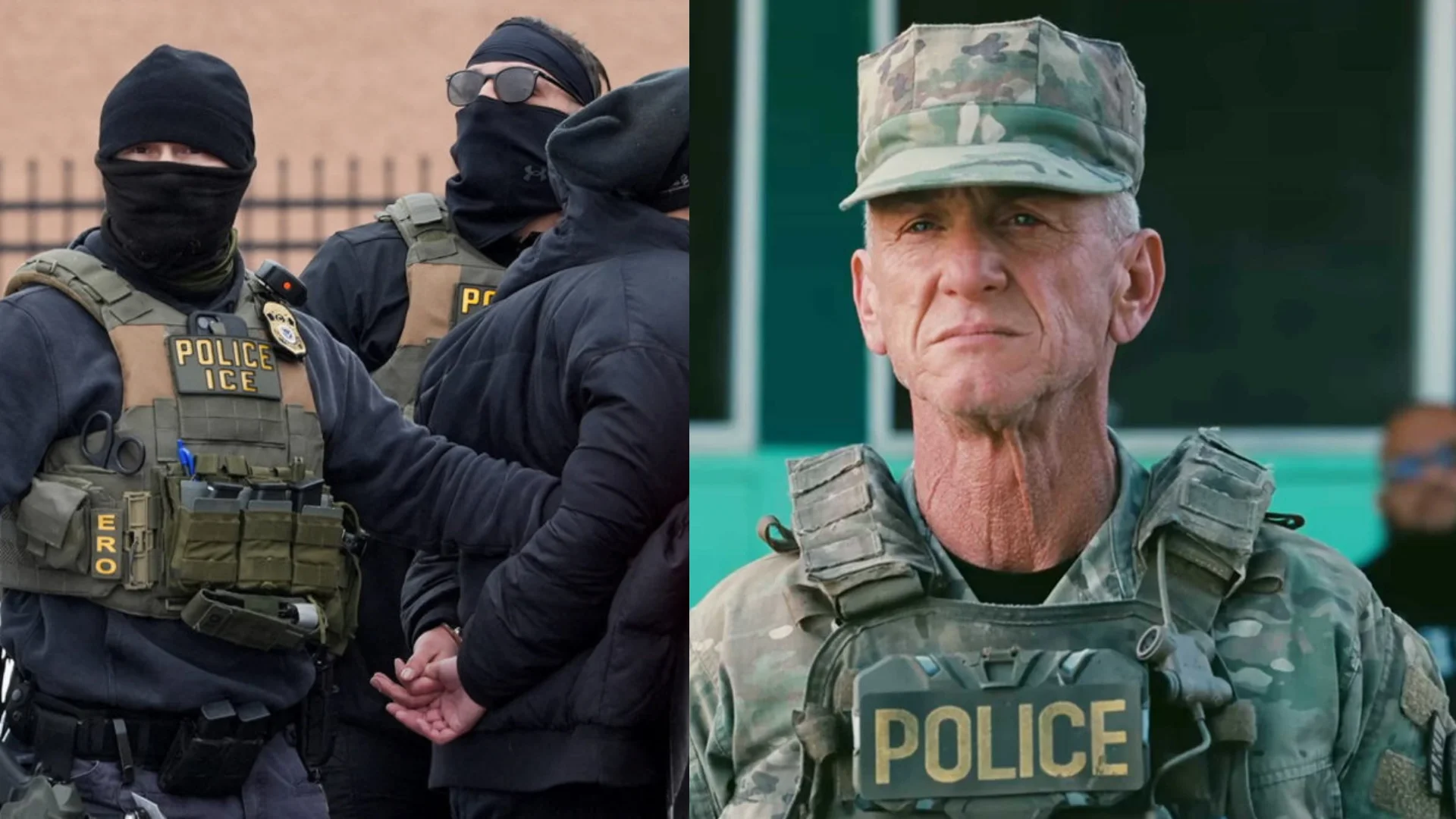
The US has been embroiled in war and civil conflict this year. In January, the Pentagon was reportedly preparing a potential deployment of 1,500 troops to the state of Minnesota after massive protests arose due to the murder of American citizens, Renee Good (37, writer and poet) and Alex Pretti (37, intensive care nurse) by ICE (Immigration and Customs Enforcement) agents.
At the end of February, the US and Israel launched joint strikes in a surprise attack on numerous Iranian military sites and cities including a girls’ school in Minab. The conflict has been erratic: one moment, 10,000 ground troops are being prepared for deployment while Trump threatens Iran's energy and water infrastructure (a war crime); the next, he's entertaining negotiations (brokered by our state: Pakistan mentioned) and privately admitting he might accept a deal without securing the Strait of Hormuz.
War and political violence have also been frothing up in American popular culture. In the last two years in particular, a handful of Hollywood filmmakers have made what many are calling their most overtly political films.
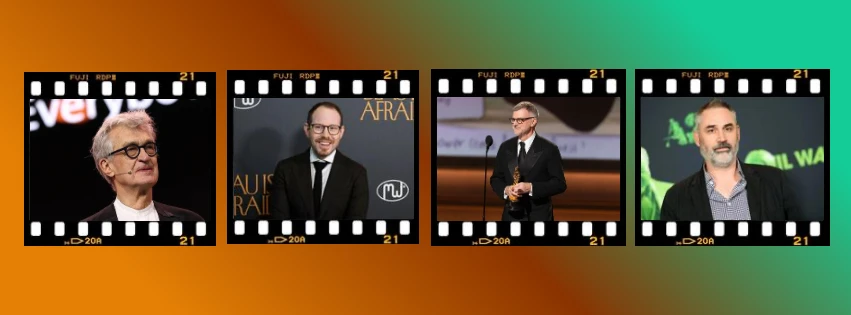
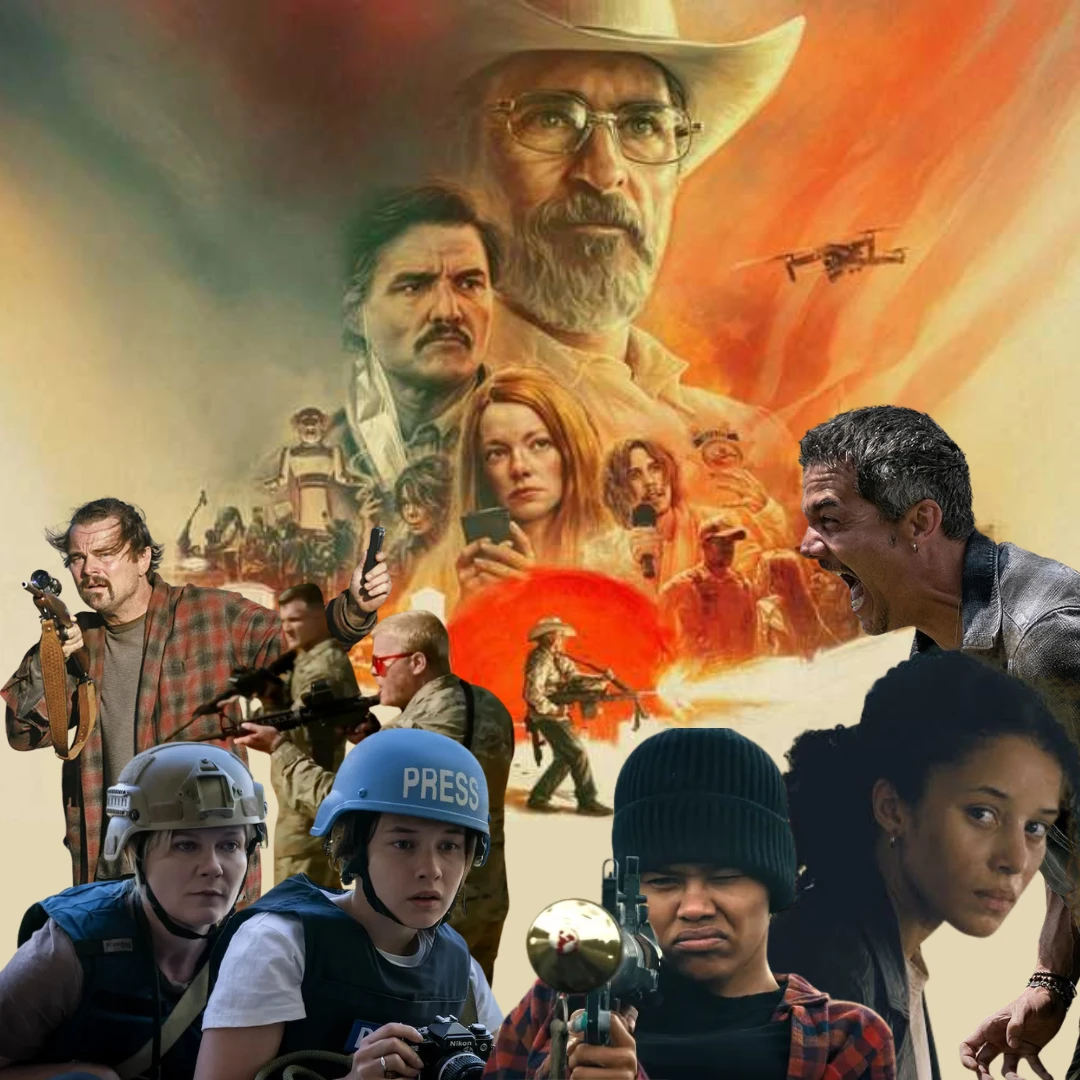
These auteurs took on journalism, war photography and the power of images — Alex Garland’s Civil War (2024); the social media seasoned isolation of the COVID-19 pandemic and the resulting rise in political polarization and misinformation in the foreground of shadowy nefarious plots (Big AI and pedophile cabals) set in a fictional small town in New Mexico — Ari Aster’s Eddington (2025); and the dialectics of revolutionary violence and long-term collective action in the fight against authoritarianism — Paul Thomas Anderson’s Oscar-winning One Battle After Another (2025).
These films have been met with widespread critical acclaim and have engendered intense debate across the political spectrum in their home country. One of the key talking points has been the capacity of film, in general, and these three in particular, to grapple with the political urgency of their time.
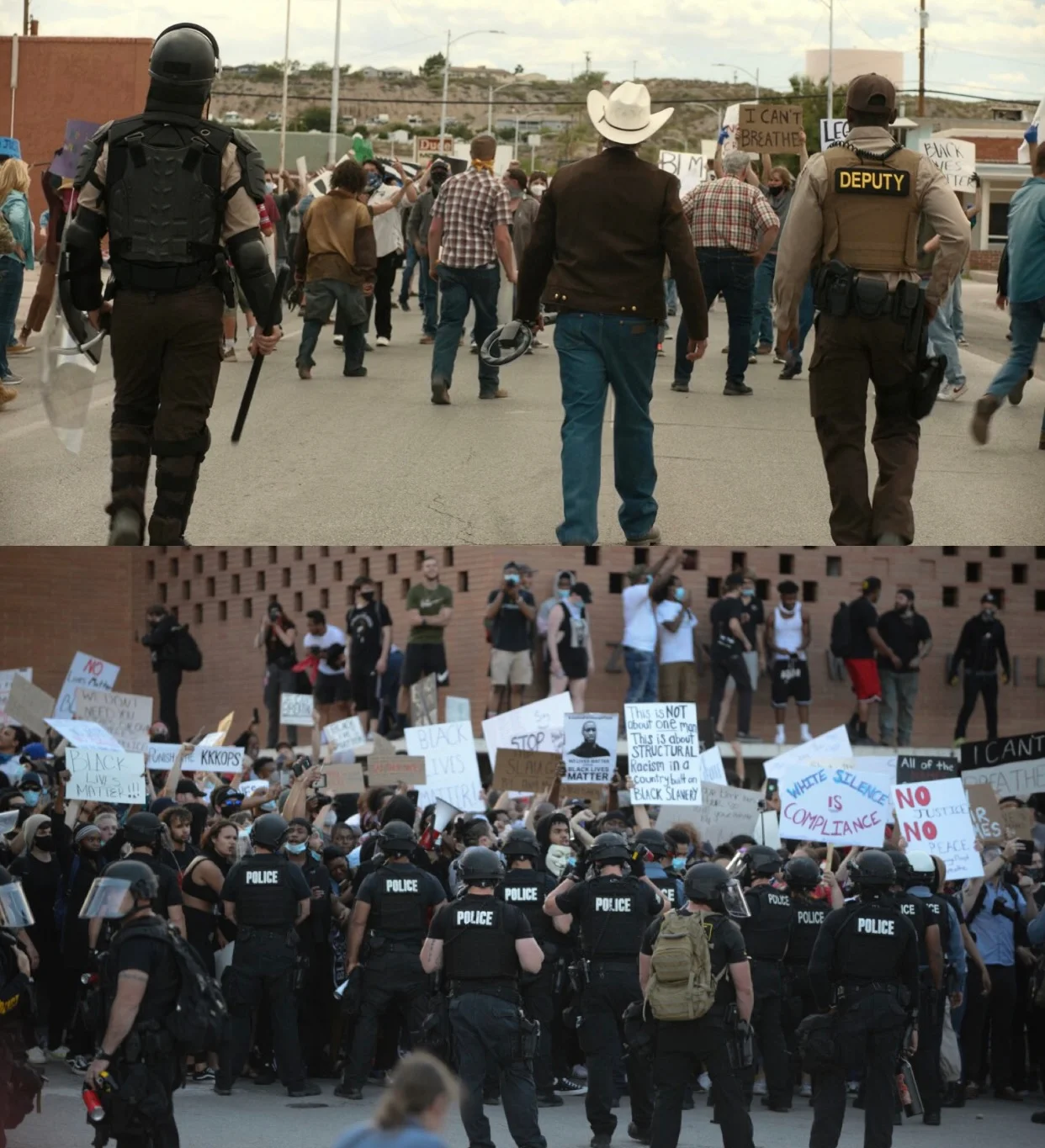
This is one of the duties we often ask of culture: to be the proverbial canary in the mine of politics — not all of us though, and certainly not consistently.
In his 1988 book, acclaimed filmmaker Wim Wenders mused on the inherent politics of filmmaking: “Every film is political. Most political of all are those that pretend not to be: 'entertainment' movies. They are the most political films there are because they dismiss the possibility of change. In every frame they tell you everything's fine the way it is. They are a continual advertisement for things as they are.”
On February 12th, 2026, as The Berlinale Film Festival was set to commence, Wenders, who was serving as the Jury President, was among the panel questioned regarding the festival’s response to Germany’s complicity in the genocide in Gaza (the festival receives a major chunk of its funding from the German state). Following some protracted handwringing from the rest of the panel that verged on the petulant, Wenders did a complete about-turn on what one would assume is an immutable belief: “We have to stay out of politics because if we make movies that are dedicatedly political, we enter the field of politics; but we are the counterweight to politics.”
For German Jewish critical theorist Walter Benjamin, film was the political art form par excellence. One of its primary social functions, as he wrote in his seminal 1935 essay “The Work of Art in The Age of Its Technological Reproducibility”, is to establish equilibrium between us and the apparatus i.e. the material, technological, mechanized, modern environment we find ourselves in, locked into prevailing relations of power.
The US stands at the precipice of a major military defeat, yet it continues to expand its military-industrial complex. Israel, its key ally in the Middle East, has committed horrific crimes against humanity and international law: ethnic-cleansing, mass-killing of civilians including children, invading and attacking its neighbours and illegally seizing lands in other sovereign territories. The US support of Israel precipitates an oil crisis. The resulting shock to the economy is something the Western world will not be able to recover from anytime soon. The US President grows ever more unpopular and will soon be impeached, his term marred by scandal. Domestically, the country’s political unrest intensifies and there is a palpable rise in anti-government sentiment. The year is 1973.
Much has been made of the youthful, experimental surge of American filmmaking in the 1970s, referred to as New Hollywood, and its alignment with the sociopolitical crises of the decade. This American New Wave was bold, energetic, irreverent, blood-spattered, racy, and often, decidedly political.
Even films not ostensibly about current affairs were deeply conversant with their moment in time: Serpico (1973) and Chinatown (1974) were commentaries on corruption and the institutionalization of injustice; Nashville (1975), a satirical musical dramatic comedy, presented a microcosm of American society and politics with political assassinations to boot; Taxi Driver (1976) parsed the many tears in the social fabric of Urban America, seen through the eyes of an isolated, traumatized Vietnam War veteran as we follow his troubled descent into vigilanteism.
The creative control afforded to the young filmmakers of this movement came as a result of their commercial promise. Many of them had already made hits and/or formed successful creative partnerships with Hollywood stars. The formal evolution of American cinema in the 1970s may just as easily be seen as a conservative move on the part of capital as it could the stylistic and narrative deviation of maverick new wave filmmakers.
The politics of New Hollywood were by no means perfect (especially when it came to race and gender) and they were certainly not always well received. The Vietnam War was notably absent from Hollywood’s visual field; the only film dealing with it directly was the 1974 documentary Hearts and Minds (dir. Peter Davis). At the 1975 Academy Awards, where it won Best Documentary Feature, Golden Age stars Frank Sinatra and John Wayne (who had done his own part in pushing war propaganda in the 1968 film Green Berets) accosted the film’s producer, Bert Schneider, backstage after his acceptance speech which included the reading of a statement from the Vietnamese people.
It is in this tradition that contemporary Hollywood filmmakers are working and building upon; Aster and Anderson have explicitly listed New Hollywood films as influences. Their creative control also comes as a result of their cultural capital: all three are prestige filmmakers and indie darlings who have largely enjoyed critical acclaim and modest commercial success. They are safe bets to get butts in seats and they’ve been given the budgets to do so. At the same time, they have been entrusted to make timely, resonant, and “serious” films and with that task, they do succeed — for the most part.
Alex Garland’s Civil War follows a rag-tag group of journalists as they make their way across a wartorn Northeast to Washington D.C. in order to interview and photograph the authoritarian US President who ordered airstrikes on US citizens and whom the press has not had access to for over a year. It’s the second American Civil War by way of a dystopian road movie but its ultimate subject is photojournalism and the power of images.
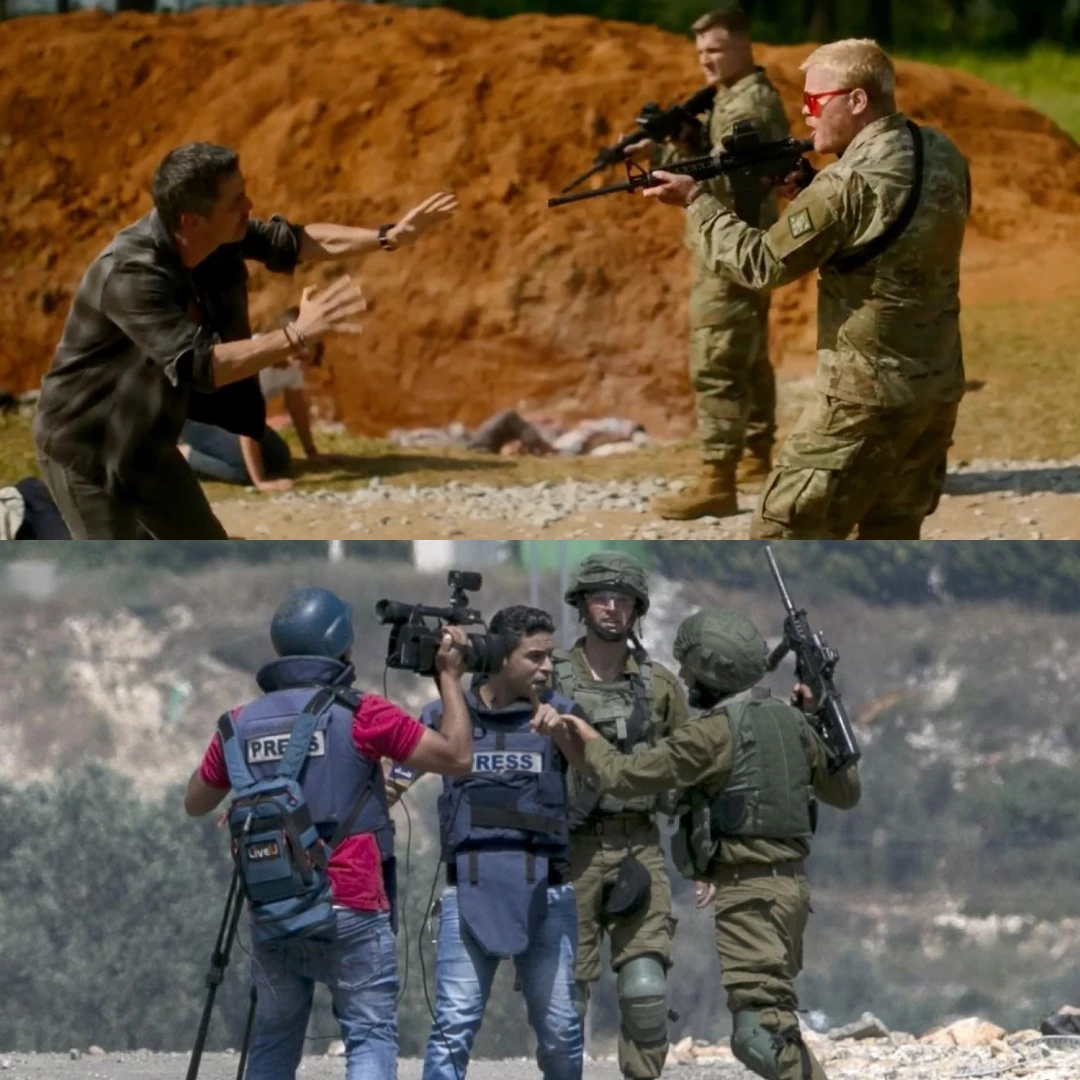
Garland, in multiple interviews, has emphasized that his journalists are “old-fashioned”, they consciously avoid bias, and that they are the heroes of this story. In a moment of devastating moral quandary, the young upstart, Jessie, is disgusted by their lack of intervention in a gruesome scene of torture. Kirsten Dunst’s Lee, a weary, seasoned war photographer, pontificates on the irrelevance of such moral questions because the duty of the journalist is to record so that others may do the asking. She is self-assured in her narrow view of the profession as one of monastic witnessing and there is no counter-argument offered by either her peers or the plot. In fact, Garland makes a concentrated effort to argue that images have inherent power and that photojournalists are a heroic cross between opportunistic artist and noble warrior that render such images for the good of our democracies. It is this almost pitifully naive understanding of war photography that makes Garland believe that “journalism ended the Vietnam War.”
Garland’s views are entirely ahistorical and depoliticized. In his mythology, the true and perhaps only purpose of journalists is to produce objective, even if aesthetic, documents that serve as the last line of defense against fascism. It’s as if Garland has not meaningfully engaged with the use and contextualization of war photography throughout history. In Regarding The Pain of Others, Susan Sontag argues that the meaning of even the most gruesome photographs from war are entirely contingent not on what they show, but in the manner that they are shown and to whom. War photographs are entirely political and they “wait to be explained or falsified by their captions,” as she writes.
The production of Garland’s film certainly didn’t happen outside the context of violence in Palestine, Somalia, Afghanistan, Iraq — he certainly should have no reason to be ignorant of Abu Ghraib. Admittedly, the film was produced before the events of October 2023, but the world it was delivered to was one in which images of mutilated bodies were already ubiquitous.
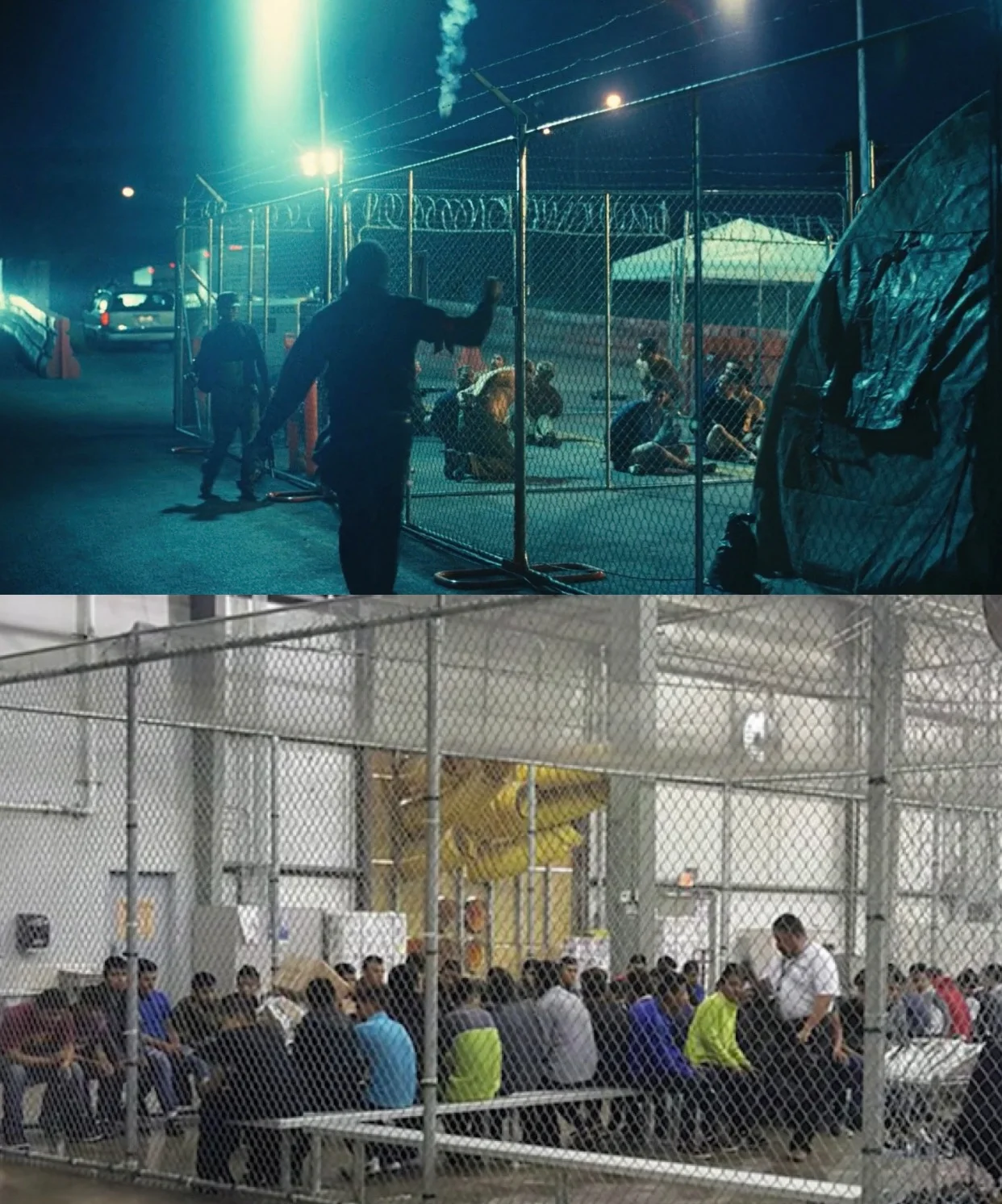
Garland and Civil War are entirely unprepared to contend with the historicity of such violent images even though images of violence seem to be central to the thesis of the film. Garland has, unsurprisingly, made no comments about the photojournalists of Gaza and the global treatment of the images they have produced. However, as someone making a film about US politics and the power of images, he should be familiar with images of Black men and women murdered by American police officers, and how they have been repurposed as memes by white supremacists; one need only think here of the repugnant “George Floyd challenge.”
Garland is correct in asserting that journalists are powerful storytellers and that they have an important role to play in the fight against fascism. However, his uncomplicated valorization of journalists as producers of “truth” only serves to romanticize the profession and reinforce a schema that allows us to celebrate figures like WWII photographer Lee Miller (inspiration for the name of Civil War’s protagonist), but not the likes of Anas El-Sharif or Wael Dahdouh.
Garland clings to this idealism around image-making and its role in politics likely because in so doing, he is able to assign value to his own labour as well, such as it is. One gets the feeling that he’s made his film needing to believe this ideology is a sacred, prerequisite truth — but if this were so, would it really need Garland’s almost two-hour long defense? It’s this confusion that enables Garland to claim in an interview that he approached this screenplay, one he wrote himself as a work of speculative fiction, journalistically.
Ari Aster takes a markedly more absurdist and explicit approach to American politics in his satirical COVID-19 neo-Western psychodrama thriller Eddington.
In small town New Mexico in the summer of 2020, a conflict is brewing between the town’s Democrat mayor, Ted Garcia (Pedro Pascal) and its conservative Sheriff, Joe Cross (Joaquin Phoenix) who rejects mask mandates and grows more radicalized under the influence of his Facebook algorithm and conspiracy theory obsessed mother-in-law. As the drama unfolds, Aster impishly runs through a Rolodex of references to divisive issues in American politics, namechecking everyone from Anthony Fauci to Marjorie Taylor Greene.
The filmmakers’ hyperreflexivity, spurred on by culture and the habitus of Hollywood, diminishes their ability to offer anything meaningful to the viewer….After all, hasn’t the ultimate criteria for the evaluation of a “political” film just become how much it gets people to argue with each other?
Aster is a master at distilling personal, libidinal, and intergenerational fear and neuroses into screenplays simmering with tension till they explode in orgiastic violence, giving us some of the most haunting imagery in American cinema in recent memory. There is always a looming threat foreshadowed at the start of the film that will come to be the ruin of our main characters. Previous Aster thrillers feature cults, a king of Hell, a mother — in Eddington, its Big Tech and AI Data Centers.
For Aster, the polarization and political rancor of pandemic America is not just to be found within the morass of social media algorithms, but also in the paranoia, performativeness, and growing isolation that Americans are carrying in their hearts. There is tragedy in there if Aster was truly interested in it, but it seems he’s more at ease with smug disapproval aimed at those he’s condemned to be victims of fate. Aster’s mastery of terror sadly deflates when it comes to those fears and anxieties that are collective — in other words, when he gets “political.”
Aster’s derision is meant to be bipartisan; he is an equal opportunity misanthrope. The climactic sequence of the film is a surreal MAGA fever dream: an antifa militia travels to Eddington, NM in a private jet, likely funded by a George Soros type billionaire, to stir up trouble in the guise of political violence and burn effigies that symbolize white supremacy.
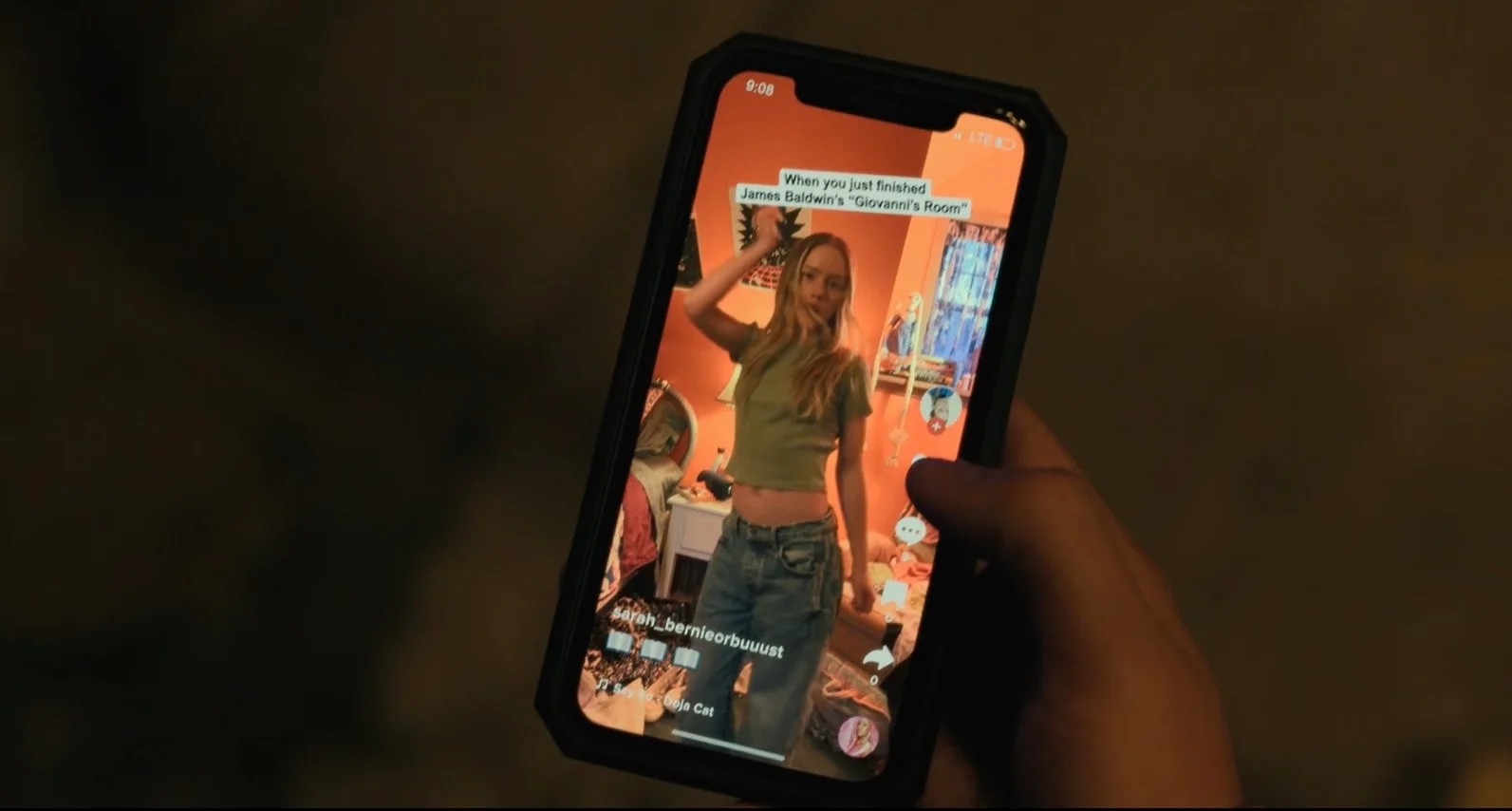
However, there is a barely contained glee that is somehow simultaneously juvenile and geriatric when Aster turns his looking glass of self-satisfied cynicism towards what he considers worthy targets on the left: white teenagers responding to the murder of George Floyd.
A couple of boys look at a TikTok video shared by Sarah, the town social justice warrior, as she dances in celebration of finishing James Baldwin’s Giovanni’s Room. One of the boys, Brian, whose political education seems entirely motivated by how horny he is for Sarah, devotes himself to performative wokeness, organizing Black Lives Matter protests in his hometown and giving lectures to his Republican family about the dismantling of whiteness. Later in the film, Brian goes on to save the Sheriff’s life by gunning down an “antifa terrorist” in the street. In the epilogue, we see him take on the guise of a Kyle Rittenhouse/Charlie Kirk composite.
Curiously, Aster doesn’t seem to reserve much contempt for Big Tech even though in his own estimation, it’s the harbinger of our collective ruin. The corporation behind the proposed AI Data Center “solidgoldmagikarp” retains more mystery than any previous Asterian villains.
Aster’s IRL Big Tech counterparts in Silicon Valley are demonstrably opportunistic actors with their CEOs and founders constituting an oligarchy regardless of how blue or red the branches of American government are (although they are much cozier with Trump, benefiting from his administration’s government contracts). In Eddington, the corporations and tech billionaires escape being the objects of satire; it is instead the local politician who is painted as the opportunist, even if a manipulated one, as he pushes for the data center at the insistence of the state governor, hoping for rewards and re-election.
Like Civil War, moments from Aster’s film betray the director’s self-involvement with the statement he is making and worse still, the discourse it will generate. The filmmakers’ hyperreflexivity, spurred on by culture and the habitus of Hollywood, diminishes their ability to offer anything meaningful to the viewer. This navel-gazing is not necessarily just a personal shortcoming of the directors’ but a structural issue within the industry. Film capital organizes the production of art with a parochial command on the function(s) it’s expected to perform. After all, hasn’t the ultimate criteria for the evaluation of a “political” film just become how much it gets people to argue with each other?
Contemporary critical theorist Sianne Ngai describes the aesthetic category of the “gimmick” as the ultimate capitalist form defined by its many internal contradictions. For instance, the gimmick is, at the same time, a thing that works too little (at convincing us) and works too hard (at getting our attention). From Google Glass, to cryptocurrency derivatives, to Marcel Duchamp’s readymades, the gimmick is “both a wonder and a trick.”
All three films under discussion are indeed wondrous. Their stylistic and technical brilliance distinguishes them among the 21st century canon. However, these divisive films, ostensibly corresponding to the politics of their national context, perform a trick as well. They become political films chiefly by being recognized as political in the American aesthetic schema.
Films such as these perform our politics for us but always imperfectly so that we continue to exercise our agency by making an aesthetic judgement, by taking a contradictory position within culture. We get to engage in “politics” in a safe, risk-free way. The discourse generated over whether or not these films work as strong and timely political films is part of their gimmick character just as the price of admission reflects their commodity character. It is as Mark Fisher argues: anti-capitalism employed as an aesthetic in our popular capitalist media serves to reinforce capitalism rather than challenge it. The same might be said for anti-fascism.
When asked about the role of politics in his film, Paul Thomas Anderson states in an interview, “I'd say One Battle After Another is about politics in the same way that Boogie Nights was about porn. It's more of a backdrop against which I tell these people's stories. Ultimately, it could take place anywhere and at any time. I'm not particularly interested in telling a story about current affairs. I always find that rather boring in the cinema.”
There’s a definite lack of clarity on the film’s position on the use of revolutionary violence — the film took turns satirizing and aestheticizing leftist politics so filmgoers were understandably curious: were we meant to cheer on the film’s revolutionaries, or laugh at them? Anderson’s refusal to publicly reflect on the themes of his film in relation to the current state of American politics further incensed filmgoers with some accusing Anderson of moral cowardice.
OBAA also came under fire for its representation of black femininity and revolutionary leaders, through the character of Perfidia Beverly Hills (played memorably by Teyana Taylor). Brooke Obie, in her review, eviscerates the film for its disconcerting race-play; dilution of black revolutionaries’ lives, most notably that of Assata Shakur’s; and overt sexualization of Black women, authored not by the women themselves but chiefly by the film’s white writer-director.
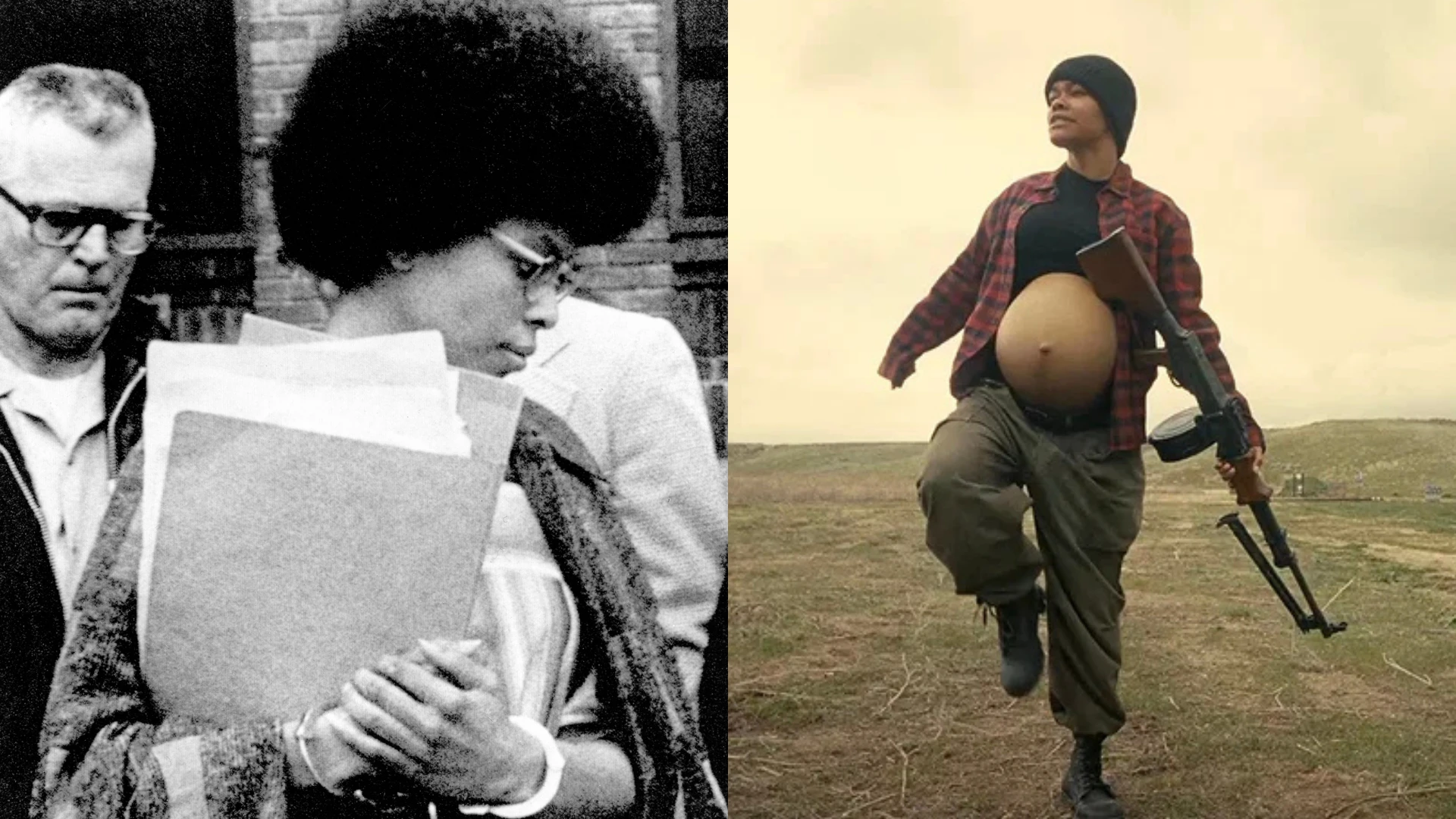
Some of these complaints are better considered than others, and there are many more to be made, but that is not what ultimately concerns me.
OBAA has been hailed as an “unabashedly leftist film” and as “everything movies made in the United States should be right now” while the filmmaker signals towards notions of pure storytelling as if politics were somehow secondary to people’s stories, as if political concerns are inherently less universal, less human than virtues like honour and love.
Walter Benjamin viewed film as a technological art form most aligned with the deeply human field of politics; he believed film had the potential to break us out of our prison worlds. Our cynical, hypermodern sensibilities could dismiss Benjamin’s fantasy for naivety, but we would be wrong. Benjamin was one of our most cogent critics of art and politics, and his analysis was grounded in materialism. Film’s capacity for revolutionary politics lies in its technological reproducibility, in its dissemination, and in its correspondence to the fundamental changes to our modes of apperception in modern times.
At the same time, he was as deeply mistrustful of Hollywood as his critical compatriot Theodor Adorno. Film’s commodity character risked the expropriation of all social function from art leaving behind only aestheticization: when politics appear as image, as spectacle, as style bereft of meaning.
Filmmakers who fancy themselves as diagnosticians of our contemporary social and political malaise must contend with astute political actors/commentators who are better placed to give testimony and analysis on the state of politics through their Instagram Reels, Substack essays, and YouTube videos.
Intimately familiar with fascism and its use of film and radio, Benjamin was nothing if not ambivalent on the potential of these technologies. Film was a tool that could be used to activate class consciousness and collective will or it could be employed for the purposes of fascist and capitalist domination. For Benjamin, the difference was that film had to come to the service of politics, not the other way around.
Almost a hundred years later, film is no longer a technological revolution and it’s an artform experiencing an array of existential threats. Our modes of apperception have been further altered by social media, smartphones, and content. On the matter of politics, filmmakers must compete with anyone with a YouTube Channel or Instagram account. Filmmakers who fancy themselves as diagnosticians of our contemporary social and political malaise must contend with astute political actors/commentators who are better placed to give testimony and analysis on the state of politics through their Instagram Reels, Substack essays, and YouTube videos.
At a certain point in OBAA, the protagonist, Leonardo Dicaprio’s Bob Ferguson, watches The Battle of Algiers (1966) from his couch while hitting a joint — much like one would consume reruns of their favourite sitcom. The Italian/Algerian film is about the Algerian Revolution, when Algerians organized and fought to oust their French colonisers.
Whether intentional or not, this perfunctory inclusion of The Battle of Algiers in the world of Anderson’s film is an indictment of not just failed revolutionary Bob, but us, the viewers, as passive spectators of the aestheticization of revolution. Writing in 1935, Benjamin argued that our self-alienation had reached such a critical point that we could take in our “own annihilation as a supreme aesthetic pleasure.”
We continue to watch American cinema borrow from politics without paying much back. As Hollywood is an industry at the heart of the empire, this must be a concern for revolution everywhere, if only to beware and safeguard itself from co-option. For an earnest exploration of what revolutionary aesthetics can look like, America would do better to look elsewhere.

Ibrahim Tanweer is a writer and cultural industries educator whose work has appeared in The Aleph Review, Lakeer Magazine, and Border Movement. He has worked as an independent music critic and edited The Lost Aux, a Pakistani music content publication. He also lectures at the Mariam Dawood School of Visual Arts & Design at the Beaconhouse National University. Originally from Multan, Ibrahim is currently based in Lahore where he resides with his partner and cat.