The universal consensus amongst the bookish in the city is that Readings is the definitive bookstore for Lahoris who actually read (necessary caveat: in English). Ferozsons and Vanguard books are irreparably musty and dusty, Books n Beans is on its 4th relaunch (full disclosure: I managed one of them circa 2014), Liberty Books is more of a shiny gift shop than a bookstore, and The Last Word is tiny and niche. Readings, on the other hand, has always been generously stocked, au courant with its new arrivals, big enough to wander around in but small enough to be cozy, in possession of some semblance of organization but you can still dig around and find unexpected gems (and receive the satisfying thrill of discovery central to any great bookstore experience). That seems to be changing though, and depressingly quickly too.
In 2006, the unassumingly named Readings, owned by the Elan Vital group, popped up in a little box with a corrugated metal roof on Main Boulevard. In the beginning, the stock all seemed to be furtive, mysteriously waylaid shipments of books meant as educational aid that had failed to arrive at their intended destination(s), and landed instead at our friendly neighborhood bookstore. They were always stamped with international charity names, which we conveniently ignored. Because we suddenly had access to contemporary fiction in English! And it was cheap as chips! No more poor quality pirated books for us. We could finally read what the rest of the world was reading, and at the same time too.
Slowly, the bookstore transitioned to new stock: affordably priced books published by the Indian imprints of international publishing houses. That is, till The Great Import Ban of 2019 barred the entry of all books from India. Pakistani authors, lacking a robust publishing ecosystem in Pakistan, routinely published in India, and struggled that year to get their books to their own country in the fallout from that (including Fatima Bhutto with New Kings of the World and Sabyn Javeri’s Hijabistan; I remember struggling to source copies when we hosted the book launch for the latter at the British Council Library in Lahore.) Books now could only be imported from the US and the UK, and with a declining rupee, that meant book prices skyrocketed almost overnight.
Readings began offering generous bank discounts though, and with brick and mortar bookstore branches mushrooming across the city (a gargantuan DHA branch, and another in Bahria Town), it seemed all was going well.
While I value legibility and accessibility, I also find it unacceptable that room for difficulty, density, complexity is shrinking. Surely there is space on the shelves for both.
In every Karachi vs Lahore debate, we always had to concede that Karachi was cooler by far, with its private beach parties, The Best Food whether it’s a chic little hole in the wall or a dhaba, the cool girl fashion restraint even at weddings while we struggled to walk in our most over-the-top, chalant outfits. But you know what we had that they didn’t? A real bookstore. The best they could do was Liberty Books, with its bad corporate vibes and the perennially unhappy sales staff who insist on trailing behind you from shelf to shelf. Most generously though, our bookstore delivered throughout the country, albeit via a clunky dinky website.
Lahore has historically been the literary capital of Pakistan, with a rich and storied tradition of literary greats choosing the city as their home — from the national poet Iqbal to the subversive Faiz, the state’s favourite Hafeez Jalandhari to the thorn in its side Habib Jalib, the reluctant resident Manto, the accidental resident Bapsi Sidhwa, the modernist Intizar Husain, and the public intellectual Ashfaq Ahmad. Lahore is where the country’s best literary minds converged at Pak Tea House, where the canopied Mall Road was lined with historical bookstores, and roadside vendors sold books door-to-door by the kg, as ubiquitous as Walls ice cream bicycles. So it made sense for the city to be home to Readings; its presence showed that literature wasn’t just a past love for the city, but its present and future too.
But then this beloved institution began to change – like all things terrible, first slowly, then all at once. Overnight, the OG Gulberg branch was gutted, and half the book stock was replaced with stationery and art supplies. Gulberg has plenty of those already of course (hello Variety Books & Anees Book Corner) and surely, nobody was heading to Readings for chart paper.
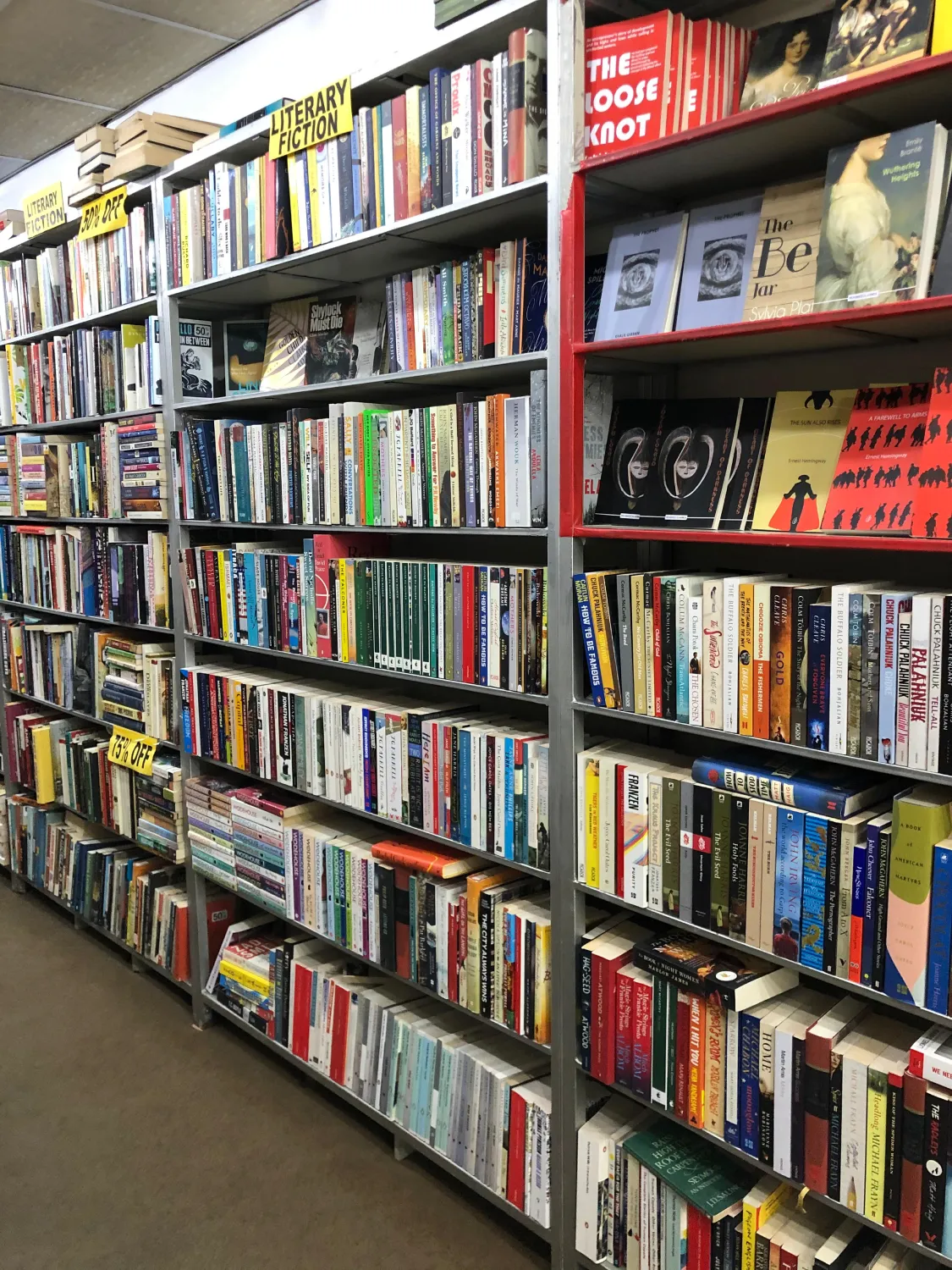
Then came the recent No Loitering rule, complete with stern signs, staff on enforcement duty, and the stripping away of their aisles. A fundamental part of what made Readings so charming was the freedom to linger endlessly between the shelves. It was a little air-conditioned oasis for mothers with small children, retired uncles, and young lovers pretending to be “just friends” in service of respectability. The little rows were always lined with cushions and stools to facilitate the reader. One of my core, gilded memories is chancing upon my now-husband a decade and a half ago on one such stool in the Philosophy section, engrossed in his book. You could even take books from the shelves to peruse to the deceptively grandly named Readings cafe, which was really just 3.5 rickety chairs and instant coffee in a trench coat.
It has been the rarest of places in a city with increasingly hostile architecture, where every possible third space has a cost barrier to entry; here was a place where you didn’t need to buy anything to feel included, and the only price of admission was a love for the written word.
As a DHA-adjacent Lahori, I was grateful that it was the Gulberg branch undergoing these hideous changes. But that relief proved to be short-lived. First, the ground floor in the DHA branch, which used to contain curated highlights and new arrivals from all their main categories, became overrun by journals, self-help books, expensive hardbound editions of classics (i.e. giftables). Shelves housing Islamic content began sitting awkwardly with shelves lined with romantasy smut popularised by BookTok. No matter; we could still climb up the stairs to find the good stuff.
They dimmed the lights in the Fasana cafe which was housed on the fourth floor, turning it from a spot for a quick snack while browsing the store or where people brought their laptops to work, to a mediocre restaurant cosplaying at fine dining. We rolled our eyes and moved on. But then, they brought the cafe from the fourth floor to the mezzanine floor, which had previously been dedicated to children’s books. Instead, children’s books, and all fiction for adults was squeezed on one floor: at the time of writing this, literary fiction is scrunched into two measly shelves. The signs on the shelves get increasingly cringier: the most recent one that left me amazed was a shelf containing popular children’s fiction series now titled Popular Brands. Which, I suppose, says something about what their intended target audience is.
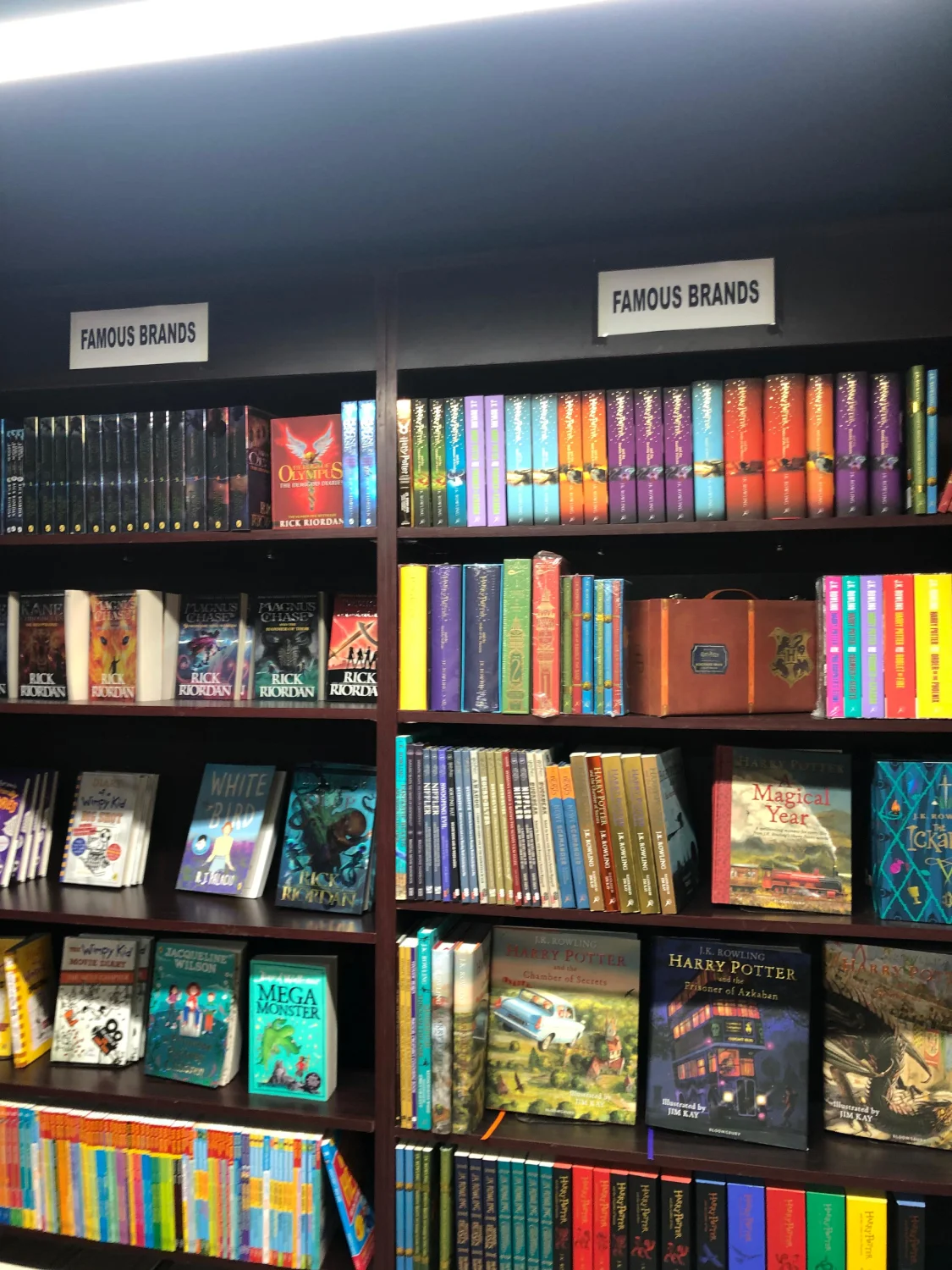
This isn’t a criticism of genre fiction; I enjoy my romance and YA and horror, easy reading as a palate cleanser between more complex morsels. But while I value legibility and accessibility, I also find it unacceptable that room for difficulty, density, complexity is shrinking. Surely there is space on the shelves for both. Barnes & Noble, the largest bookstore chain in the US, recently announced they would be open to stocking “books written by AI”. The push towards anti-intellectualism is clearly global, and my favorite bookstore seems to be caught in the tide.
Every time I visit the store now, it’s increasingly clear that they won’t be populating their shelves with prize-winners and critically acclaimed books, but with giftables and the junk food of literature (here’s looking at you, the Sarah J. Maas’s, Frieda McFadden’s, and Colleen Hoover’s of the world.) Cory Doctorow’s concept of enshittification — the decay of online platforms in turn affecting the physical world — can be experienced in real time at any Readings branch now. The slop pushed by BookTok now dictates how the stores are laid out and what gets to have a place on the shelves. The digital is merging with the physical, and it is bleak.
For years, I have been in the habit of piling up a wishlist while leisurely strolling around the store, and upon reaching the counter, picking one or two from the pile to buy on any given day. Increasingly now though, I find myself buying as many as I can, because who knows if they’ll ever be restocking the good stuff?
As a skeptical big city resident in Pakistan, I know better than to develop attachments to public spaces, but this once-little bookstore has always had my heart. It has been the rarest of places in a city with increasingly hostile architecture, where every possible third space has a cost barrier to entry; here was a place where you didn’t need to buy anything to feel included, and the only price of admission was a love for the written word. In a city so accustomed to uniformity, so vigilant about keeping up appearances, here was a space where no one cared how you showed up, or with whom for that matter. Over the years, it has as much been a great haunt for people-watching as it has been for book-finding, always featuring the most unusual cast of characters and the funniest conversations (Overheard at Readings would make for a great Tumblr).
The decline of Readings is unfortunately not singular, but seems to be in line with other once-vibrant spaces for readers petering out. Most stores selling used books - Old Book Shops in local parlance - have either shut shop due to the accelerating cost of overheads or succumbed to becoming a mere repository for academic materials such as O levels past papers (now that’s an evergreen market). Similarly, the Anarkali book bazaar seems to be falling victim to the Punjab government’s overzealous anti-encroachment drives and their aggressive attempts at gentrifying the older parts of the city. The small but always brilliantly curated The Last Word has been struggling under debt, and looking at its half vacant shelves feels like experiencing the last gasp of a beautiful, dying creature.
As a kid, I would often borrow books from friends who got them as presents from relatives in foreign lands (our famously stingy expat relatives only brought almost expired chocolate from the discount rack, if we were lucky). What I couldn’t provide in reciprocity (I had no gleaming new books to provide in exchange), I learned to make up for in behaviour: I would finish books in record time, and kept them pristine enough to provide the illusion of being untouched. For me, as well as any other Lahori with a hunger for the world beyond our little town masquerading as a city, the arrival of Readings — with its rows upon rows of fresh stock — was life-altering. And its end as we know it will be too.
Hira Azmat is a writer, editor, and a Pushcart Prize nominated poet. She has been working in the cultural industries in Pakistan for the last decade and a half, as a curator of cultural spaces, and an international arts manager. She is the Features Editor at Dunya Digital, and Associate Editor at SAAG, and can be reached at [email protected].