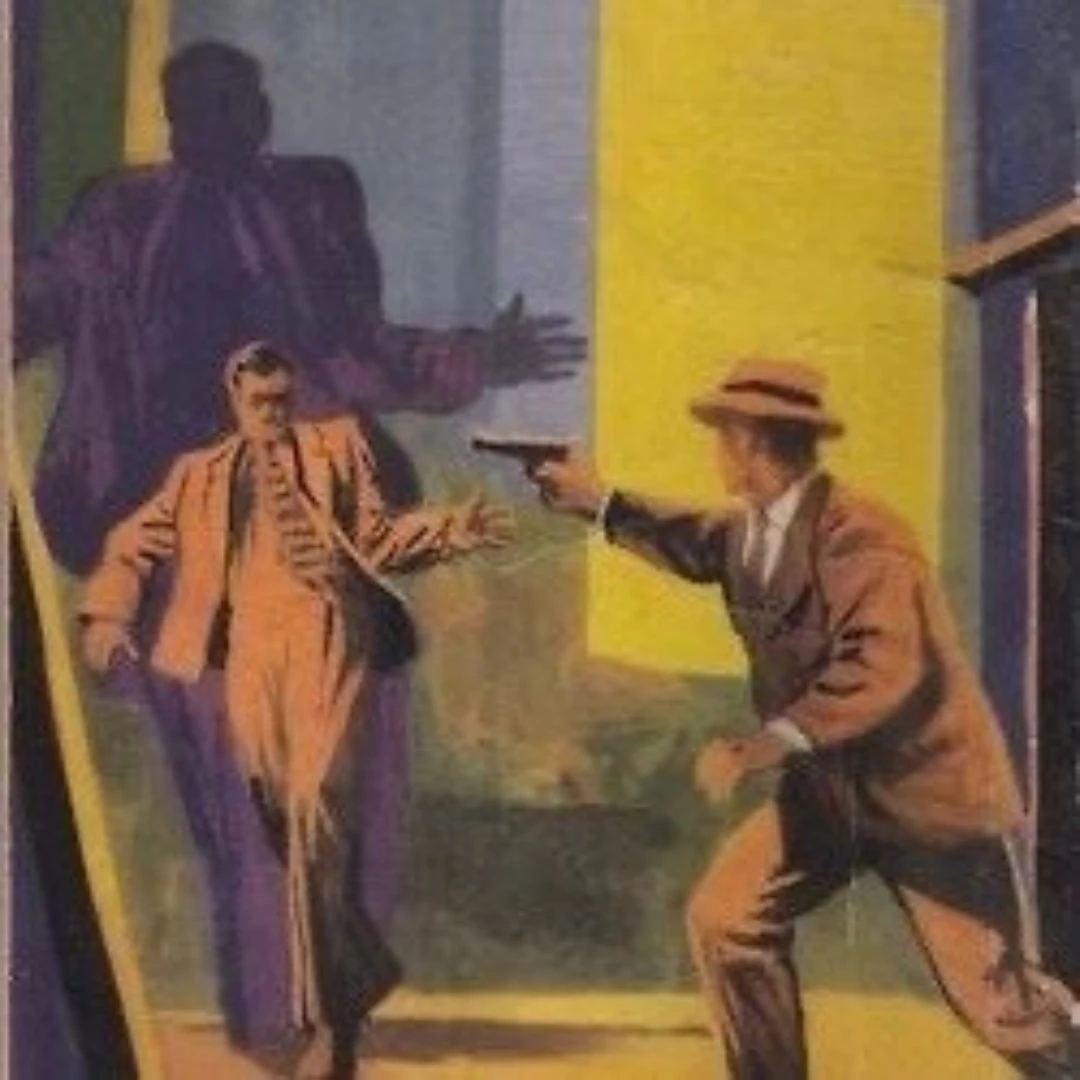
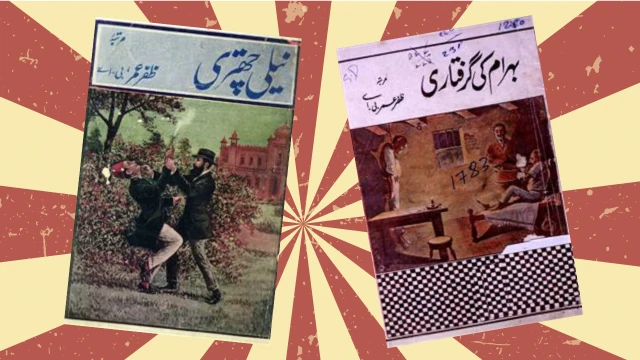
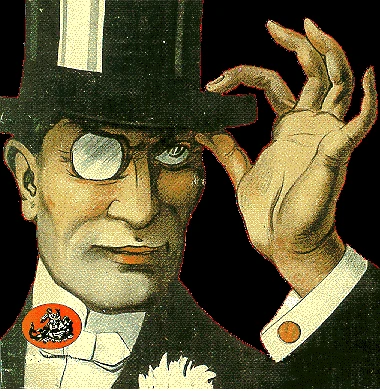
In 1916, in a slim novel published out of the north Indian city of Badaun—the birthplace of people as varied as the Sufi saint Nizamuddin Auliya and the Urdu progressive writer Ismat Chughtai—readers of Urdu fiction were introduced to Bahram, a noble thief with a heart of gold, a “sharīf badmāsh” who took Urdu popular fiction by storm, and who left a lasting impression on Urdu jāsusī fiction for the next fifty years. The novel, titled Nīlī Chatrī yā Shahān-e-Dehli kā Poshidā Khazānā (The Blue Pavilion, or the Hidden Treasure of the Kings of Delhi, 1916), written by one Zafar Omar (a graduate from Aligarh working as a police officer), describes Bahram this way: “Bahram, whose strange and marvelous exploits have since ages left the public in a state of astonishment! Bahram who? Not a mere thief or pickpocket, but the king of all thieves! Just ask the wealthy elites of Delhi, Calcutta, and Bombay—so many of them have been forced to pay tribute to Bahram. And his thefts do not consist of just of a couple of thousands! No, they number in the hundreds of thousands or millions. The police have been on the hunt for this cunning ayyār but Bahram has always eluded them,” (“Bahram jis ke ajib-o-gharib kārnāmoñ ne muddatoñ khalqat ko ālam-e-hairat main dāl rakhā tha. Kon Bahram? Ma’amūlī chor uchakkā nahī, balke choroñ kā bādshah! Delhi, Calcutta, aur Bombay ke dolat-mandoñ se pucho! Kitne in main se Bahram ke bāj-guzār reh chuke hain. Chorī bhī kesī hazār do-hazār kī nahin balke lākhoñ karoroñ ki. Police barsoñ is shātir ayyār kī fikr main rahī magar Bahram kabhī hatte na charhā…”).
This Bahram, whose lineage the novel explicitly connects to the trickster ayyārs of the centuries-old dāstān tradition, and whose popularity kicked off a wave of novels featuring the gentleman-burglar and the master of disguise character (written by Omar and later many other authors) well into the 1930s, was in fact an adaptation of the gentleman-burglar Arséne Lupin, created by the French writer Maurice Leblanc (1864-1941). Leblanc had created the character just a decade earlier, but his fame had quickly reached far beyond France; Omar had adapted his novel L’Aiguille Creuse (1909) via its English translation The Hollow Needle, which he probably got access to through the railway station book stalls that had started cropping up all over colonial India by the latter half of the 19th century, and which carried much of the same English-language fiction that a common reader in England would have access to at the time. While Leblanc’s novel is set in Paris and revolves around the hunt for the secret, centuries-old treasure of the kings of France, Omar transposes the narrative onto Delhi, and centers it around the hidden treasure of the royalty of Delhi. Delhi had recently been made “New Delhi,” the capital of British India (a formal shift from Calcutta, in 1911), and its place in the bygone empires of India, the Mughal Empire or the Delhi Sultanate, along with its associated riches, treasures, and majesty, was newly refreshed in readers’ minds, making Bahram’s adventures excitingly relevant. Reading Leblanc’s novel and Omar’s side by side, one is struck by how masterfully Omar has adapted Leblanc’s plot and characters onto an urban colonial Indian milieu. The prose is nimble and modern, the dialogue pacey and quick, and the series of plot twists and unfolding of the mystery make the adventures of Bahram hard to put down.
Lupin’s transformation into Bahram Dāku, master thief conning the elite of 20th century Delhi, was embraced by a reading public that had been primed for him. The constellation of popular genres in early 20th century Urdu and Hindi print cultures was fed by translations of British, European, and American authors of science fiction, mystery, horror, and detective fiction. Since the middle of the 19th century, British novels of ‘serious standards’ had been introduced in colonial India “as a means of propagating and legitimating Englishness in the colony,” as Priya Joshi (2002) has shown. But the English-language fiction which became most popular and which entered South Asian languages was not the realistic fiction of writers like Charles Dickens, Jane Austen, or George Eliot. Rather, what became widespread in colonial India was genre fiction: pulpy novels and short stories of mystery, thriller, horror, romance, science fiction, and melodrama. Translations of British writers, such as Wilkie Collins, H. Rider Haggard, and Arthur Conan Doyle, the Scottish R. L. Stevenson, European writers like Alexandar Dumas and Jules Verne, and the American horror writer Edgar Allen Poe appeared in Urdu periodicals and as cheaply printed books (for example, the first translation of the Sherlock Holmes stories in Urdu appeared as early as 1903—a translation of “The Red Headed League” as Ajīb Sāzish yā Surkh Bāl Vāloñ kī Kampanī). These translations were sometimes presented as translations, with the original author and title of the novel cited in the title page or preface, and sometimes presented as original works, and the quality of the translation, of course, also varied. But such translations, adaptations and transcreations made the Urdu (and Hindi) popular fiction market an excitingly rich and diverse space.
The ubiquity of mysteries, thrillers, and detective fiction by early 20th century colonial South Asia is also pointed to in Nīlī Chatrī itself, by Masud, a brilliant young student at Aligarh College (soon to become Aligarh Muslim University) who is assisting the police and who serves as Bahram’s foil. Masud says, “In school, we read the adventures of Sherlock Holmes and other similar astounding stories in abundance [Sherlock Holmes ke qisse aur issi tarhañ ke hairat-angez afsāne ba-kasrat parhte hain], and often we wear disguises and reenact those tales [bhes badal kar in qissoñ kī mashq karte hain]. Our teachers support and encourage us in this…Hamlet and the Merchant of Venice are out of fashion in the college now…” When the police chief asks Masud whether it is true that the students of Aligarh remain embroiled in politics day and night (“Aligarh ke larke raat din pālitiks main pare rehte hain…”), Masud retorts, “This is complete slander [bilkul bohtān hai]! Whatever time we have left after our studies, we spend in playing elaborate games of detection [humārā jo waqt bachta hai umda umda kheloñ aur surāgh-rasānī ke qissoñ main sarf karte hain].” By linking detective stories, and the art of detection by deductive reasoning to Aligarh (already associated with ideas of modernity, knowledge and scientific advancement by this time), the novel reinforces the idea of jāsūsī fiction as a genre for the young, modern Indian reader.
[T]he English-language fiction which became most popular and which entered South Asian languages was not the realistic fiction of writers like Charles Dickens, Jane Austen, or George Eliot. Rather, what became widespread in colonial India was genre fiction: pulpy novels and short stories of mystery, thriller, horror, romance, science fiction, and melodrama.
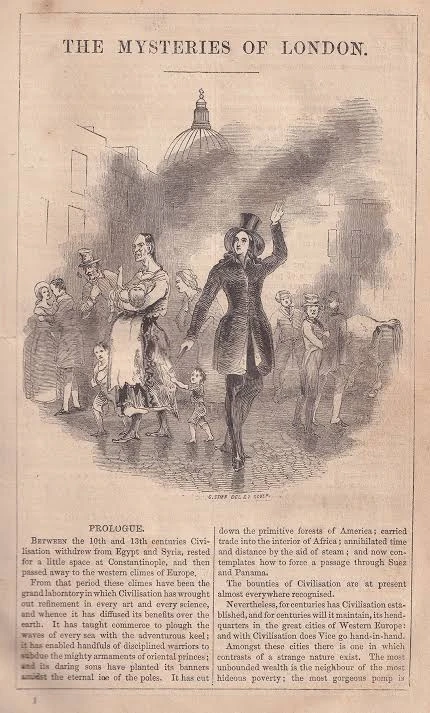
C. M. Naim (2023) has traced the beginnings of what eventually consolidates itself as the jāsūsī fiction genre to specific translations and adaptations of British crime fiction that came into the Urdu print market in the 1980s, particularly that of one particular Victorian pulp fiction writer, George W. M. Reynolds (1814-1879) who, Naim argues, was “the most widely read and admired author in Urdu” between 1895 and 1925. Reynolds, although little remembered in British literary history today, wrote melodramatic stories of crime, drama, and romance, exposing the vices and depravations of British society. Translations of these novels became hugely popular in north India and were translated into Urdu, Hindi, and Bengali from the 1880s onwards. In fact, Reynolds was the most widely translated and adapted British writer in all of South Asia—among his admirers were the Urdu-Hindi writers Premchand and Saadat Hasan Manto, and the Anglophone writer Mulk Raj Anand. Reynolds’s 1848 novel The Mysteries of the Court of London was the first of his books to come into Urdu, translated by Ghulam Qadir Fasih in 1893. The full title of the Urdu translation was Mistrīz āf dī Kort āf Landan ya’nī Darbār-e-Landan ke Asrār (Mysteries of the Court of London, i.e., The Secrets of the London Court), and the popularity of this novel introduced to the Urdu popular fiction sphere the new genre categories of mistrīz and asrār. Reynolds came to be known in Urdu as jadu-nigār and his novels found many translators, adapters, and imitators in Urdu in the first decades of the new century, with titles such as Mistrīz āf Lahore, Mistrīz āf Peshawar, and Mistrīz āf Kabul, which according to Naim, were the first examples of original crime fiction in Urdu.
[T]he jāsūs of the Urdu-Hindi jāsūsi fiction genre is not an exact replica of the detective figure of British and European mystery novels. While detectives like Sherlock Holmes, with their deductive reasoning and rationally explicable actions had the trappings of modern, scientific knowledge, the jāsūs figure, because of its “partially different genealogy” is more nebulous, combining almost-supernatural abilities of spy craft and ayyārī with skills of logic and deduction.
Indeed, the jāsūsī novel became the most successful of the popular genres that entered Urdu-Hindi commercial markets in the 20th century. English and French detective fiction played an important role in familiarizing readers with the conventions of the novel as a genre, which was new to the reading public. Their popularity inspired enterprising writers and editors of both Urdu and Hindi to set up monthlies and imprints devoted solely to crime stories and detective fiction through which they “eagerly translated, transcreated, and translocated texts, creating a panoply of detective figures, often strikingly modern while at the same time attuned to local social values,” as Francesca Orsini and Laura Brueck (2022) explain.
This is not to say that jāsūsī fiction in Urdu and Hindi were mere imitations of Western detective fiction. As I mentioned earlier, Bahram is called an ayyār in his very first mention in the novel, linking him to the classic trickster ayyār figures of the Persian and Urdu dāstān tradition—one can see Bahram being a descendant of Umro Ayyar of Dāstān-e-Amir Hamza. In the dāstān tradition, ayyārs were tricksters and masters of disguise, and functioned as sidekicks to the heroes, using wily methods to spy on the opposing side in order to foil their plans. These ayyārs harkened back to the jāsūsi spying and investigative operations established by the Mughal regime. As Francesca Orsini (2003) has shown, the jāsūs of the Urdu-Hindi jāsūsi fiction genre is not an exact replica of the detective figure of British and European mystery novels. While detectives like Sherlock Holmes, with their deductive reasoning and rationally explicable actions had the trappings of modern, scientific knowledge, the jāsūs figure, because of its “partially different genealogy” is more nebulous, combining almost-supernatural abilities of spy craft and ayyārī with skills of logic and deduction. The jāsūsī genre, therefore, was not just a translation of British or French detective fiction; rather, it was a rich and overlapping mixture of mystery, thriller, adventure, and even had elements of fantasy and science fiction thrown in. The genre was organized more by the emotions it elicited in the reader—suspense, was a big one, of course, but also hairat or wonder. The subtitles and descriptors of pulp novels in Urdu and Hindi used terms such as pur-asrār, (mysterious), sansanī-khez (sensational), hairat-angez (astonishing), haibat-nāk (horrifying), tilismi (enchanting), and even neend urādene walā (a novel so gripping you will stay up all night to find out what happens next).
Bahram lived on in two other novels by Omar, one Bahram Kī Giriftārī (1919), which was a transcreation of another one of Leblanc's Lupin novels 813, and the other titled Laal Kathore (1929), which was a loose adaptation of British crime fiction writer Edgar Wallace’s The Three Just Men, but which in Omar’s hands, continues to center the adventures of Bahram and Masud. The popularity of Bahram as a sharīf badmash led to other writers trying their hands at writing his adventures, and Bahram continued to reign supreme over Urdu pulp fiction. It was in 1952 that Bahram was overtaken by Inspector Faridi of Jāsūsī Dunya and Imran of Imran Series, created by Ibn-e-Safi. Where Bahram and early jāsūs figures in Urdu-Hindi represented the modern colonial Indian subject, Imran and Inspector Faridi embodied the excitement and potential of the newly formed nation-states of Pakistan and India, and thus took the mantle from Bahram of the tradition of jāsūsī fiction into the postcolonial, Cold War world order.

Nudrat Kamal is a PhD candidate of Comparative Literature at the University of Pennsylvania. Previously, she taught comparative literature and writing in Karachi. Her research and teaching focuses on South Asian literatures in Urdu, Hindi and English, particularly in the intersections of literary and print history, science fiction studies, gender and sexuality studies, and environmental humanities. Her writings on literature, film and television, and culture have been published in Dawn, The Express Tribune, and Newsline.