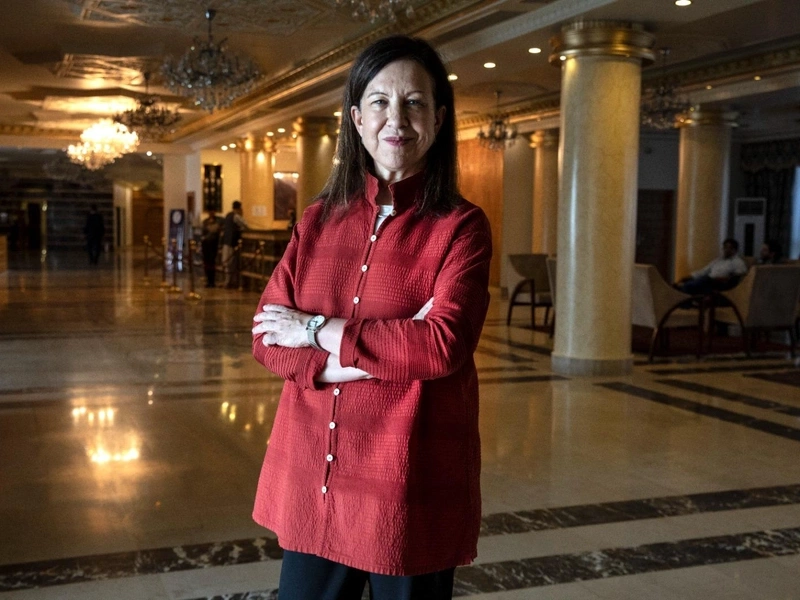
In a sea of empty chairs and tables, the few guests that had managed to arrive at the wedding at the Inter-Continental Hotel Kabul were glued to their phones. They were frantically trying to reach their loved ones; the wedding ceremony had halted under the spectre of an imminent Taliban attack. Sadozai, the hotel’s “banquet manager turned consoler-in-chief,” attempted to comfort the bride. The hastily served feast was left untouched, guests hurriedly departed, and the bride never wore her final outfit, “her pure-white wedding dress gleaming with dreams.” A wedding suspended, life interrupted, like the lives of many Afghans Lyse Doucet traces in her recent book that won this year’s Women’s Prize for Non-Fiction.
We read the story, too, of Abida Nazari, whose memories refuse to leave her. Her doctor has strictly prohibited her from watching the news, the leading cause of her sickness. Married at fourteen to a tailor, who occasionally beat her, she nevertheless grew to care for and love him. During the first Taliban rule, the couple briefly escaped to Pakistan, only to return because her family could not “live in a land that wasn't their own.” Back in Kabul, they became “refugees in their own city.” Soon after, her husband left to search for one of their children and was killed when a rocket struck him. Everyone blamed Abida, who had asked him to go out. Years later, she remains haunted by memories as she serves as sous chef at the Intercontinental Kabul, and allows her mind to wander into “a past that would never be past.” In other words, the present-past (term borrowed from historian and critic Saidiya Hartman) haunts her, as well as other people mentioned in the book.
And yet, even half-broken, she urges her children towards education, repeating to both her daughters and sons, “Qatra, qatra, darya mesha” (drop by drop, a river is made). This relentless spirit, that refuses to surrender in the face of what all life throws at them, is a remarkable theme highlighted throughout the book.
Doucet’s Afghanistan, it seems, filtered through a particular institution, at least in this book, is one deeply connected to diplomats, journalists, foreign visitors, and urban elites. This does not diminish the value of the stories Doucet uncovers. Rather, it raises a question central, perhaps, to any people’s history: who are the people included and not included in this people’s history?
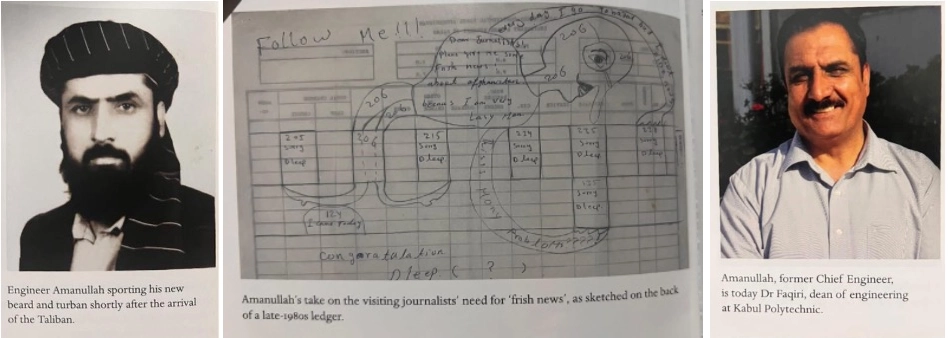
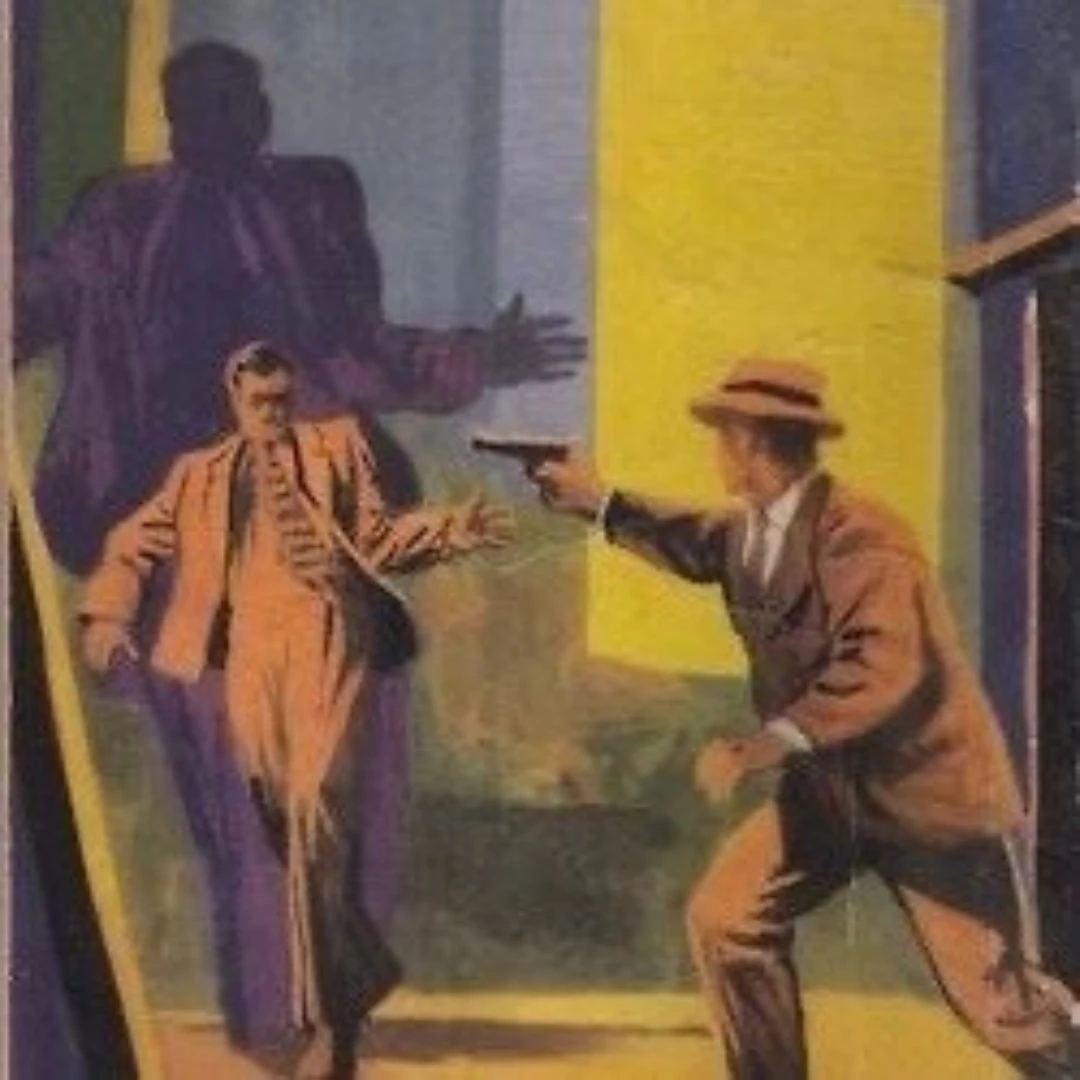
Then, there is Amanullah, a teenage guard who once questioned why guards at the hotel could not eat the same food as hotel staff and guests. Amanullah’s creativity knows no bounds. He jokes cleverly with the journalists in the building, sharing with some his version of their obsession with “frish news” (see image). Soon, he climbs his way to room-service cashier, and eventually follows his dream of becoming an engineer, becoming an instructor at Kabul Polytechnic University, and helping to launch Bakhtar University, where he later serves as its dean and academic adviser.
In The Finest Hotel in Kabul, instead of tracing the history of Afghanistan through its rulers, Doucet centers its people, and shares the dreams, desires, hopes, fears and lives of hotel staff, guests, families, engineers, cooks, guards, and managers. The task before her is enormous: how does one write the history of a region and people that has moved from monarchy, to republic, to socialism, to Taliban rule, to republic, and back again? And on top of that fraught task is another: to challenge not one, but multiple racist stereotypes and dangerous discourses that have emerged in recent decades about Afghans and their land.
She achieves this through writing accounts of Afghan people closest to her, from the lens of the Intercontintental Hotel Kabul, the hotel she stayed in during her reporting visits, providing a thread of continuity, and a fresh insight into its history.
People’s history as the modern concept we know it today rose with the popularity of social history during and after the World Wars, and was influenced by the intellectual currents of the time, such as the Annales School. It sought to shift attention away from kings, states, and military campaigns towards the lives of ordinary people. Historians like the noteable E. P. Thompson demonstrated that workers, peasants, women, and other groups relegated to the margins of historical narratives were not merely passive recipients of change but active participants in making history. This “people’s” perspective attempts to rewrite narratives, lives, and experiences, often producing new understandings of familiar historical events. For Afghanistan, a country so frequently only mentioned in relation to war, occupation, and geopolitical crisis, this is particularly urgent and welcome.
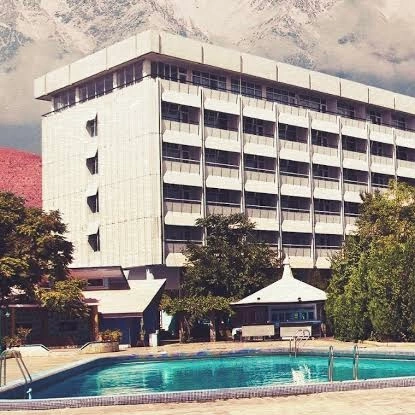
Doucet accomplishes this ambitious task through the Inter-Continental Kabul itself; the hotel that emerges as a living organism of history, absorbing the shocks, contradictions, and transformations of the country and its people. Perched above the city with windows opening onto the majestic Hindu Kush, it is an international hotel that remains “also very Afghan.” The whole place is “an iridescent bubble floating above the city’s cares. And the world was here.” Lebanese and Swiss managers, a German chef, a Palestinian engineer, a Filipino accountant, a British personal assistant, alongside staff drawn from Afghanistan’s many ethnic and tribal communities, passed through its halls. Far from an isolated or insular Afghanistan, the hotel reveals a Kabul deeply connected to the wider world. In fact, Doucet writes: “Kabul was one of the world’s only capitals where Cold War enemies socialised.”
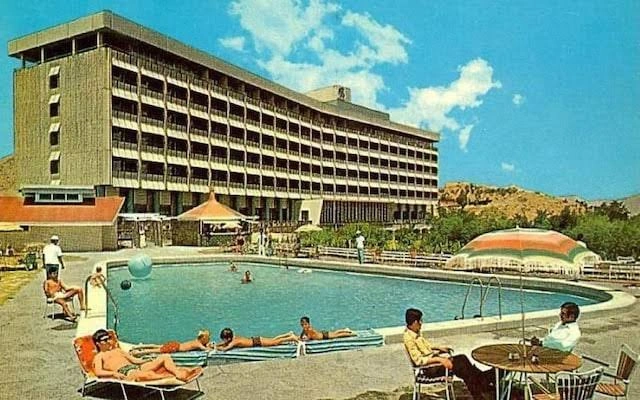
Opened in 1969 as part of an international chain, designed by Taylor Woodrow International Limited of London and financed through a loan of £2.5 million, the hotel quickly became a symbol of a particular moment in Afghan history. Pierre Balmain staged a memorable fashion show there. Diplomats, journalists, royalty, politicians, and many more crossed paths in its corridors. In many ways, this hotel stood the test of time. During Thanksgiving in 1979, amid the Soviet invasion, revolution in Iran, and the siege of the Kaaba, “The region trembled. The world shook. But the hotel’s American Thanksgiving went ahead... ‘a dinner buffet in the traditional western atmosphere’ whatever the streets outside had to say.”
The hotel’s life is inseparable from the country’s own. Its restaurants changed names. Its sauna and swimming pool closed. Staff were dismissed. Attacks scarred its walls and memories alike. Following the 2018 assault, “the golden hotel turned black.” In 2021, journalists found themselves living in what had become a “luxury prison.” The hotel that once promised glamour and international socialization also at another time housed armed men, checkpoints, fear, and uncertainty. Through all of these seasons, the Inter-Continental survives, adapts, mourns, and endures, much like a living, breathing creature.
However, one occasionally wonders as a reader whether the hotel’s walls become too impermeable a frame. While the socio-political climate outside shapes the lives of those within it, the messiness of the world beyond sometimes remains elusive. Doucet’s Afghanistan, it seems, filtered through a particular institution, at least in this book, is one deeply connected to diplomats, journalists, foreign visitors, and urban elites. This does not diminish the value of the stories Doucet uncovers. Rather, it raises a question central, perhaps, to any people’s history: who are the people included and not included in this people’s history?
Doucet is not allowed outside the walls of the hotel, the history ‘outside,’ or rather inside, the full Afghan world. Even then, it is a valuable glimpse that must go beyond just that, and crack open into more complex, localized, messy histories, and Afghanistan’s present-pasts.
Part of this limitation certainly stems from the position of the narrator herself. Doucet’s decades-long engagement with Afghanistan lends the book a thick description, yet she remains, ultimately, an outsider and a journalist, despite calling the country her “second home.” While her critical and brave journalistic eye (she refused to leave Afghanistan even after receiving rape threats, and continued to befriend locals at the hotel) captures angles others might miss, it also produces a tendency to fill gaps that did not necessarily need filling, or require a more creative, poetic attument to the past than what this chronology-focused, clean, reporting-infused language can give us.
Within the text, the reader is often told what people must have felt, feared, or desired when the evidence for such claims remains uncertain, or vague, at best. Sadeq, one of the staff members, tells the narrator that hotel guests were frightened during an anticipated threat. “But what else could he do?” Doucet asks. “His job was to run the front desk, not the country.” Did he think this himself? Did he not feel invested in the safety of his country, just the hotel where he was employed? Moments like these suggest an impulse to individuate, to detach people from the larger structures and geographies they inhabit. At other times, people and their details are introduced abruptly, and awkwardly. Malalai, another staff member, we are told, spoke Pashto, Dari, and “the Urdu of Pakistan” – perhaps, it is the instinct of a seasoned journalist in her that fixes a language to a country in an attempt for specificity, a clear mistake when read by experts who understand the intertwined histories of our lands that go beyond the boundaries of nation-states.
Throughout the narrative, certain descriptions appear to position a particular kind of progress as the natural and aspirational target towards which Afghan society is moving. One passage describes Kabul as “a capital that has been yanked back into medieval times” before “pushing into the future at breakneck speed.” Elsewhere, following renovations by a Dubai-based design team, the Inter-Continental became “a hotel that had been pulled into modernity.” Such formulations, owing to the language they employ, carry an assumption. They imply a particular direction of history, a movement from tradition towards modernity, in other words, from ‘backwardness’ towards ‘progress.’
While Doucet succeeds in showing that Afghans are not passive objects of history but active participants in it, the terms upon which they imagine their futures sometimes falls short. Living with a people is not the same as fully inhabiting the worlds through which they understand themselves.
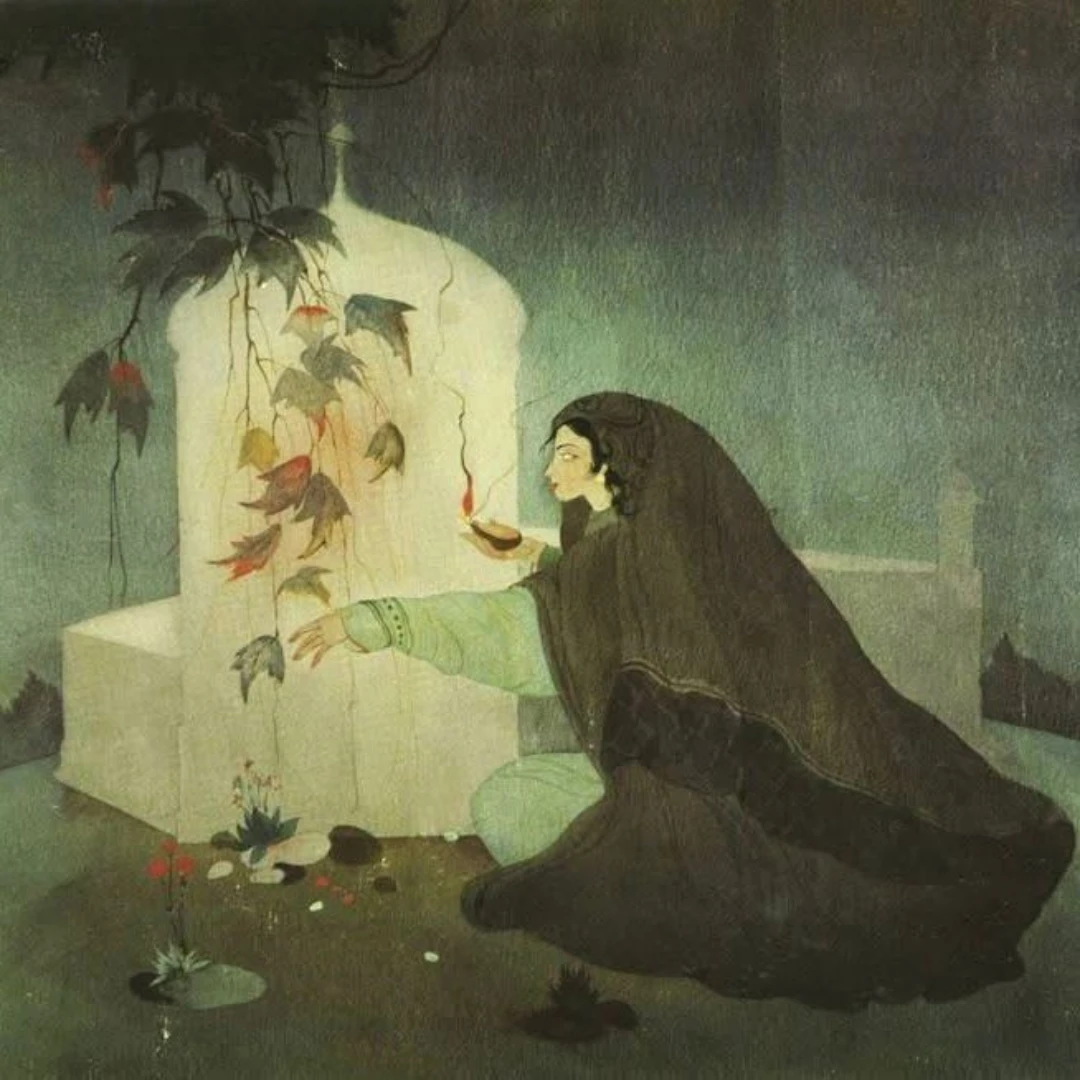
In another place, a painting depicting chapandaz engaged in Buzkashi is described as “a rough-and-tumble Afghan version of polo,” translating Afghan cultural forms into references that are likely to be legible to Western audiences. In one of the book’s darker moments, the hotel is likened to “a musty old museum pining for visitors.” Such descriptions seem minor in themselves, yet they reveal an underlying tendency to understand Afghanistan through categories imposed upon it. The question is not whether Afghans desire education, prosperity, stability, or change; many of the people in this book clearly do. The question is whether these aspirations must necessarily be understood through the mode of modernity, notions of which have certainly seen Afghan lives as its Other, especially in current times. Modernity, after all, has always possessed a Janus-faced character, promising emancipation while producing exclusions, violence, and other contradictions of its own.
While Doucet succeeds in showing that Afghans are not passive objects of history but active participants in it, the terms upon which they imagine their futures sometimes falls short. Living with a people is not the same as fully inhabiting the worlds through which they understand themselves. It is an easy mistake to make, to assume universality for all the terms laid out in the ethos of modernity, especially its hyper-focus on individualism, and set trajectories and destinations in life.
Overall, the significance of this text lies in its demonstration that the hotel may have been built by foreigners, financed through foreign loans, managed at various points by foreign staff, and frequented by diplomats, journalists, and international visitors, yet it is Afghan workers, families, cooks, engineers, guards, managers, and guests who give it life.
When Abida says that if she could read and write, she would write a book about her life, it serves as an important reminder that to read and write a people’s history is to recognise that the fullest account of those lives may ultimately lie with the people themselves. While what Doucet offers are valuable glimpses into Afghan lives through challenging times, we must hope for and build a world capacious enough for Afghans to write their histories on their own terms, challenge assumptions, and chart their own paths their own way.
Musfira Khurshid is a history researcher and journalist, who has written for The Express Tribune, Lakeer, and Narivaad, focusing on interlacing connections often lost in the dominant discourse. She is an incoming PhD student in History, working on everyday policing and legal history of colonial Punjab.