At times it is difficult to discern genuine news headlines from parody. It was recently reported that the Special Investment Facilitation Council (SIFC) ‘feels’ high taxes in Pakistan might be discouraging investment. This observation, unfortunately, has the dubious distinction of being both a gross understatement and a complete misdiagnosis of the underlying problem.
With a peak tax rate of 49%, Pakistan has among the highest corporate tax rates in the world, and, at 0.5% of GDP, has one of the lowest levels of inward foreign direct investment relative to its economic scale. Corporate taxes are not only discouraging new investment, they are also driving existing investors away. In the two years since the SIFC was launched to help expedite foreign investment, nine multi-national corporations have wound up or divested their Pakistan operations.
Although the exodus of international firms had started well before the SIFC was established, it nevertheless doesn't inspire much confidence in the effectiveness of an investment promotion council when existing investors close up shop on its watch. What appetite are new entrants expected to have when 60-year plus veterans of the geography are calling it quits?
Regrettably, the imaginations of Pakistan's top brass appear to be unable to conceive of anything beyond foreign direct investment as the only hope for the country and tax incentives as the only means to attract it. When plunder and impunity has been your own operating model for so long, it is hard to imagine any other playbook.
Taxes, though, are not the sole, or even the primary factor in attracting investment. Businesses invest in new geographies mainly for three reasons: to tap into a new customer market, to extract resources or to take advantage of economic efficiencies.
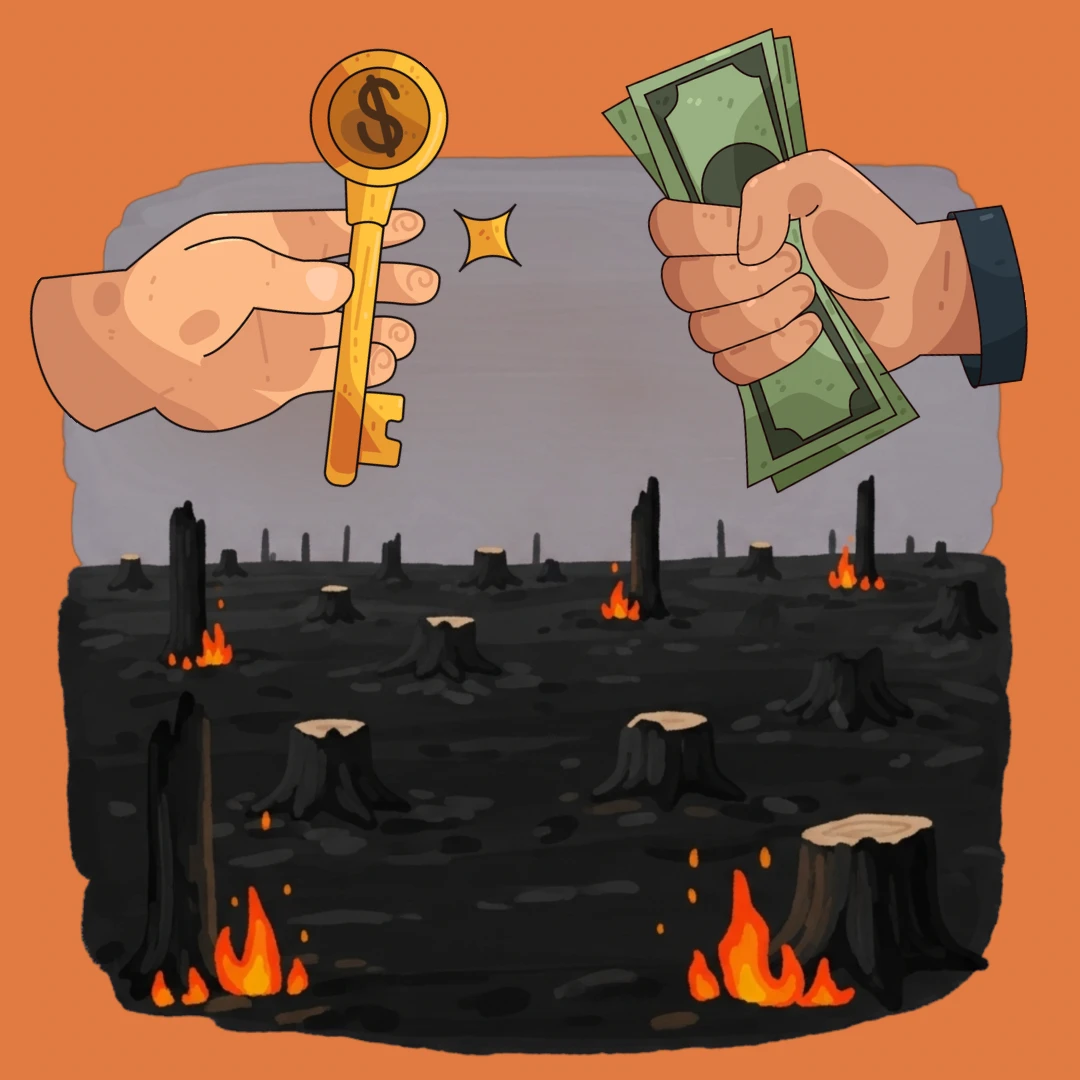
The message is clear: Pakistan's leadership is open to having extractive foreign businesses come in and further exploit the country for a few dollars more of foreign direct investment. Never mind that the countries in the Global South with the greatest mineral wealth have not seen their own populations benefit from it.
With a population exceeding 250 million, Pakistan, on the face of it, is a sizeable consumer market. But to be an attractive market, the consumers need to have some spending power, which regrettably, Pakistanis don’t have. Real personal disposable income per household grew at 3.2% per year on average between 2002 and 2016, barely above the population growth rate of 2.5%. The last ten years have been worse, with income stagnating in real terms, while costs have ballooned. This explains why companies like Yamaha — whose bikes starting at Rs. 430,000 are now unaffordable for the average motorcyclist — are winding down their domestic manufacturing.
Pakistan does have substantial untapped resources. Or so we are told: Every ten years or so, when the economic situation gets particularly untenable, the government trots out well-worn pipe dreams on the country's untapped abundant resources. Queue Reko Diq, Thar Coal and the as-yet undiscovered, massive oil and gas reservoirs off the coast of Karachi. More recently, Pakistan's leadership has started peddling the country's mineral deposits, showing up to meetings with international heads of state toting ore samples. Balochistan and Gilgit Baltistan potentially have large deposits of lithium and rare earth elements that are key raw materials for the tech industry, and Pakistan's government is keen to encash them.
This is a continuation of the geopolitical rent-seeking approach to revenue generation that Pakistan has employed for so long. The message is clear: Pakistan's leadership is open to having extractive foreign businesses come in and further exploit the country for a few dollars more of foreign direct investment. Never mind that the countries in the Global South with the greatest mineral wealth have not seen their own populations benefit from it.
Libya and Nigeria have the 9th and 10th largest oil reserves in the world — more than the United States, yet suffer poverty rates approaching 50% of the population. The Democratic Republic of Congo produces nearly 75% of the world's cobalt — used in nearly all rechargeable batteries — yet is also one of the world's poorest countries. But Pakistan should know the pitfalls of resource exploitation only too well: how much did Balochistan benefit from its Sui gas fields — one of the largest fields in the world at the time of its discovery — which the rest of the country managed to fully deplete in less than 70 years?
Even if Pakistan were to develop a framework that would protect the environment and allow its citizens to benefit in a fair and equitable manner from the extraction of the country's natural resources, the infrastructure needed to support industrial scale mining and commercialisation of these metals doesn't exist in Pakistan.
But, even if Pakistan were to develop a framework that would protect the environment and allow its citizens to benefit in a fair and equitable manner from the extraction of the country's natural resources, the infrastructure needed to support industrial scale mining and commercialisation of these metals doesn't exist in Pakistan, certainly not at the scale to cover the end-to-end operational requirements from mining and processing to export.
Lithium and rare earth element mining require massive earthmoving equipment and haul trucks for quarrying and moving hard rock and ore. Mining processes utilise large amounts of water — which needs an extensive network of pipelines, storage tanks, pumping systems and desalination plants. The crushing equipment and grinding mills utilised in ore processing are power intensive, requiring dedicated, stable power generation units on site. Finally, transportation infrastructure — roads, railways and ports — are needed, not just for moving raw materials, chemicals and finished products to and from the quarry sites, but also for mobilising the mega excavation equipment.
Infrastructure should come first. It is a critical enabler, not only for foreign investors and major projects, but also for domestic business ventures. In a powerful demonstration of what actually generates sustainable wealth for a country, some of the countries that developed the fastest, did so without having any substantial natural resources. Japan, South Korea, Singapore and Taiwan all relied on building efficient infrastructure, a business-friendly environment and a highly skilled workforce to catalyse their economic development.
It is these factors which create the economic efficiencies that attract businesses. Perhaps if it was still the 1970s, tax incentives might have been a sufficient incentive to attract FDI into Pakistan. But at present, with the UAE, Bahrain, Qatar and Saudi Arabia all offering low corporate taxes, as well as world class infrastructure, liberalised capital flows and stability, for Pakistan to think investors will flock to the country for its tax regime is more than a little delusional.
Tax holidays as an incentive for attracting foreign investment is myopic for other reasons as well. On the one hand, the government is desperate to increase revenue to increase fiscal space, mainly for debt servicing needs. Yet it is offering exemptions for new investment solely for a one-time inflow of foreign exchange. This may meet the government's immediate need for a fix, but this will flow out many times over in the years to come through profit repatriation, while contributing nothing to the exchequer.
There are no short cuts here. Pakistan's leadership needs to shed its antiquated, colonial-era mindset of viewing the country, its environment, its people and its minerals as mere resources to be extracted and auctioned off. This will only attract predatory, transactional parties, not partners interested in genuinely investing in the country and its people.
Pakistan's government should reduce tax rates, both for individuals and for businesses. At current levels, they are driving out businesses that operate by the book while forcing others to look for ways to bend the rules to survive. But this should be done not in some mistaken belief that it will open the floodgates to new investment, but as part of a larger, systematic effort to create a more conducive environment for businesses to operate.
There are no short cuts here. Pakistan's leadership needs to shed its antiquated, colonial-era mindset of viewing the country, its environment, its people and its minerals as mere resources to be extracted and auctioned off. This will only attract predatory, transactional parties, not partners interested in genuinely investing in the country and its people.
Ultimately, the SIFC needs to accept that there isn't any equitable foreign investment on its way to the country — not until Pakistan upskills its labour, improves its infrastructure and changes the administrative bureaucracy's mindset to one that enables business rather than impedes it. Maybe then it may even be worth paying such high taxes.

Haroon Sethi advises on public-sector reform and economic governance in Pakistan. He has built and led ventures in manufacturing, automation and software technology.