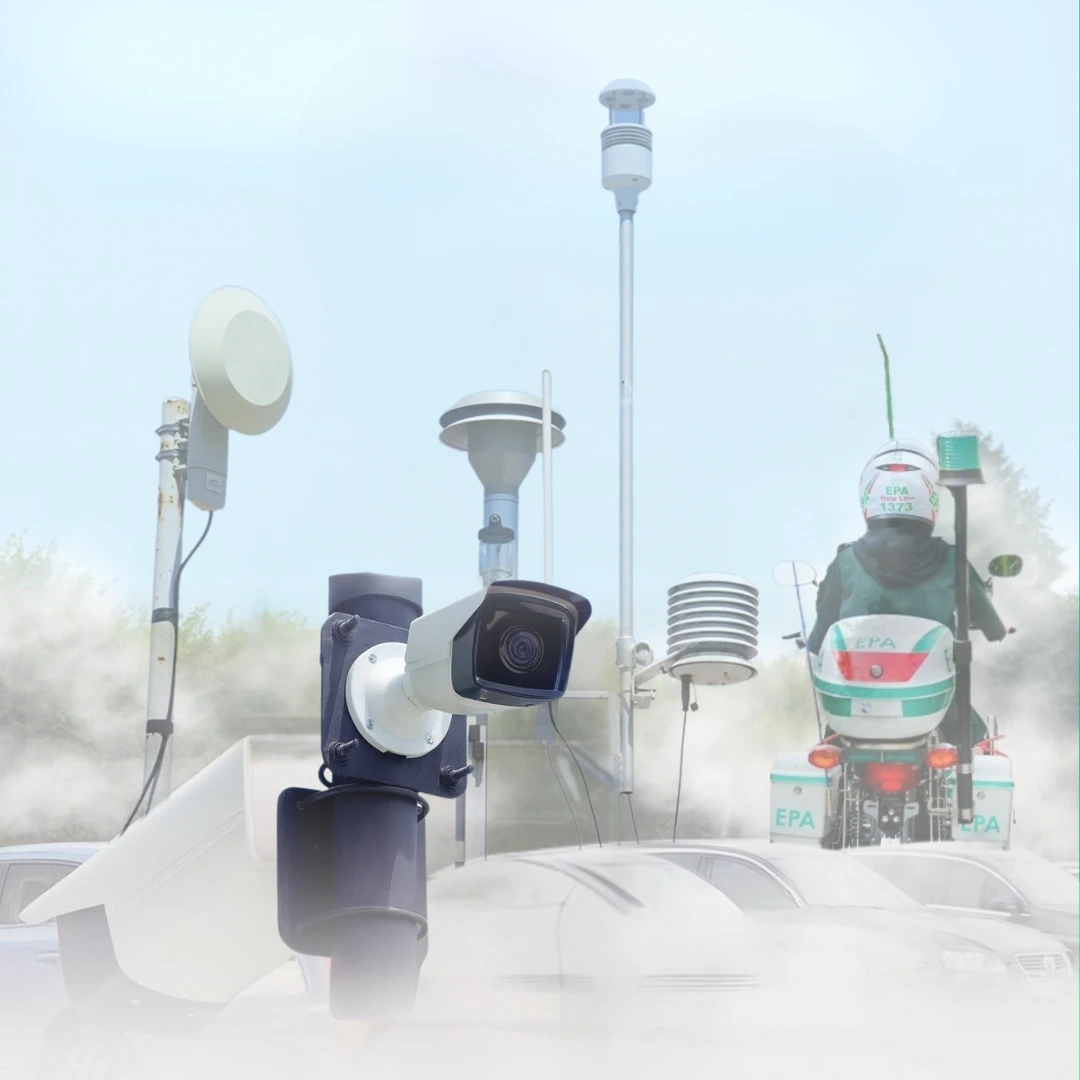
Whether or not they manage to make any actual difference to the air pollution levels, Punjab’s administration is determined to let everyone know that they are going all out to combat smog. Government communication campaigns are currently in full swing announcing a plethora of smog-control measures, including the induction of 25 additional air quality monitoring stations, the deployment of a 250-person Environmental Protection Force and the commissioning of 67 ‘Quick Response Units’ in agricultural districts to put out fires from the burning of crop waste.
Even sceptical observers would concede that this administration is doing a lot to try and combat smog. In fact, the administration may be trying to do too much. A handful of focused initiatives tackling the largest contributors to smog emissions — mainly emissions from burning fossil fuels such as untreated diesel and coal — might have greater impact than a scattershot approach that spreads resources too thin.
One can imagine the behind-the-scenes provincial apparatchiks trying to pad the list of initiatives for extra credit. But to anyone who understands the challenges of large-scale reform, the sheer breadth of initiatives signals a lack of clarity. By diluting their focus, government authorities are hurting their own ability to adequately target the few, significant pollution sources that drive the smog crisis. For now, the government’s response is an agglomeration of initiatives that attempt to cover everything, everywhere, all at once.
In fairness, one can argue that this kind of multi-pronged approach is needed to tackle a complex problem like smog. Given the different factors that contribute to smog, multiple mitigation measures are needed. There is no shortage of advice and input on what should be done. Environmental experts and climate advocates have extensively laid out the numerous different interventions that are required, from fuel quality control, to curbing crop burning, to enforcing zig-zag stacking in brick kilns.
The challenge is that this advice comprises the entire gamut of environmental best practices, leaving implementation authorities like the EPA and Agriculture Department the responsibility of trying to figure out what to do.
A handful of focused initiatives tackling the largest contributors to smog emissions—mainly emissions from burning fossil fuels such as untreated diesel and coal—might have far more impact than a scattershot approach that spreads resources too thin.
What has been less clearly identified and quantified is the relative impact of each of the different anti-smog measures and the required sequencing of these interventions. All reform efforts do not need to be rolled out simultaneously; purely performative measures should be eliminated entirely.
Some of what Punjab is doing is spot on: soft loans to help small factories retrofit emission control systems and interest free financing for farmers to mechanise harvesting are exactly the kind of areas where funding and investment should be made. However, far too many initiatives are resource intensive and incorrectly targeted, where the benefits do not justify the cost and effort involved.
Punjab has increased its monitoring stations from 75 to 100 — measuring air quality is important, but when the smog is so bad you can taste it, there is little additional insight to be gleaned from more monitoring stations. This is like trying to treat a fever by repeatedly taking a patient’s temperature.
There is equally limited value in investing in artificial intelligence-based forecasting of smog patterns if nothing is being done to counter its impact. One doesn’t need an AI model to know that air quality in Punjab will be poor throughout the winter. Nor can the public benefit from being forewarned of smog if they cannot escape it. Resources and effort need to be directed where they can yield material impact on the ground.
The EPA’s enforcement officers can certainly go around fining farmers for burning crop waste, sealing brick kilns and shuttering small factories and workshops, but can they penalise or seal the 1320 MW Sahiwal Coal Power Plant or any of the 8 major cement factories in Punjab that use coal both for power generation and kiln firing? Brick kilns account for about a quarter of total coal burnt in the country; cement accounts for two-thirds.
Sealing a kiln will have a small, albeit positive impact on air pollution. But it will have a material, adverse impact on the livelihoods of an already disadvantaged socio-economic segment. On their own, brick kilns will never be able to afford the investment needed to seriously reduce emissions. The margins of the cartelised cement sector, on the other hand, can comfortably absorb capital outlay on emission reduction technology. The right mix of incentives and penalties can encourage the cement sector to invest more in systems like coal washing and post combustion filtration that minimise the particulate matter in exhaust.
Both sectors need to be regulated, but Punjab’s priorities should be informed by evaluating the overall impact and its sustainability against resources needed for enforcement. There are certainly easy to implement ‘quick wins’ that can have a big impact with limited effort. However, it is the complex, capital intensive and politically sensitive areas where the biggest gains in emission reductions can be found.
Given that fossil fuels — motor gasoline, diesel, furnace oil and coal — are at the root of nearly all of the air pollution, the key priorities should be around managing the quality of these fuels and managing how emissions from their use are minimised. Regulating the quality of fuel may be outside the purview of a provincial government, but it is not entirely outside of their sphere of influence.
Measuring air quality is important, but when the smog is so bad you can taste it, there is little additional insight to be gleaned from more monitoring stations. This is like trying to treat fever by repeatedly taking a patient’s temperature.
Punjab has set up labs to test the fuel quality at petrol stations, but it makes more sense to first regulate upstream before cracking down on the retail distributors. Much of the fuel that is sent to petrol stations comes directly from domestic refineries. It is easier for Punjab’s government to directly engage with 5 refineries and enforce quality standards of fuel being sent into the province than to oversee 13,000 petrol stations.
Similarly, testing vehicle emissions is important, but car owners cannot control the standard of emission control systems that automotive assemblers install in their cars. The auto makers are the ones that need to be regulated and incentivised to improve fuel after-treatment systems. Pakistan currently mandates Euro-2 standards for vehicle emissions, but this needs to be raised to at least Euro-5. Anything lower does not impose limits on particle emissions from petrol engines, which is needed to materially impact PM2.5 emissions.
Some automakers have exceeded the current government standards on their own: most modern petrol cars being assembled in the country are already at Euro-4 standards, while the newest models of Chinese cars, like Changan’s Alsvin, are at Euro-5. Clearly, the transition to Euro-5 emission standards will happen on its own eventually. But being such a large market for cars, Punjab has the ability to influence the quality standards which vehicles being sold in the province are required to adhere to. This can accelerate the auto makers’ transition to higher vehicle emission standards. It is easier to push the top 3 automakers, who make more than 90% of all cars in the country, to accelerate the introduction of newer models with lower emissions than to individually test 7 million cars — that too against outdated emissions standards.
Punjab has the heft and muscle to properly take on the air pollution challenge and eliminate smog. It should do so by first focusing on two or three major pollution sources and undertaking interventions that reduce emissions permanently. This will be a better use of provincial resources than a patchwork of stop-gap and palliative measures.

Haroon Sethi advises on public-sector reform and economic governance in Pakistan. He has built and led ventures in manufacturing, automation and software technology.