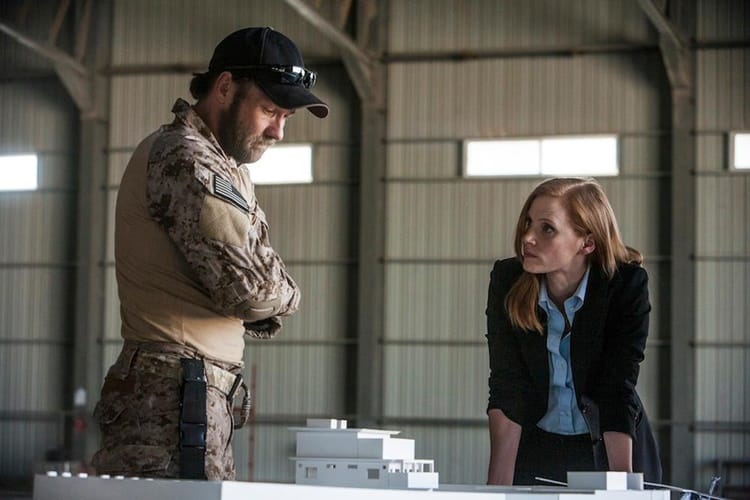
To mark twenty-five years since the attacks on the World Trade Center, The Los Angeles Times curated a list of nine films “that best capture the mood of 9/11.” Alongside literal selections like Kathryn Bigelow’s The Hurt Locker (2008) and Zero Dark Thirty (2012), the list includes the sci-fi thriller Donnie Darko (2001), which follows a sullen teenager facing the apocalypse and was filmed before September, and the documentary Man on Wire (2008) about a French funambulist’s clandestine 1974 high-wire walk between the Twin Towers.
The mood ties not only these nine films together but also the brief body dubbed “post-9/11.” Barring a mutual atmosphere — oppressive, sombre, unmoored — these films may be about the exact day of the attacks, a viscerally desolate New York, the War on Terror, or a cross-country search for Osama Bin Laden. If this shapeshifting does not already indicate its fundamental shakiness, another listicle in Slate, published in 2011, declares its own set of “brilliant 9/11 films,” with all four titles made before September 11: Memento (2000), Waking Life (2001), Mulholland Drive (2001), and Donnie Darko (2001). Beyond a coincidental proximity to the attacks, these films share only the architecture of an uncanny fictional world.
Although these listicles betray the conceptual quagmire at their core, they also begin to delineate the peculiarly fluid boundaries of the 9/11 film, stretched between the hard fact of the incident and the miasma of its ghosts. While the incident has produced a morbid corpus of imperial-hypermilitarised visions (Bigelow’s films) and ineffective sentimentalism (Extremely Loud and Incredibly Close, Dear John, Remember Me), the ghosts have activated the allegorical (25th Hour, War of the Worlds, Margaret). They sneak into films, reside at the threshold of visibility, and attach themselves not to the future, but to a past prolonged beyond its usefulness. And because it is the nation that is being interrogated, the interrogation takes place elsewhere: in cities, suburbs, and slums, where American progressivism is made to play out in miniature. Not unlike the Slate listicle, it takes a certain way of seeing before these films reveal themselves as being post-9/11.
This way of seeing is hardly universal. In HG Wells' 1898 novel The War of the Worlds, the Martians are a fictional counterpart to the British colonisers who drain and devastate native lands and peoples. Spielberg’s adaptation, however, arrived in a different imperial moment. With the exception of the unmistakable post-9/11 iconography of an absent Twin Towers and a few passing references to terrorists, the film can be read as much as a parable of the World Trade Center as of the American invasion of Iraq, as critic Leo Goldsmith has pointed out. Even its scenes of destruction and death remain strangely nonspecific, a flattening visuality in which one war begins to resemble another. Perhaps it was inevitable that, after their first gruesome brush with “invasion,” American viewers should have begun finding September 11 in the science-fiction and dystopian films around them — genres that had spent decades being read to filth by postcolonial critics for their penetrative fantasies of the Orient.
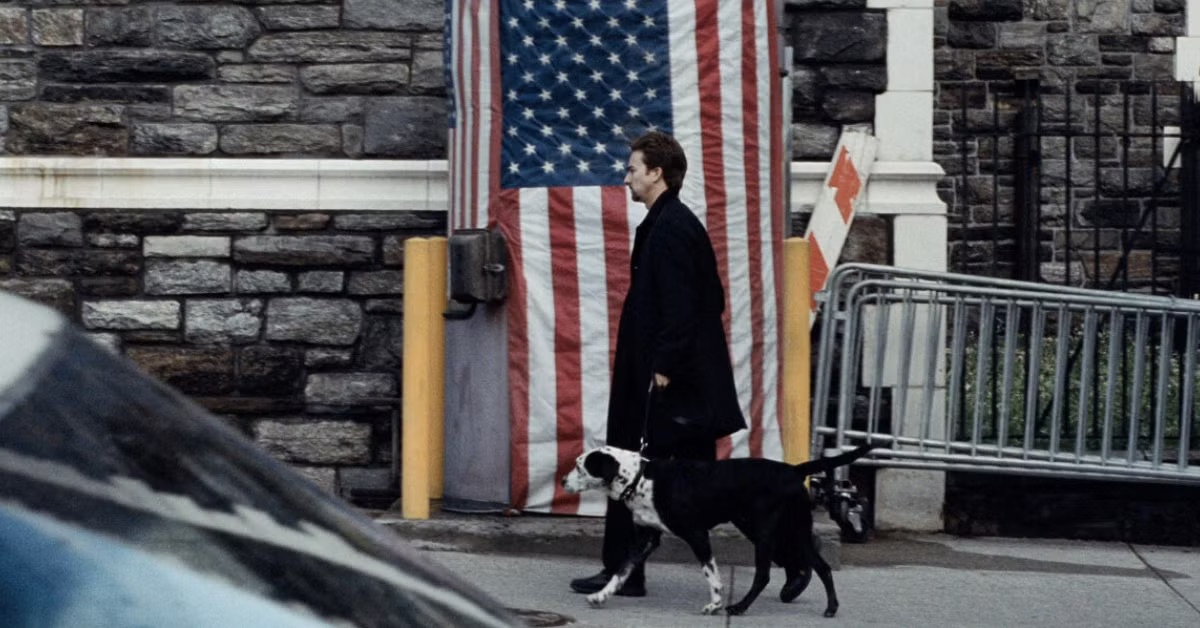
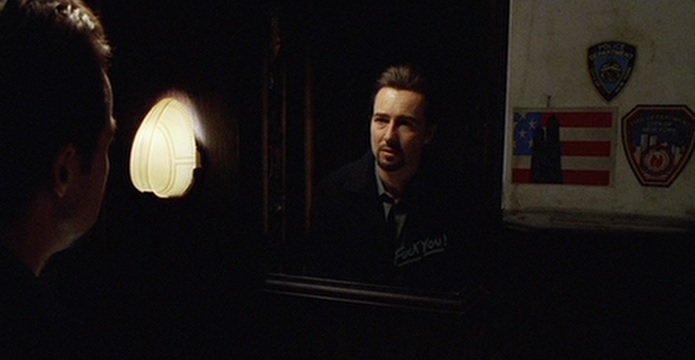
In another anniversary piece this September, The Hollywood Reporter’s Darren Franich posed: “Why Hollywood Has Never Made a Great 9/11 Movie.” Franich ran through most of the usual suspects: the direct and the oblique, the dramatised and the documentary, the prizewinner and the overlooked. If online readership and discussion are any indication, Spike Lee’s 25th Hour (2002) remains an obvious contender. Like the David Benioff novel on which it is based, the film follows Edward Norton’s charismatic, self-loathing Monty, a drug dealer with one day left before beginning a seven-year prison sentence. Lee’s New York, though, is a city newly thick with grief and disillusionment. The recency of September 11 is everywhere: in the inundation of American flags, in the disquietingly incomplete skyline, in the pit where the towers once stood, and finally in Monty himself, one man who hates everyone.
Perhaps it was inevitable that, after their first gruesome brush with “invasion,” American viewers should have begun finding September 11 in the science-fiction and dystopian films around them — genres that had spent decades being read to filth by postcolonial critics for their penetrative fantasies of the Orient.
He hates curry-stinking Sikh and Pakistani cab drivers, “terrorists in fucking training”; Korean grocers who “still no speaky English”; uptown brothers who “blame everything on the white man,” even though “slavery ended one hundred and thirty seven years ago.” Russians, Italians, Puerto Ricans, Upper East Side wives all make the catalogue. So do the corrupt cops and their “anus-violating plungers” who betrayed the public trust, the priests molesting children, the Wall Street brokers robbing “hard working people blind.” Osama bin Laden and al-Qaeda join the procession, the “backward-ass cave-dwelling fundamentalist assholes everywhere” responsible for the deaths of thousands of innocents. Most of all, though, he hates himself for ruining his own life.
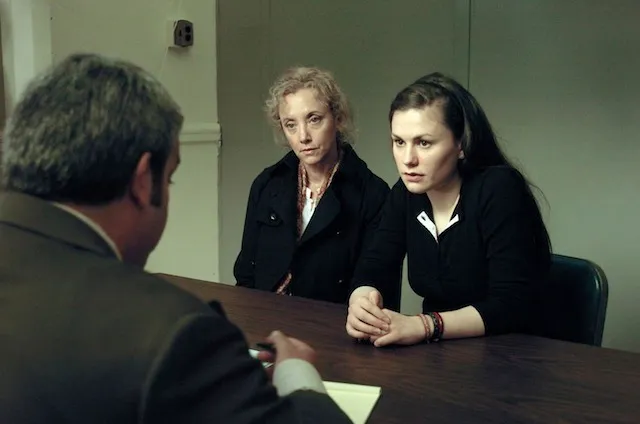
Likewise, a blinding buckshot rage grips Lisa, the teenage protagonist of Kenneth Lonergan’s Margaret (2011), whose fury is compounded by the crushing guilt of having played an indirect role in a fatal bus crash. The film belongs to that small company of post-9/11 works praised for their formal and psychological sophistication, and for their reckoning with the American dream. Like Monty, Lisa hates the cops; like him, she intermittently possesses the capacity to recognise the marginalised, only for that capacity to be overtaken by the national question: What does it mean to be American? Her dysfunctional sexuality, jadedness, and casual xenophobia are both a continuation of the old world order and symptoms of a new one, thus making September 11 an imperfect rupture. With varying degrees of intensity, both Monty and Lisa symbolise the post-9/11 America herself: lost and resentful, blaming everyone but mostly herself.
That the “average citizen” can remain the subject of this cinema may itself be a testament to the American mythos. Its anger and sorrow are diffuse enough to settle nowhere in particular — and thus, everywhere at once — all without ever invoking the figure of the terrorist, or the theatre of war. Expecting a reckoning with the strictly imperial nature of the American project is a tall order for Hollywood, whether from Bigelow’s homage to the “brave” military and intelligence professionals “who paid the ultimate price” or Lee, who campaigned with Obama for Kamala. But this peculiar itch for non-specificity becomes more conspicuous beside the cinematic responses of the Muslim diaspora. War, terrorism, the CIA, the FBI: these films are crowded with the things American cinema can leave at the margins, along with the incorrigible hope that survives underneath them all – the American dream.
Shoaib Mansoor’s Khuda Kay Liye (2007) is the first film to come to mind. It is at once a disavowal of conspicuous Muslim-ness and a public service message of peace and love for America. Its story of two brothers in a band, Sarmad and Mansoor, born to supposedly “moderate” Muslims, begins with tensions that precede September 11. Sarmad, manipulated by a cleric, abandons music and is drawn into the Taliban insurgency in the borderlands; Mansoor, meanwhile, migrates to Chicago to study music, only to find his cosmopolitan Islam criminalised by post-9/11 American paranoia. It might take a chapter, if not a book, to catalogue the appalling lacunae in KKL’s vision of secularism and Pervez Musharraf’s state-endorsed “enlightened moderation.”
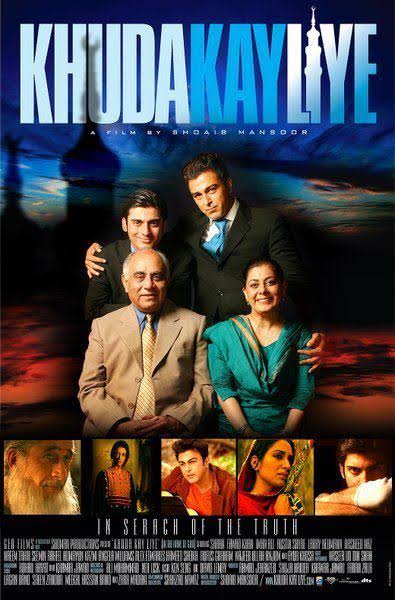
Nation-making is where the film’s liberties become harder to overlook. From Mansoor’s invocation of Muslim rule in India and Spain to KKL’s own branding as the revival of Pakistani cinema, the project is invested in furnishing an idea of the nation with a usable Islamic past. Nowhere does that investment become more apparent than in Mansoor’s detention at Guantánamo Bay shortly after September 11. Bound and beaten, the Sufi, music-loving Mansoor insists, “I love America. I think it’s a great country.” In a particularly stiff, circular exchange, his interrogator asks why all Muslims believe in terrorism. “Not all Muslims are terrorists,” he replies.
“Maybe, but all terrorists are Muslims.”
“Because Muslims are the only nation,” Mansoor stresses, “that has been subject to injustice.” Later, when ordered to write his confession on the cell walls, he covers them instead with the same declaration: “I love USA.”
Similar tropes permeate the subtler, more assured The Reluctant Fundamentalist (2012), Mira Nair’s adaptation of Mohsin Hamid’s 2007 novel. Nair structures the film around a tense present-day interview in a Lahore café between an American journalist, Bobby Lincoln, and Changez, now the prime suspect in the kidnapping of an American professor. Their conversation is repeatedly interrupted by extended flashbacks that trace Changez’s rise from Princeton to Wall Street, and eventual collapse in post-9/11 America.
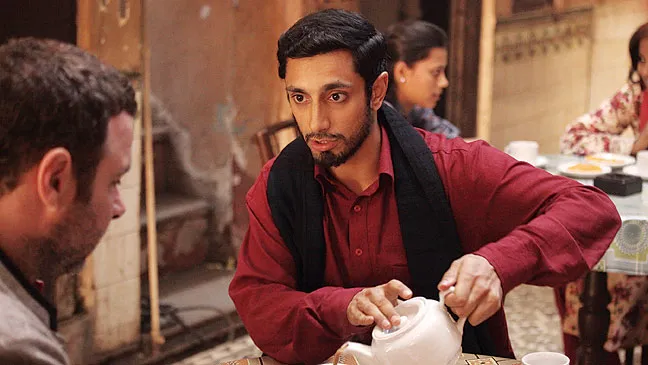
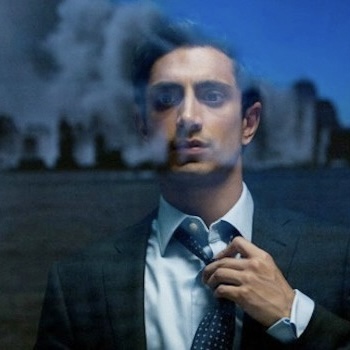
The trajectory is familiar. Like Mansoor, Changez comes from an upper-class family and goes to the US to study. A scholarship student at Princeton, he joins the top Wall Street valuation firm Underwood Samson upon graduation, dazzling rooms full of people with his acumen for gutting distressed companies in the name of corporate efficiency. The young Changez routinely resurfaces online in clips from his interview at the firm, Riz Ahmed declaring with studied confidence: “In America, I get an equal chance to win. And whether or not you hire me, Jim, I am going to win.”
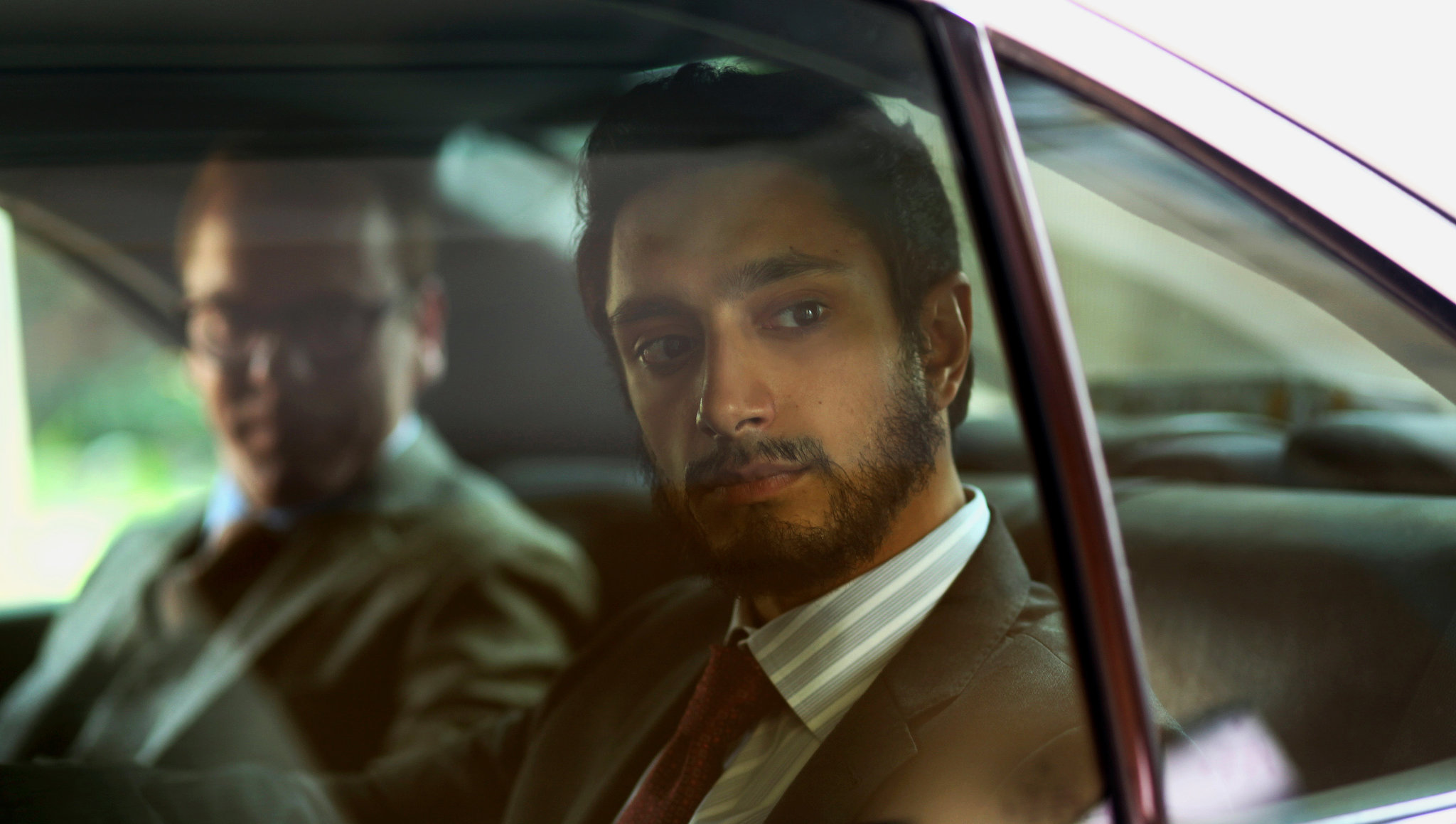
Expecting a reckoning with the strictly imperial nature of the American project is a tall order for Hollywood, whether from Bigelow’s homage to the “brave” military and intelligence professionals “who paid the ultimate price” or Lee, who campaigned with Obama for Kamala.
Changez’s faith in the American dream splinters through more quotidian encounters than Guantánamo Bay. At the airport, he is subjected to an invasive strip search. At work, he watches from a window as his colleagues talk about a “full F-16 tank-ass war…in the entire Muslim world.” He quits, returns to Lahore, and takes a teaching post, gaining notoriety for his diatribes against US foreign policy. “Looks can be deceiving. I am a lover of America,” he tells Bobby early on. America also acquires another name in the film: Erica, Changez’s white girlfriend, whose guilt and mourning over her dead boyfriend never fully allow her to return his affections.
Is Changez a terrorist? Is Bobby not simply a journalist? Is the missing professor a CIA spawn? What if Erica/America loved Changez back? The first three questions drown out the fourth, and more pertinent, one. The CIA’s involvement, lurking in the background, has the unfortunate effect of muddying the film’s more psychological and emotional stakes in its bid to mime political urgency.
That urgency can become still more capacious elsewhere. In Karan Johar’s My Name Is Khan (2010), disability, faith, terrorism, hurricanes, and a cross-country road trip jostle for space within the same character-driven saga. Rizwan Khan (Shahrukh Khan), an Indian Muslim with Asperger’s syndrome, moves to San Francisco to live with his brother and sister-in-law, where he falls for Mandira (Kajol), a Hindu hairstylist. But when Mandira and her young son, Sameer, adopt the ‘Khan’ surname upon the couple's marriage, a loving gesture of domestic intimacy inadvertently transforms the trio into targets for virulent post-9/11 Islamophobia — a tragic shift that costs Sameer his life in a hate crime.
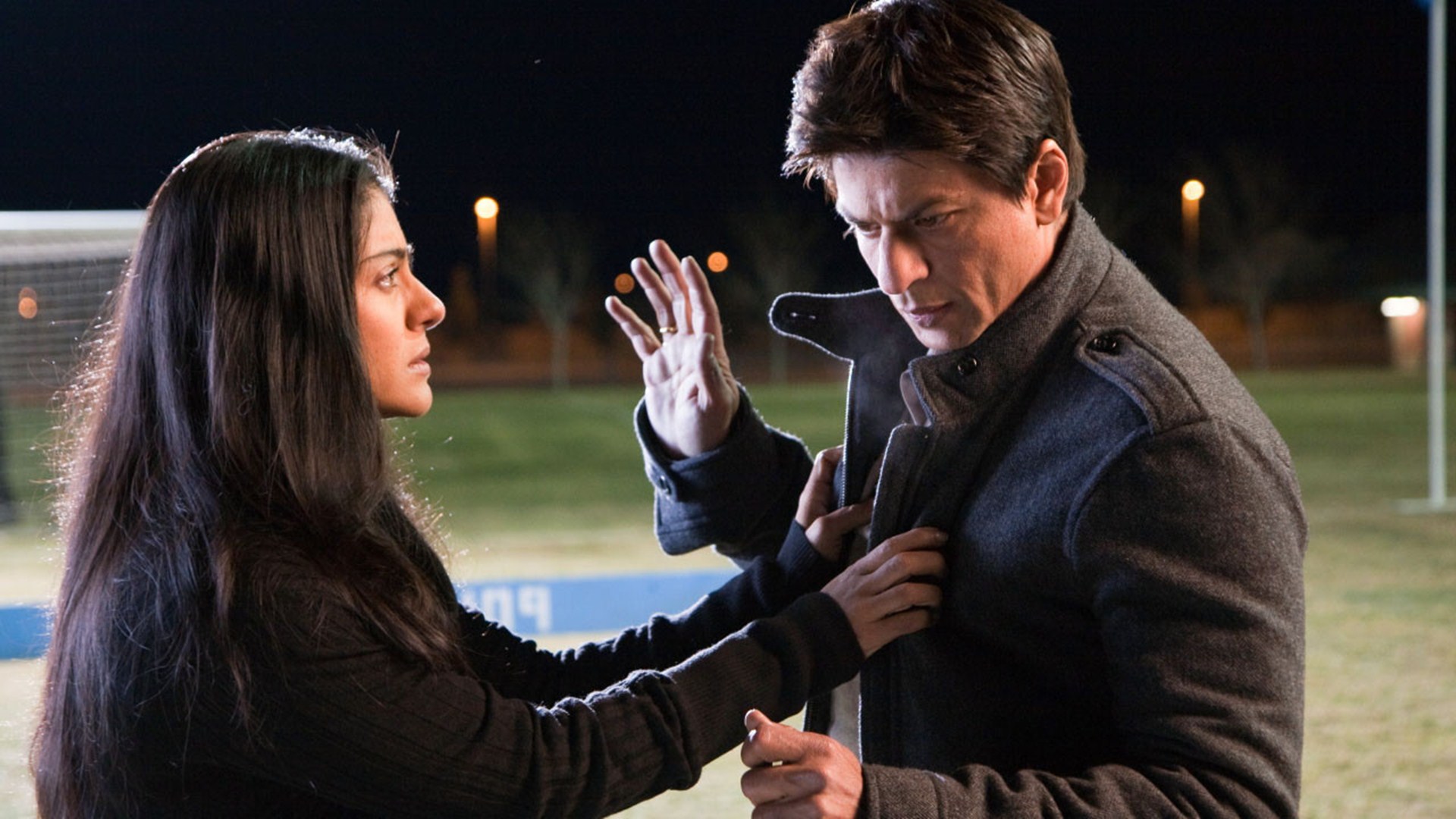
“I should never have married a Muslim man,” an inconsolable Mandira yells at Rizwan. “Go tell the President of the United States, ‘My name is Khan and I am not a terrorist.’ When you do that, only then come back.” So begins Rizwan’s winding, quixotic search. A familiar register of post-9/11 anxieties accumulates steadily: from hijab-pulling, slur-hurling bigots to Rizwan’s own short detention, where he is tortured and interrogated about Al-Qaeda. Yet, it is his neurodivergent outlook — entirely stripped of subtext and artifice — that dispatches this new America. Much like the quintessential American Democrat, he can identify scheming terrorists in a mosque as bad men, and regard Sameer’s murder and the deaths of US veterans in Iraq as comparable tragedies triggered by September 11. His odyssey takes unexpected turns as America purges the Bush administration and elects Obama. But for Rizwan, all that matters is reaching the President, whoever it may be.
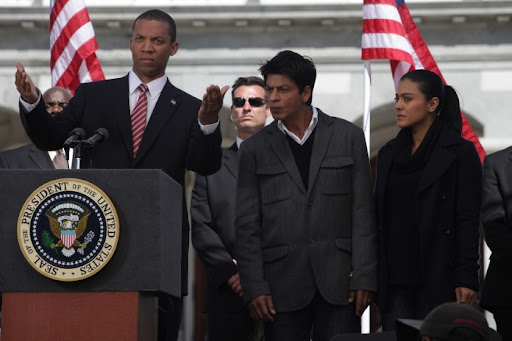
Unwittingly, Mansoor, Changez, and Rizwan each have their incantations, but their purpose converges: to conjoin anti-terrorism with anti-anti-Americanism. The trouble with this relation is not that post-9/11 cinema must be exceptionally prone to America-bashing, but that it is exceptionally incapable of being so because that is what the terrorists do. Hence the grieving racist Monty, who hates everyone but does not really mean it, and the battered and bruised Mansoor, confined to a torture facility, who loves America and really means it. The paranoia of “America-hating heathens” is easier to diffuse now that it is abundantly clear that hating America might ossify nationalisms and inspire a few tyre-burning protests oceans away but will have eventually no direct bearing beyond those borders. Love and hate alike remain contained within the boundaries of a national imaginary.
It is beyond these boundaries that the terrorism comedy emerges as possibly the most transnational offshoot of post-9/11 cinema. Here, imperialism receives its due recognition as an economy first and foremost — one in which terrorism enjoys a lucrative exchange value. This dynamic is crudely but effectively captured in Abhishek Sharma’s Tere Bin Laden (2010), the story of Ali Hassan, a small-time Karachi reporter trapped in a loop of post-9/11 visa rejections. Desperate to fund an escape to the US, Ali fabricates a video using an Osama bin Laden lookalike, inadvertently triggering a full-scale US military manhunt across Pakistan when the tape leaks globally. Since Ali’s yearning to escape is a bid for survival rather than a status grab — the middling reporter isn't looking to trade Pakistani wealth for American affluence — his absurd gambits carry the weight of a deeply exhausting necessity. (Ironically, sixteen years down the line, with local newsrooms hawkishly withholding salaries or shuttering entirely, almost any Pakistani journalist would leap at the chance to relocate to the States — were the trek not even more punishingly expensive and structurally impossible than it was then). Neither Bin Laden nor Islamophobia commands much emotional allegiance. Ali’s motivations are closer to the ground: money, mobility, work, escape. He is, for all intents and purposes, a bad good Muslim.
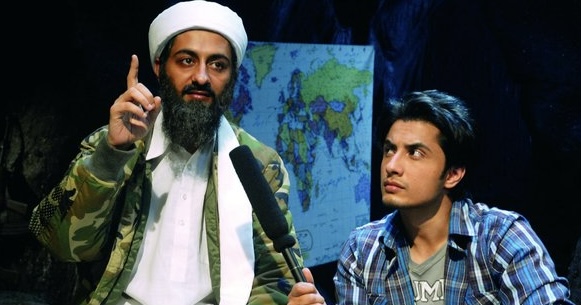
The mirror image of this survivalist hustle is the good bad Muslim — an avatar found not in the visa queues of Karachi, but in the mundane suburbs of Yorkshire. Chris Morris’ Four Lions (2010) charts a cell of inept homegrown British Pakistanis and a white convert, Barry, whose grand jihadist aspirations are consistently derailed by their own spectacular incompetence. Operating out of Sheffield, the cell bumbles through their preparation: futilely training crows to carry bombs, filming botched martyrdom videos, and accidentally obliterating jihadists at a Pakistani training camp with a backward-fired rocket launcher. For all their talk of martyrdom, the Lions remain decidedly more British than anything else. They imagine paradise as an infinite loop on the Rubber Dinghy Rapids at Alton Towers and prefer the soft rock of King Harvest to religious nasheeds.
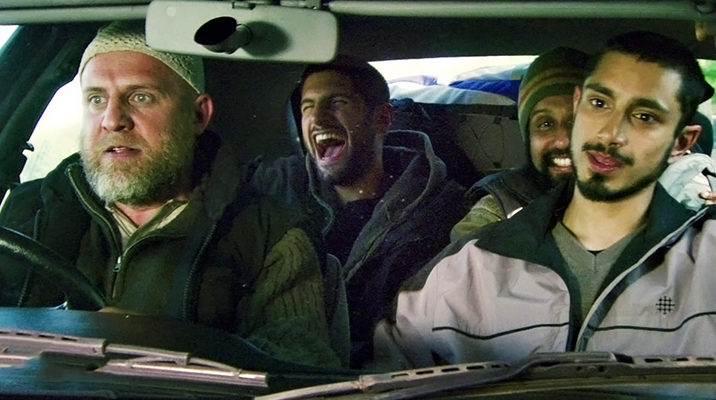
Cinematographer Lol Crawley captures these tensions by filtering the cell’s exploits through a lens of shaky handheld cameras, erratic digital zooms, and voyeuristic compositions. Far from a mere stylistic gimmick, this aesthetic exposes the twin pressures of a suffocating surveillance state enclosing British Muslims and a modern, image-obsessed culture compulsively documenting itself: Omar (Riz Ahmed) spends his days monitoring society as a mall security guard, while his cell obsessively records their meetings. But the state’s paranoid gaze is completely blind to them.
While counter-terrorism forces violently sweep up Omar’s orthodox but entirely pacifist brother, the actual cell slips through the cracks simply because their mundane Britishness breaks the algorithm of racial profiling. Strip away Barry’s fixation on bombing a mosque to radicalise moderates, none of these men actually want to kill anyone, let alone themselves. More perversely, their internal contradictions mirror the very imperial gaze hunting them. Omar shrugs off their accidental training-camp massacre because the dead “were not Arabs, they were bad tribesmen,” while Barry furiously shouts down a panel of Brits to insist that the average Muslim is anything but peaceful. In the film’s epilogue, a news report reveals that the rocket misfire killed bin Laden. This is the Lions’ great service in the great war, only they seem to have fought on the other side, killing more jihadists than ‘infidels.’
The refusal to respect geographic or narrative borders accounts for why Four Lions occupies such a faint position within the post-9/11 canon. Riz Ahmed once ironically remarked: “I think it’s worth noting that probably the most beloved film about British Muslims, by British Muslims, is made by Chris Morris (a white, middle-class guy).” Though Morris began conceiving Four Lions in the immediate wake of 9/11, before the 7/7 London bombings, the cultural search for a great 9/11 film remains insulated. If the object of the search is a film that truly gets it — death, warts, imperialism, and all — then there is everything to be gained by looking beyond America and Americans. The answer might be a film in which not just the towers, but America itself, is a ghost.

Manahil Tahira is a Karachi-based journalist and writer whose work moves between fiction and nonfiction, tracing the intersections of bodies, spaces, visuality and technology. Formerly desk head of Lifestyle at The Express Tribune, their creative writing has appeared in Arzu Anthology, Fahmidan Journal, Lakeer, and is forthcoming in The Aleph Review (2025). They are also a Non-Fiction Editor at South Asian Avant-Garde (SAAG) magazine.