The first weekend of February this year brought with it Basant festivities in Lahore after years of restrictions; the same weekend also brought with it the annual Lahore Literary Festival — both occasions were an explosion of culture and a reminder of our heritage here in the city.
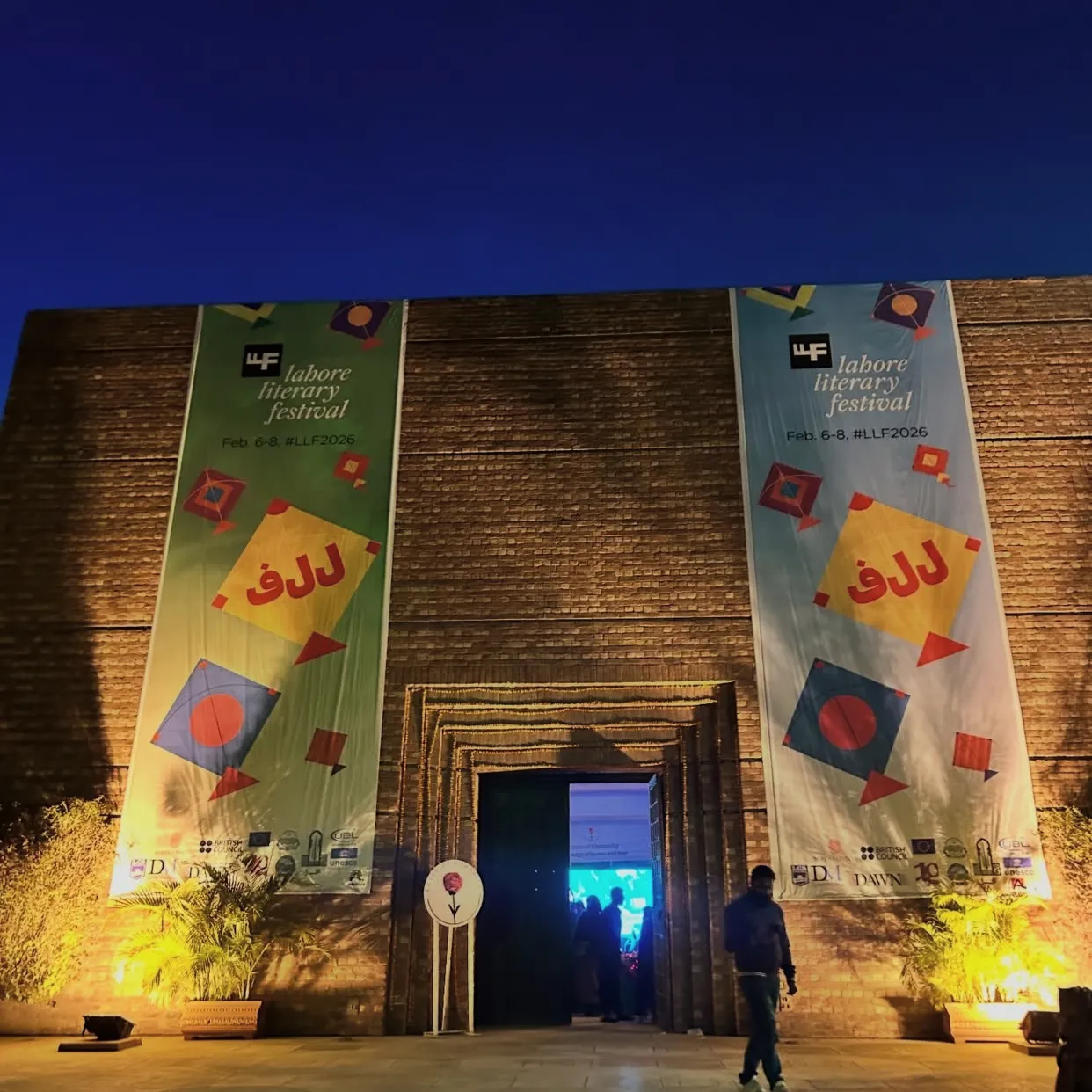
The 14th edition of the Lahore Literary Festival took place from February 6th to 8th, 2026. As always, the Alhamra Arts Council served as a venue for thinkers, writers and creatives from around the world to gather, discuss and celebrate the latest offerings from the world of literature, art, academia and current affairs.
The lineup, more diverse than usual, included national and international figures, such as Dr Salima Ikram, the distinguished Pakistani Egyptologist and Professor at the American University in Cairo; historian, writer and film maker Sam Dalrymple, son of William Dalrymple and writer of the newly released book Shattered Lands; Robin Lane Fox, Emeritus Fellow of New College, Oxford; as well as national treasures such as Kamila Shamsie, Mohsin Hamid, Nayyar Ali Dada and Amin Gulgee, to name only a few.
The 14th edition of the LLF was certainly an improvement upon last year’s effort: the buntings were up and cheerfully flapping in the air on Day 1, and Basant themed decor made the atmosphere all the more festive. The line up of speakers this year was decidedly more interesting than usual, with lots of new faces and names, and less of the usual suspects.
The festival opened with an emphasis on the importance of literature, scholarship and culture in shaping the fabric of society, and the need for uplifting critical thinking and democratic values in the keynote address by Iqbal Z. Ahmed. This was followed by a lecture by Professor Robin Lane Fox on Alexander the Great. A smashing 60 sessions were scheduled for the weekend, of which 12 were held in Urdu and Punjabi, demonstrating the LLF’s commitment to representing and uplifting Pakistani culture and community.
While attending the festival this year, the inter-connectedness of culture and literary festivals was foremost on my mind. Culture is a dynamic concept shaped by language, food, history, art and ideas that evolve over time, and it is also something that is learnt through observing the society around us, therefore, it is subject to change.
As renowned artist Amin Gulgee commented during the panel Culture, Shulture: Pakistan at a Crossroads, culture for him consists of his own unique mythology and is a fluid concept, overlapping and interlocking all of his lived experiences both at home in Pakistan and abroad. Artist Risham Syed expanded on this idea, pointing out the connection between culture and cultivation — just as a seed absorbs nutrients from the soil and sunshine, and takes in air in order to grow, likewise culture has a number of factors that inform its “quality” as she put it. She also considered the influence of power on culture, noting symbols of culture may be dictated by those in positions of power, such as through nationalism.
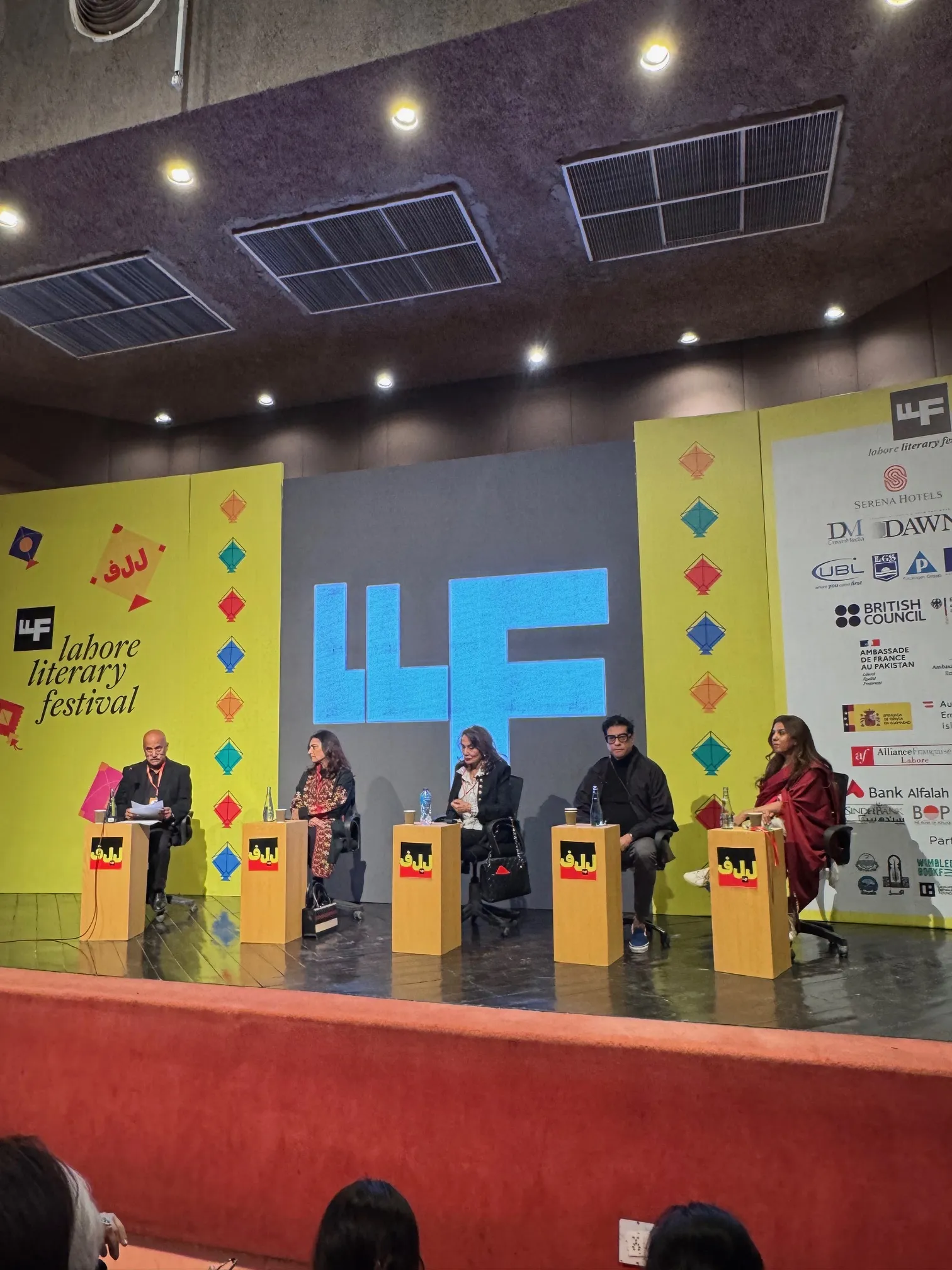
Scholars and anthropologists have been agonising over the precise definition of culture as early as the 1800s, with Matthew Arnolds in 1867 creating a distinction between high culture — a special intellectual or artistic endeavour — and what is currently understood as pop culture, thus elevating culture as something only few can access or possess. In contrast, Edward Tylor in 1870 conceptualised culture as a quality possessed by all people in all social groups, identifying it as “that complex whole which includes knowledge, belief, art, morals, law, custom and any other capabilities and habits acquired by man as a member of society.”
Ghazi Taimoor added to this conversation with his own distinct flavour in his session Lahore as Palimpsest, where he characterised culture as akin to the popular local dish biryani, pointing out how both contain many layers, some of which are pleasant (the aromatic rice, the succulent meat and potatoes, the explosion of flavour) and some of which are unpleasant (accidentally chewing on black cardamom or clove). Places such as the subcontinent are rich in an explosion of multiple cultures that are layered together, overlapping and informing one another, and sometimes competing with each other. For instance, old havelis in Androon Lahore were once occupied by Hindus and Sikhs pre-Partition, but now are occupied by Muslims, some even turned into places of worship for Muslims, while still bearing the names of the previous owners of the buildings. Ghazi Taimoor noted that culture is a feeling that creates connections within communities and informs the day to day lives of individuals.
Closely connected to the idea of culture is the notion of heritage, a legacy from the past that we desire to protect and preserve in order to pass on to future generations. Heritage seems to be a more tangible aspect of culture, and can often be more easily identifiable such as archaeological sites and historically significant landmarks.
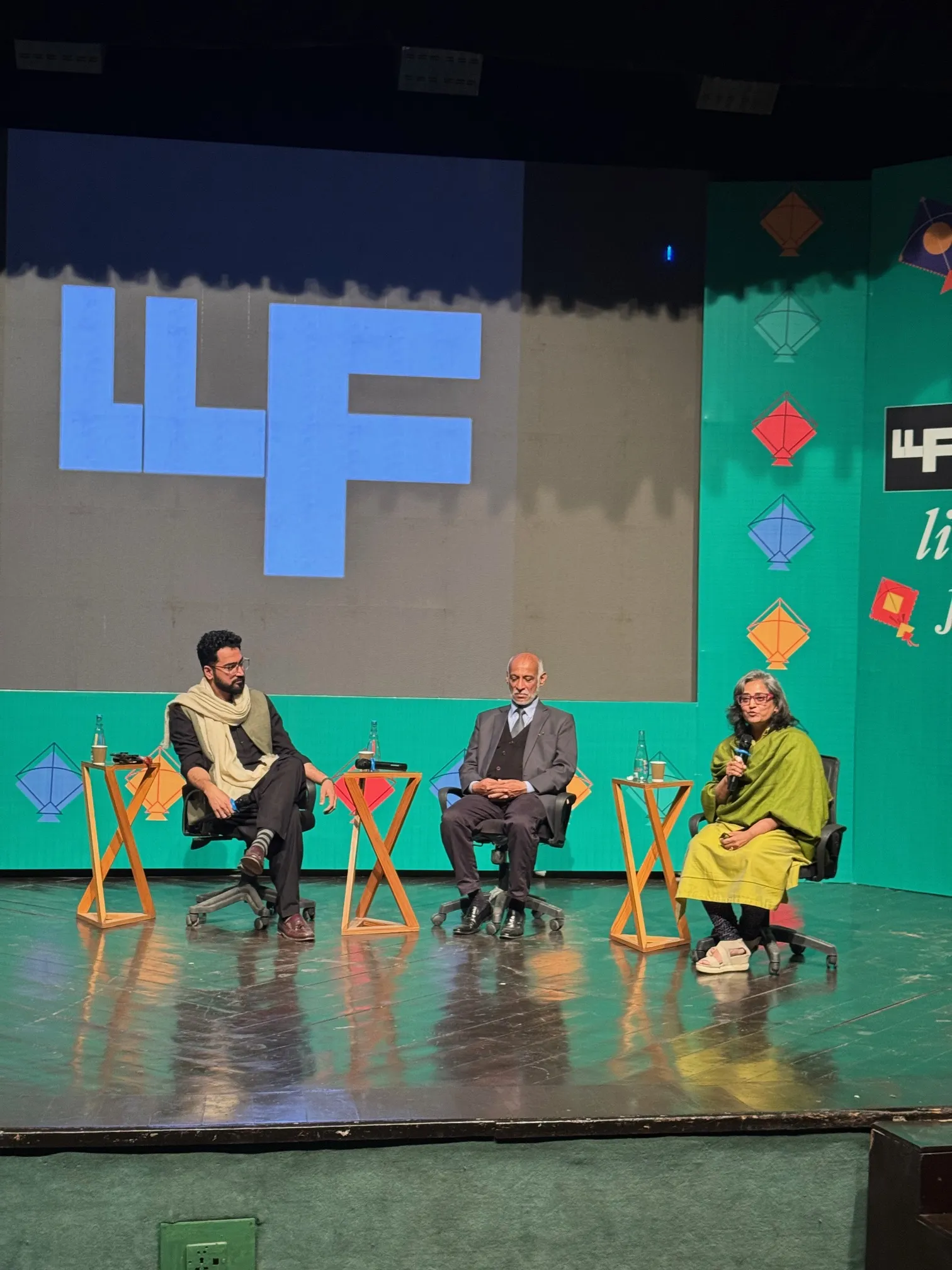
Director General Walled City Lahore Authority, Najam us Saqib, stressed upon the importance of preserving and restoring areas in Androon, such as the Spice Bazaar and old havelis, as they represent not only the historic and tangible heritage that accompanies our Colonial and pre-Colonial experience in the subcontinent, but also exemplify something intangible about our heritage and culture.
Kai Weise, an architect concerned with preserving cultural heritage who has worked closely with UNESCO and ICOMOS Nepal, was on the panel Conservation and Restoration: Approaches to Cultural Heritage, where he stressed the need to examine the driving force behind conservation efforts. “Heritage sites and cultural landmarks have value which needs to be preserved for future generations … a community is the primary bearer of that value, and the skill of preservation is the link to continuity, which necessitates supporting local craftspersons in their conservation efforts.”
Irina Bokova, former Director General of UNESCO and fellow panellist highlighted “the evolution in thinking around the word heritage and the contrast between the East and West in conceptualising this concept. Heritage in the West suggests something fixed, such as buildings and landmarks, however in the East it can also be representative of something spiritual and emotional.”
This year it felt as though there was more cohesion to the panels, the silver thread tying everything together being an exploration of the idea of culture and heritage, whether directly or indirectly in the panels.
On the third day of LLF, the dialogue on stage continued to highlight the importance of culture and heritage. During the talk Protecting the Past, architect and cultural heritage conservationist Usman Sami highlighted “heritage as fragile, something that needs saving”, but also went on to wonder if “it can be used as a weapon for resistance when the state itself is the aggressor?” This was certainly an interesting notion, and made me think back to Risham Syed’s comment on culture as a tool for those in power, often used to create a sense of nationalism to further political motives. Francesco Bandarin, former Director of the UNESCO World Heritage Center, spoke of cities such as Lahore as “living and dynamic artefacts” and questioned the impacts of modernity on such historic tapestries.
In the world we now live in, culture is certainly under threat with the mass homogenisation taking place via social media trends, climate change, and an uptick of armed conflict and nationalistic politics around the world. Globalisation aided by technology has eroded individuality, fashion trends rolled out on platforms like Instagram and Pinterest can be observed the world-over. Armed conflict in parts of the world is also destroying the unique culture, language and identity of those being attacked, weakening those communities’ sense of shared identity and history. Misinformation and a surge of nationalistic politics around the world are further isolating and eroding unique cultural identities.
If we look a little deeper into this topic of culture and heritage, beyond the definitions of what it is and the dire need to preserve it, we can also find pockets of joy that culture has to offer. During the panel entitled Fiction’s Pull, writer David Wagner cheerfully noted that “there are specialities of your own culture which make the story more interesting to a reader” and added that as a reader it is fascinating to encounter things that are difficult to understand. Arslan Athar, another writer on the same panel, went further to say, “Explaining our culture takes away from its power and we should not explain it (as writers). Instead we should take ownership and allow the reader to figure it out, allowing them to experience empathy and intrigue.”
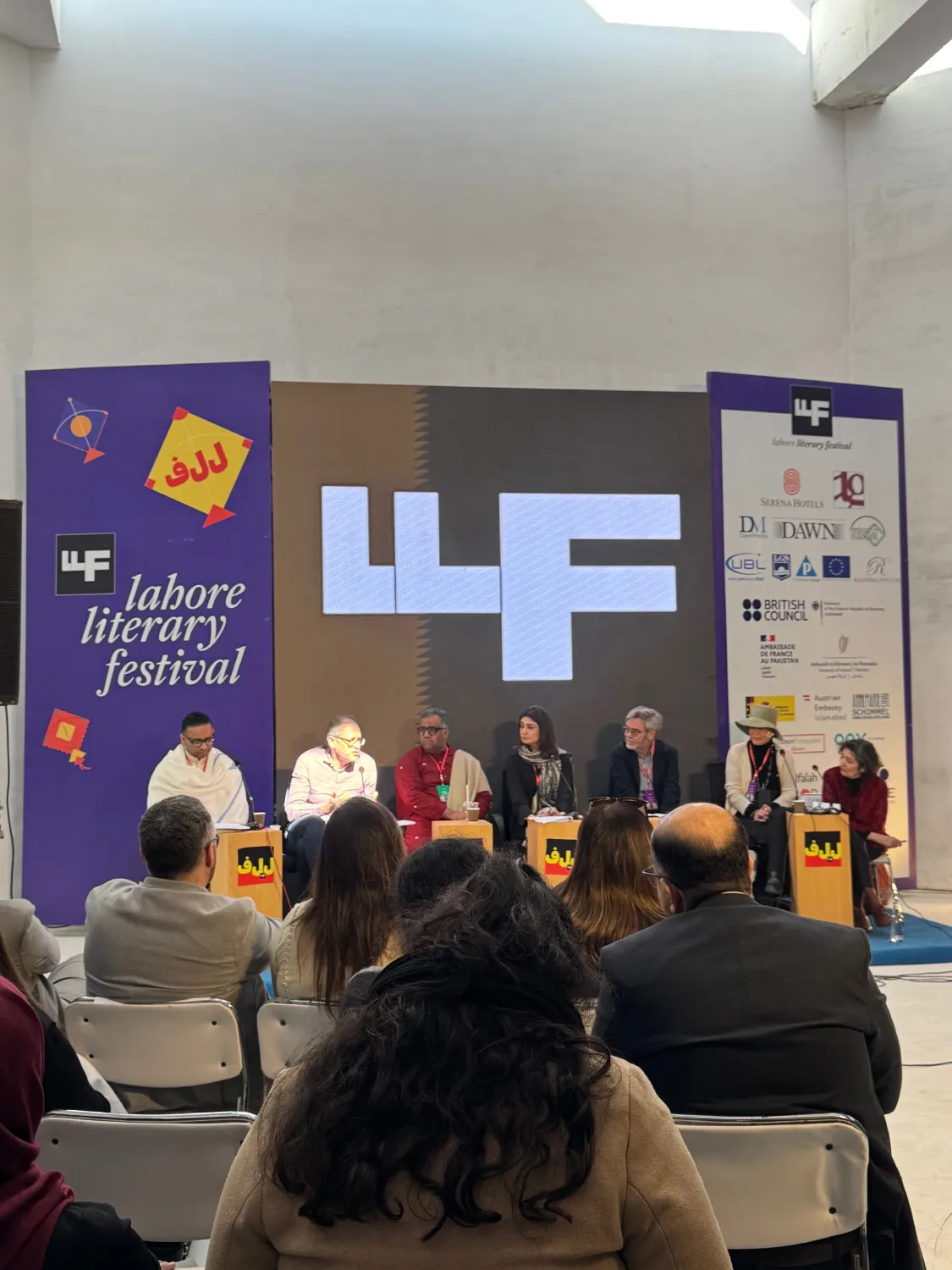
In the same vein, Perin’s Passion was a joyful celebration of Professor Perin Boga’s contributions to the world of theatre in Lahore. Professor Boga spoke of the significance of theatre in community building and emphasised the joy that it brought to both the actors and audiences, especially in a time when such a community or culture did not really exist in this city.
Writer Saba Karim Khan lamented “living in a time of fracture” during her panel Art Everlasting, but also went on to say “nevertheless art persists … uncertainty makes art necessary”. Mohsin Hamid, on the same panel, added that there is a growing sense of helplessness around the world, and a sense of fragmentation, an inability to feel connected to anyone or anything because of our limited attention spans and constant barrage of bad news at the touch of our fingertips on our smartphones. Perhaps the only form of resistance, as Usman Sami had expressed earlier, is by a commitment to culture, heritage, art, literature, theatre and all those creative and scholarly pursuits that foster a sense of connection and community within us.
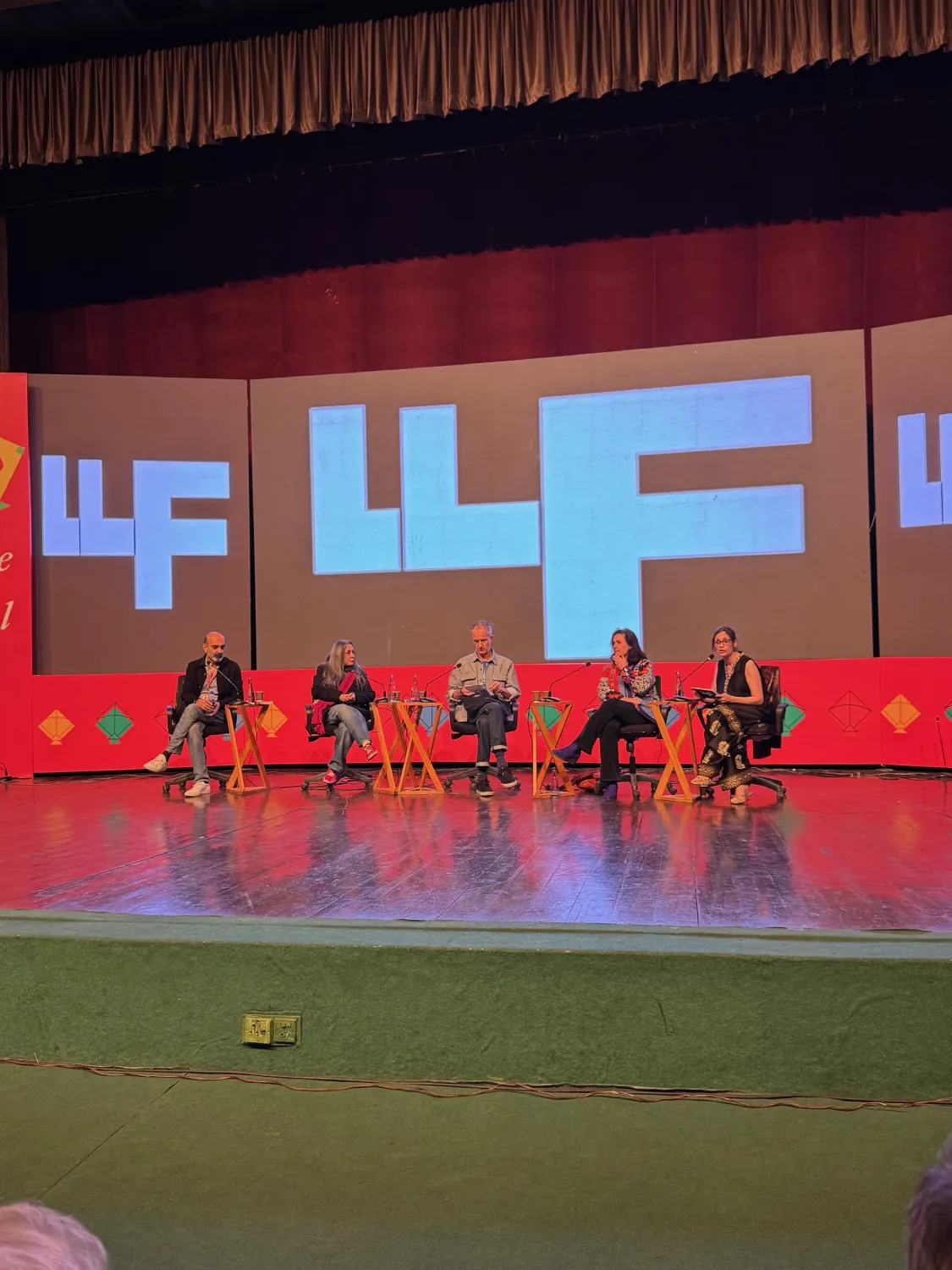
The immersive art installation Roses of Humanity was a shining example of art persisting even in the most hopeless of times. Nuria Rafique-Iqbal put together 15,000 tenderly handmade roses, each one a representation of a child murdered since October 7th in Gaza. A sea of handcrafted roses were arranged in a darkened atrium, haunting Arabic music and poetry playing in the background and the scent of roses hung in the air. The sense of despair and grief was felt by every soul who walked through the installation, and the connection was made deeper by individual name tags of those children attached to every single rose.
The 14th edition of the LLF was certainly an improvement upon last year’s effort: the buntings were up and cheerfully flapping in the air on Day 1, and Basant themed decor made the atmosphere all the more festive. The line up of speakers this year was decidedly more interesting than usual, with lots of new faces and names, and less of the usual suspects. Of course, technical issues and some ill equipped moderators were sprinkled into the mix, as well as a panelist or two blithely vaping on stage during their panels, but all that added to the peculiar magic that is a literary festival. Alhamra, as always, served as the best public space and venue for this festival, even though the decrepit toilets on site could be classified as a crime against humanity.
This year it felt as though there was more cohesion to the panels, the silver thread tying everything together being an exploration of the idea of culture and heritage, whether directly or indirectly in the panels. What is a literary festival if not the ultimate celebration of culture and the best way to contribute to it and crystallise it, even if only for a weekend!
All in-text photos courtesy of the author; header image courtesy of Ayza Khan.

Nijah S. Khan is a lawyer, writer and bibliophile. She lives in Lahore and has worked as an English Literature teacher, interior designer and lawyer. Nijah’s writing has appeared in several Pakistani publications.