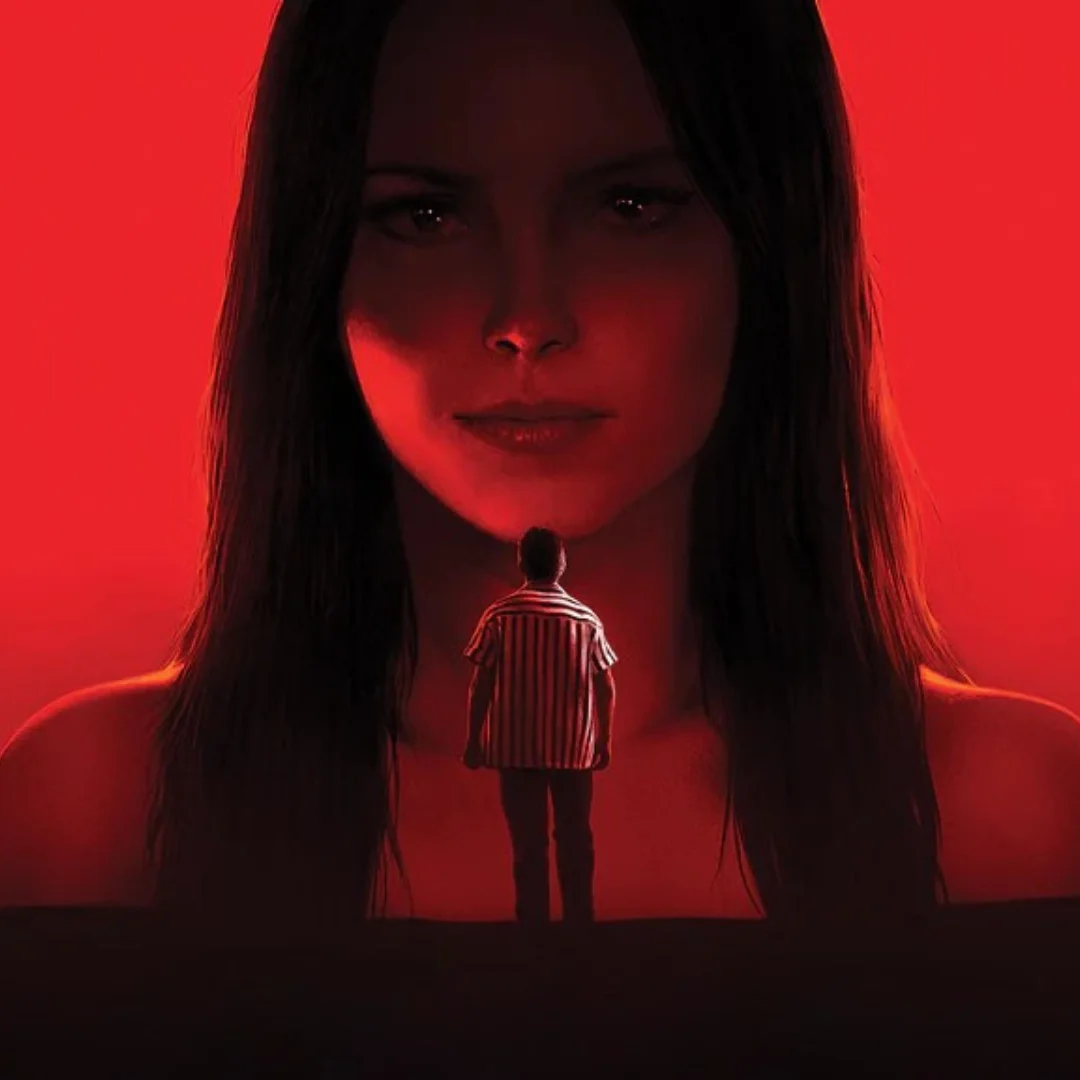
It is the peak of summer in Karachi, when a young mother asks her almost 8-year-old son if he can understand what's playing on the screen. This screen is the Cinepax located inside Ocean Mall in Karachi, for a 9 pm show of the film Obsession (2026). There are whispers and chatter; most of the audience is experiencing and responding to the film audibly. There are families with children well below the age of 13, seated for a journey that is clearly not for them.
“People were cackling at some of the most horrifying scenes, assuming this was a comical take on a crazy girlfriend,” said Sara, who watched the film in Lahore.
In another city, at The Arena theatre in Bahria Town, Islamabad, men gather in their seats to hoot when Nikki asks Bear to take her to his home. Some of the film's comparatively PG-rated scenes were evidently censored by PEMRA before its release in Pakistan, but the cuts ultimately proved futile. The audiences still found seemingly provocative moments to comment aloud in during the movie.
The film starts with an average-looking man, Bear, in his mid-twenties, practising how to confess his love to his childhood crush, Nikki. “I would choose you over everything,” Bear remarks earnestly to a waitress at the café, while his friend Ian choreographs the proposal, suggesting how Bear should stop being himself, because that's “too much” and Nikki won't appreciate it. Ian also went to school with both Nikki and Bear, so he's aware that Bear has delayed this proposal by 7 years because he can't find the courage to proceed.
[The film] was received through the lens of dehumanization towards women, enough to elicit moaning sounds from the men watching in the theatre when Nikki appears on screen. Their contempt for women was made apparent. As an audience member, one could barely process the movie on its own, removed from the context in which it was being played.
“Do you like me?” Nikki asks when Bear is dropping her off later that night.
Confused and alarmed, he scoffs, “No?”
Frustrated with his own nonchalant response, he cracks open the willow wish bark he had initially gotten for Nikki and makes a wish.
“I wish Nikki would love me more than anyone else in the world.”
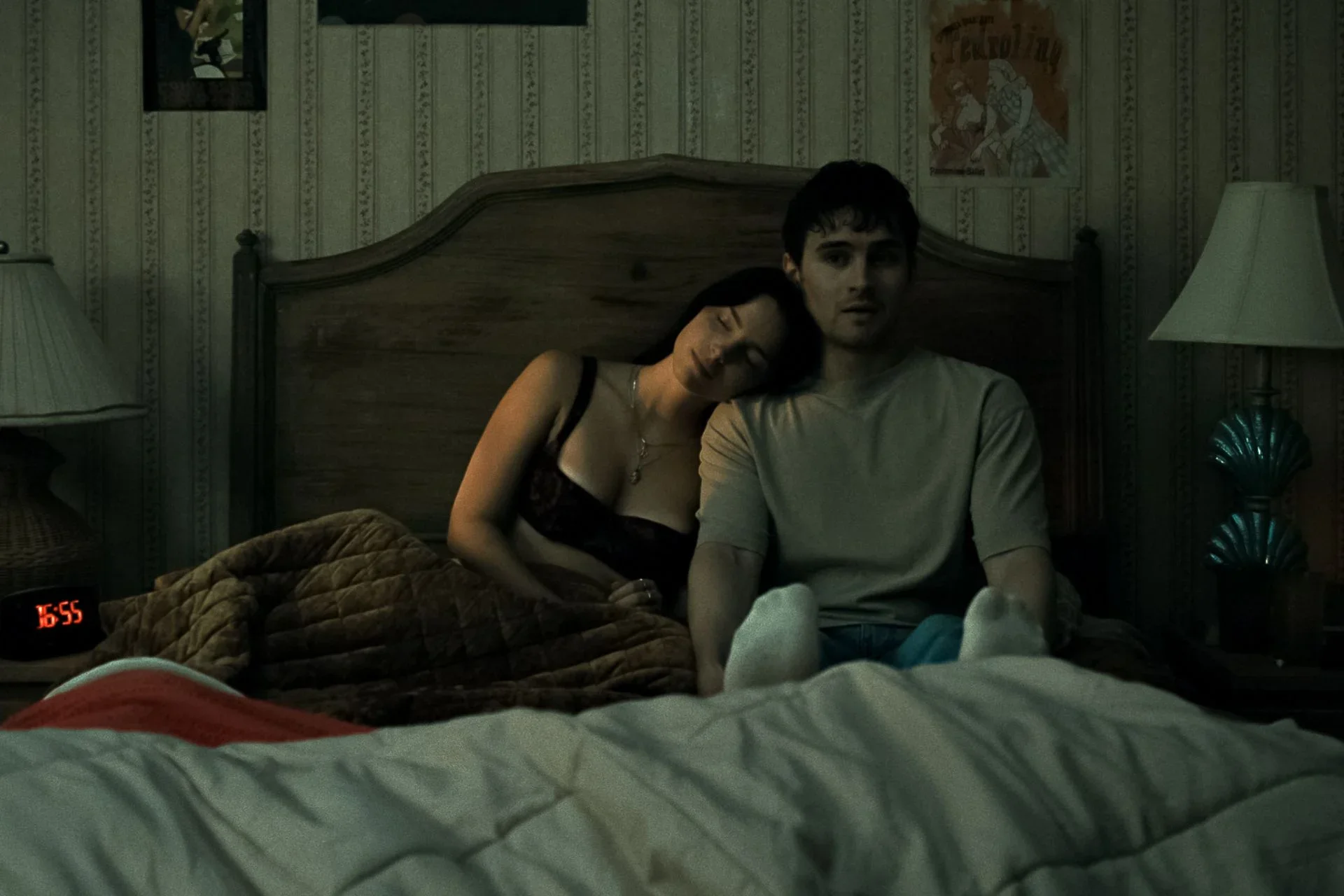
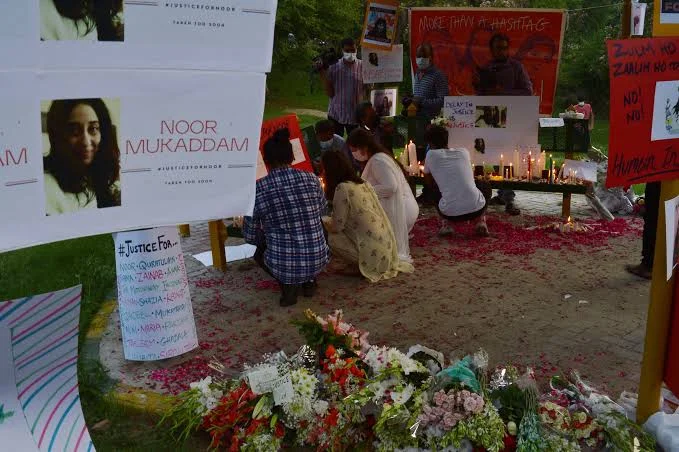
This wish echoes the feelings of countless men who haven't felt good enough for the women they have been obsessed with, making this film acutely relatable to male audiences in theatres across the country. But Pakistani women will also find much to relate to in Nikki, if they look closely. Five years ago, both Noor Mukaddam’s life and life story were taken away from her by Zahir Jaffar, who brutally murdered her after emotionally and physically abusing her. Or, in the case of Qandeel Baloch, an internet star, what drove her to her death was a dominant incel culture that both wanted to objectify her and own her honour. The slut shaming that she had to go through, while all she wanted to do was exist on the internet and have her voice heard, culminated in her murder at the hands of her brother. This fictional depiction of the stripping away of Nikki's autonomy comes uncomfortably close to the materiality of women's lived experiences in Pakistan.
This culture of violence and coercion against women seems to have desensitized audiences enough to not be able to notice and name the violence that Bear inflicts upon Nikki by stripping away her basic human right to consent to being in a relationship with him. American Director Curry Barker builds the character of Nikki as a manic pixie dream girl, a term coined by film critic Nathan Rabin in 2007 to describe a bubbly, whimsical woman on screen whose sole narrative function is to shepherd a brooding male protagonist toward his own growth. Over the years in literature and film, it has been used to flatten women into a device for a man's emotional arc, rather than write them as people with an interiority of their own. Bear’s wish makes Nikki fall for him hollows out her own sense of self, and replaces it with a single-minded devotion to him. However, this satirical depiction of the trope did not translate well in Pakistani theatres.
Instead, it was received through the lens of dehumanization towards women, enough to elicit moaning sounds from the men watching in the theatre when Nikki appears on screen. Their contempt for women was made apparent. As an audience member, one could barely process the movie on its own, removed from the context in which it was being played.
“Men were filming entire scenes with their flash on, as if to share on WhatsApp chats and enjoy later,” said Hasan, a theatre student who watched the film in Karachi.
Film scholar Linda Williams grouped horror alongside pornography and melodrama under a single category she called body genres. These films are built specifically to provoke involuntary physical reaction in the audience, whether that's screaming, arousal, or tears, such as in films like Possession (1981). In Possession, a woman's attempt to break free from a controlling, possessive husband manifests as a grotesque physical and psychological transformation. So during the screening of Obsession, the audience’s reaction to the visuals on the screen wasn’t unaccounted for; it just landed in the wrong direction. The genre of horror, in that room, was merely a comical representation of a ‘crazy girlfriend’, who would traumatize the man in the relationship by being too ‘possessive’ or ‘controlling’ of him, when all the while he is the one who controls her.
What Qandeel threatened in the fabric of this society was legibility. Her audiences could not place her into the role of a wife, daughter, or victim, and a culture that can't categorise a woman in terms of her relationality struggles to mourn her cleanly.
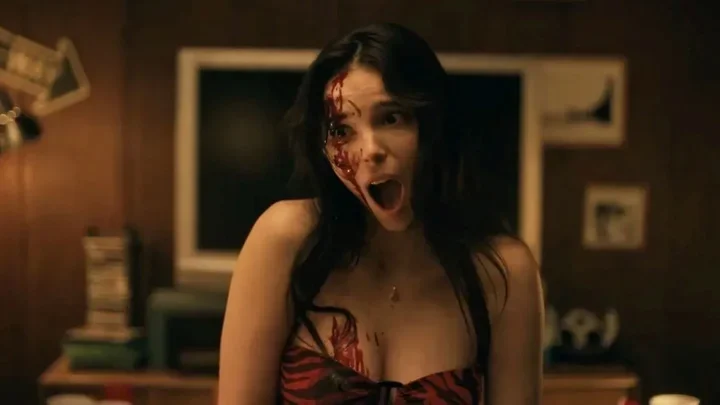
Foundational film theorist Laura Mulvey's decades-old argument about the ‘male gaze’ is still relevant in Obsession. She argued that mainstream cinema often positions women as objects of visual pleasure for a heterosexual male viewer. Women are filmed not as people driving a story, but as an aesthetic to be looked at, more significant for how they appear rather than what drives their character. Nikki's smile lingering a beat too long, her eyes doing the labour of communicating her truth; these are directorial choices that put her body on display, even inside her own violation. The audience hooting at scenes that portray Nikki to be vulnerable is not what the grammar of this film called for; it’s the misplaced judgement in a room full of Pakistani men, who can only perceive her character by dehumanizing her.
What makes the reaction particularly unnerving to sit through is something that horror theorist Carol Clover found when she studied slasher-film audiences: horror is one of the few genres where male viewers identify with the female lead, not against her. They cheer for her survival, flinching at her fear as though it was their own. That's the identification this film seems to have been built to invite. In the early scenes of the film, we see Bear, still conflicted if he’s the ‘good guy’ or ‘bad guy’, who loses himself over a woman's love, and before we learn enough about Nikki to humanize her, she loses her personhood entirely. This assumption expects the viewer to stay with her horror till the end. The Bahria Town audience declined that invitation and identified with Bear instead. They could relate with his guilt and his need to be approved of and validated by Nikki, in a culture where women are always consumed as the subject of voyeuristic urges and never actually seen.
That refusal to identify with a woman's horror aligns with the statistics of gender-based violence that have been recorded in Pakistan recently. According to the Sustainable Social Development Organization, more than 32,000 cases of GBV were reported in 2024, including over 5,000 rapes, 2,000 cases of domestic violence, and 500 honour killings, while conviction rates for these crimes remained exceptionally low.
The crisis has shown little sign of abating. During the first six months of 2026, 3,172 cases of gender-based violence were officially reported across Pakistan, as reported in Sahil’s ‘Six Months Cruel Numbers’ report, with Punjab accounting for nearly three-quarters of all reported incidents.
Noor Mukaddam's case in 2021 should have been straightforward. Amna Baig, a superintendent of Pakistan police and the first responder when Noor Mukaddam was murdered, has been vocal about her investigation of the case. In a podcast with journalist Sahar Habib Ghazi called Pink Salt, she dove into the layers of misinformation that were constructed in an attempt to save Zahir Jaffar from getting convicted. Media outlets repeatedly misreported the story, using headlines like: “Noor Mukaddam: Diplomat's daughter beheaded for spurning proposal” — statements that decentralized the perpetrator of violence and used passive voice to shelter and safeguard Zahir.
Noor's only crime was to refuse his marriage proposal.
These men objectify women and 'control' them, which is not far from what Bear does to Nikki, by making her the object of his desire, hence controlled by his wish. What also stands out in the film is the moment Bear's friends find out that he and Nikki are dating. Their immediate assumption is that he must be taking advantage of her vulnerability, given that she is struggling to cope with her father's terminal illness. The accusation enrages Bear and forces him to look inward. "Am I really that bad? Why can't she like me?" Yet even in this moment of self-reflection, he fails to recognize Nikki as a complete human being with agency and capacity to make her own choices. Instead, he frames the situation around his own desirability, unable to imagine that her feelings might simply not align with his.
Sara Shroff, an Assistant Professor of Gender and Sexuality Studies, examines Qandeel Baloch's life and murder through the lenses of honour, race, and digital celebrity. She writes: “Dishonourable women are bad assets, and their death is how value is reclaimed.” Nikki and Noor are just examples of this theoretical framework being enacted on the screen and in real life.
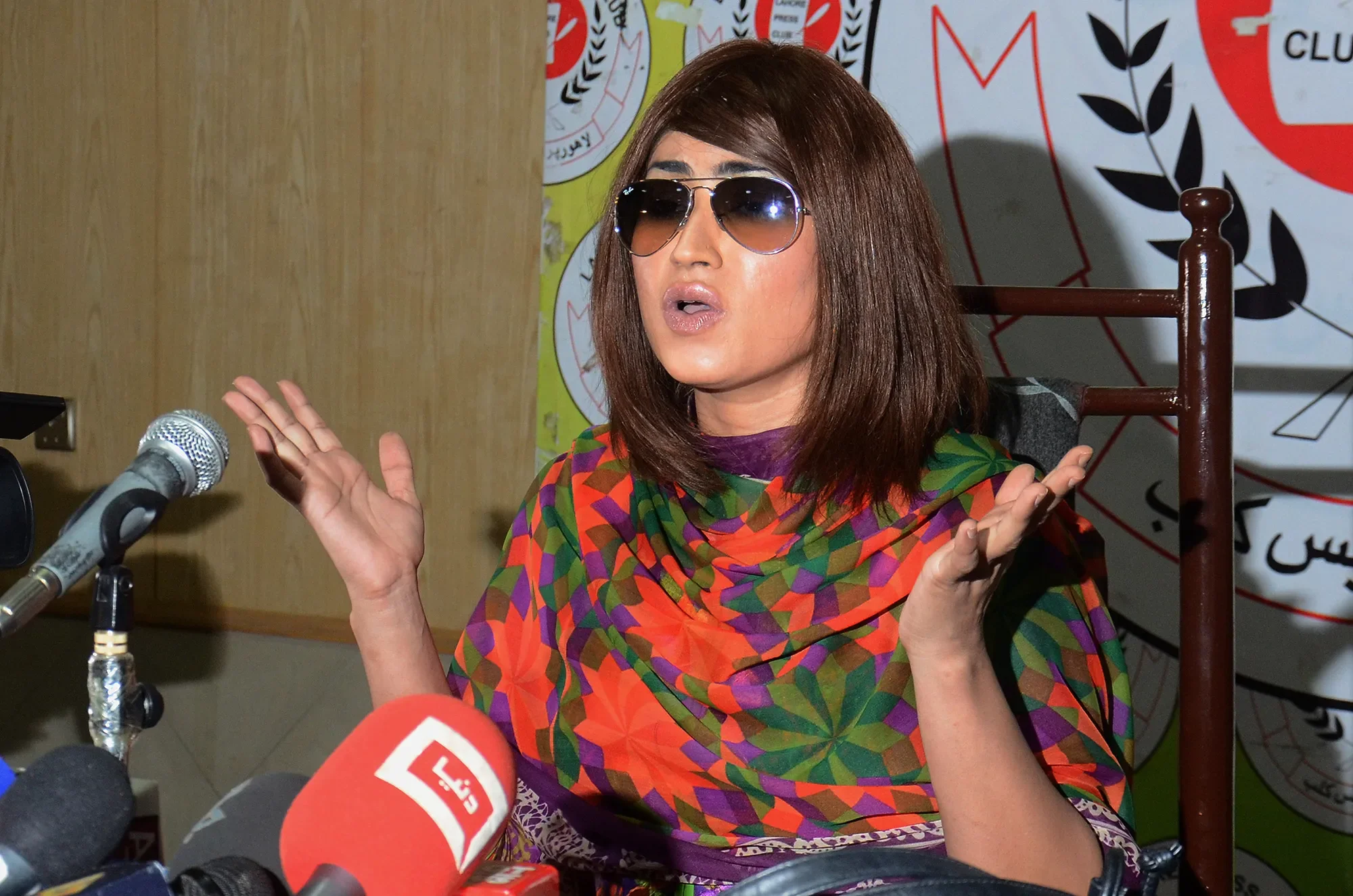
What Qandeel threatened in the fabric of this society was legibility. Her audiences could not place her into the role of a wife, daughter, or victim, and a culture that can't categorise a woman in terms of her relationality struggles to mourn her cleanly. Shroff notes the public reaction that followed her murder, one repeated so often it became its own kind of consensus: “She shouldn't have behaved like that, but she didn't deserve to die.” It's the same sentence structure running through the theatres. Sympathy towards Nikki or Noor or Qandeel is only warranted on the condition of her being a victim. Even the men who killed them seemed to understand this logic better than the country did. Mufti Abdul Qavi, who Qandeel had publicly embarrassed weeks before her death, later offered this as commentary: “In the future, before you humiliate the clergy, you should remind yourself of this woman's fate.” Not grief, but a warning, issued to every woman watching, to mould themselves into the version of womanhood desired by the men around them, on pain of death.
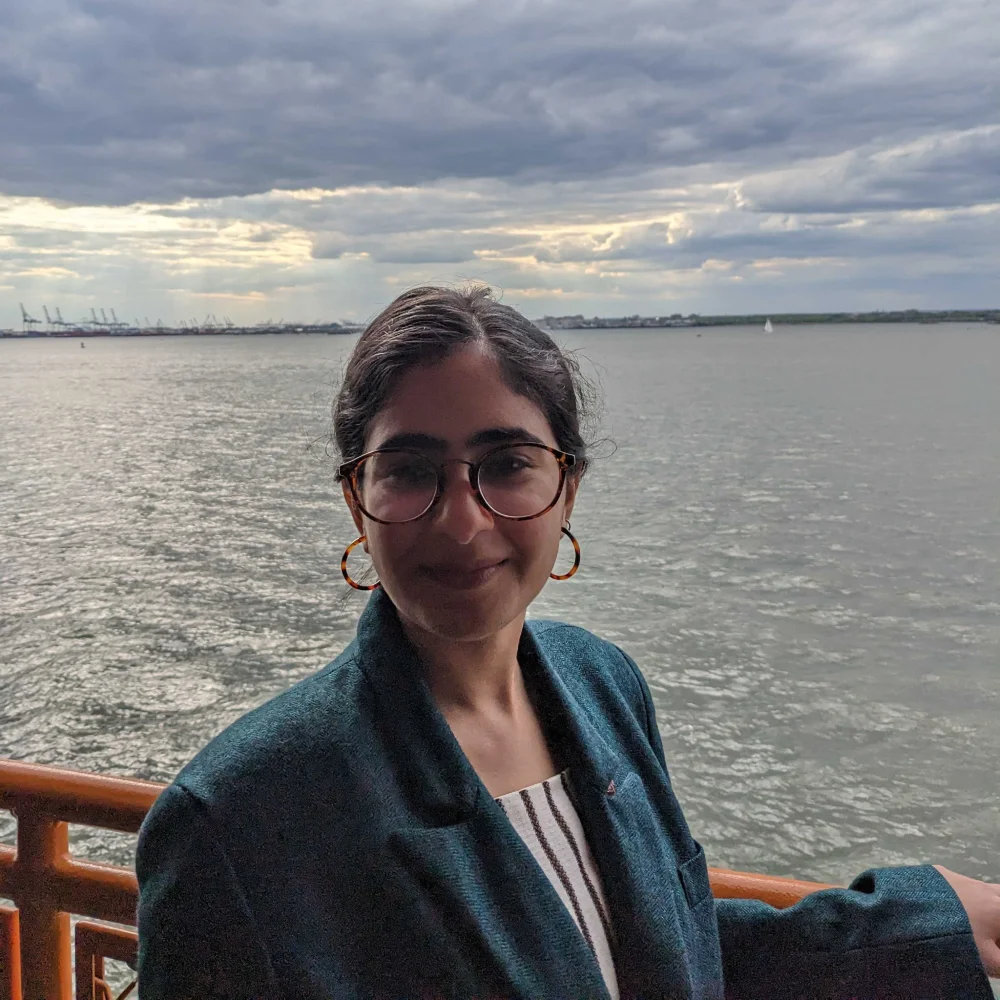
Manal Khan is a writer, photographer, and curator, inspired by food alchemy, cinema, and memory. Raised in Karachi and shaped by the cultural movements in New York City, her writing has been featured in MIT Press, Liberty Books, and Herald Magazine. She documents her ongoing food journey on @manal8athome.