Within seconds of a bomb falling somewhere in the world, a video of it is in our hands.
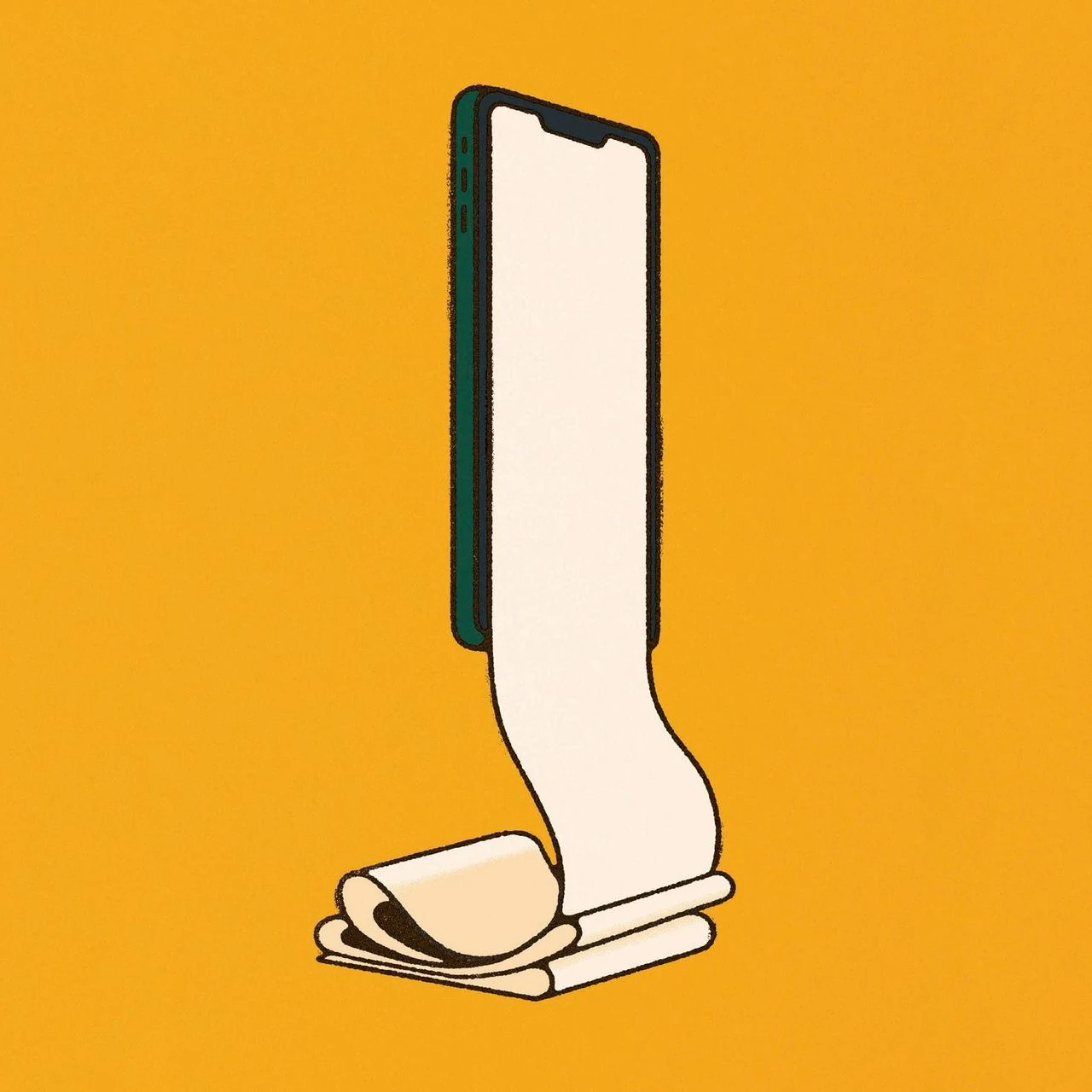
For Pakistanis, who are living in a country where an increasing segment of the population relies on social media as its primary source of news, where traditional media is censored, where the state controls the narrative, and where a phone is often the only window to the world, the information arriving through that screen is not background noise. It is how our reality, and political perspectives, are consistently shaped. And unlike previous generations who waited for the morning newspaper or the evening bulletin, we receive it all - wars, crises, fabrications - at 2am, on the same device we use to call an Indrive.
This is genuinely new. Not the existence of war or political crisis, but the experience of receiving it continuously, personally, in real time, in a format engineered to prevent us from putting it down. The teacher in Multan checking her phone between classes. The father in Karachi scrolling through his family group at midnight. The student in Lahore whose entire political education has taken place on a feed. All of them trying, in good faith, to understand what is happening to their country. And all of them doing so inside an information environment that was not built for their understanding, but for their attention.
And it raises a question that most analysis of misinformation sidesteps: what does this level of access do to human agency, to the capacity to form a considered view, to act on our own judgment, to be a thinking citizen rather than a reacting one?
What agency requires, and what depletes it
Albert Bandura argued that human beings are neither passive products of their environment nor free-floating autonomous agents. They operate within systems, social, political, technological, which both constrain and enable their capacity to act deliberately. What makes agency possible within those systems is the ability to govern one's own thinking, form goals and translate thought into action. This capacity is finite. It depletes under pressure. And the conditions under which it depletes fastest are precisely those that algorithmically curated information environments are designed to produce.
During the India-Pakistan military crisis of May 2025, deepfake videos of nuclear site strikes circulated within hours of actual military exchanges, forwarded many times.
But individual cognition is only part of the picture. Social psychology adds something essential: people do not form their sense of what is real, what is possible, and what they should do in isolation. They form it through communities, through norms said communities sustain, the information environments they access, and the social cost of dissenting from the dominant group feeling. When an entire community is receiving the same algorithmically curated emotional content and responding to it collectively - in family WhatsApp groups, in drawing room conversations, through Instagram stories - the individual's capacity to question what the group has already accepted is not only cognitively difficult, but socially costly too.
Where Pakistan Stands
Consider Rehana. She lives in a middle-class neighbourhood in Lahore. She is a schoolteacher, a mother of three, and a member of seven WhatsApp groups. Family, school, neighbourhood, alumni, and one her brother-in-law set up specifically for ‘news sharing’. On the morning of March 1, 2026, she woke up to 340 unread messages.
Rehana is not a passive person. She is trying, under conditions of acute national anxiety, to understand what is happening to her country and what might happen to the people she loves. The problem here is that the information environment she was navigating that morning was not built for her understanding, rather merely her attention.
Pakistan's geopolitical position in early 2026 placed its citizens at the intersection of nearly every major regional tension simultaneously. The country shares a 900-kilometre border with Iran. India looms over on the other side. It has a defence agreement with Saudi Arabia, a country under attack by Iranian proxies. So many Pakistanis work in Gulf states send home remittances that function as a structural economic lifeline. All while at home, fuel prices have risen forty percent in a single month. A population already navigating severe financial stress was simultaneously being asked to process a geopolitical crisis of historic proportions through algorithmic platforms.
When the United States and Israel struck Iran in February 2026 and killed Supreme Leader Khamenei, these pressures converged at once. In Karachi, protesters stormed the US consulate. In the districts of Gilgit and Skardu, a three-day curfew was imposed and troops deployed following deadly clashes in which at least twelve protesters died. Across the country, at least twenty-four people were killed in the first wave of protests alone.
The Machine
For most Pakistanis, social media is not a supplement to news. It is news. WhatsApp, Instagram, YouTube, and X create an information overload for users according to an algorithmic logic that surfaces content generating the most reactive responses. Because emotionally aroused users engage longer, share faster, and return more frequently. Behind a small screen, viewing short form content, is how we increasingly access news.
It is worth being specific about what this means in practice. The algorithms that determine what Rehana sees on her feed were not designed with her in mind. They were built by companies headquartered in California, optimised for markets in North America and Western Europe, and trained on data sets that reflect the cultural anxieties and political vernacular of those geographies. When those systems encounter Pakistani content, about Iran, about India, about sectarian grief, they apply the same engagement logic: surface what provokes the strongest reaction, regardless of accuracy, context, or consequence. This is not only an external problem however. Pakistani state actors and domestic political interests also exploit these same platforms actively and deliberately. The smog reduction campaigns with social media users is one small example.
For users, what alienates them further from actual information is the systematic suppression of credible local reporting. This is euphemistically labelled by these platforms as “content moderation”.
Doom-scrolling is what this looks like from the outside, while from the inside, it often feels like staying informed. That is the trap.
Pakistani voices reporting on dissenting political views often see their reach reduced. As a result, users are flooded with fabricated emotional content while credible local reporting becomes harder to find. Not only because of censorship, which is at least visible and contestable, but by algorithmic demotion that operates invisibly. What rises to the top of the feed is not what is most true, or most important, or most relevant to Pakistani lives. It is what produces the most engagement in the least time, and increasingly, that content is often only artificially intelligent.
Under conditions of fear or collective threat, people process information faster and less critically, rely more heavily on group cues, and become more susceptible to whoever is loudest in their immediate social network. While this is a valid response, that coordinated group response reduces a threat. This response is ill-suited to operate on a social media feed. It manifests as believing what anyone with a following says about the political situation, rather than listening to an expert. This feed is built by systems that cannot distinguish between a real post and a fabricated one, and more importantly, have no interest in making that distinction.
The doom scroll and what it takes from us
During the India-Pakistan military crisis of May 2025, deepfake videos of nuclear site strikes circulated within hours of actual military exchanges, forwarded many times. To me for one, anything with a forwarded many times label straight up comes off as misinformation.
Similarly, during the US-Iran war, AI-generated footage of fabricated battlefield events reached hundreds of millions of views globally, becoming one of the first major conflicts in which AI-generated misinformation outpaced traditional fakery in both volume and realism. Users were not encountering false information occasionally; they were submerged in it – with an already narrowed cognitive bandwidth making it genuinely difficult to distinguish real from fabricated.
Rehana forwards the video before her first class begins. She will not find out it was fabricated until the following week, if at all. Doom-scrolling is what this looks like from the outside, while from the inside, it often feels like staying informed. That is the trap. The scroll produces the sensation of engagement, the feeling that we are following events, forming views, participating in something. This happens whilst the cognitive capacity required for genuine evaluation drains out.
People do not stop consuming information at this threshold; in fact, they consume more of it, more compulsively, with progressively less ability to interrogate what they are absorbing.
The dopamine cycle of the new notification, the outrage that arrives before the question, the urgency of the forward: these are the intended outputs of a system whose commercial interests are precisely served by the gap between what we feel and what we have actually decided. It is this vicious cycle that should compel us to interrogate our agency as consumers of content more deeply.
The Political Irony
Here is what makes Pakistan's situation particularly stark. While Rehana was processing 340 unread messages about a war she could not verify, Pakistan's diplomats were sitting in rooms in Islamabad hosting the highest-level direct talks between the United States and Iran since 1979. The nuclear question, the Strait of Hormuz, the shape of any durable peace – these were being negotiated in Pakistan's name, by officials who had spent weeks positioning their country as the one credible bridge between two parties who would not speak directly.
For the Pakistani state, this was a triumphant moment of genuine diplomatic achievement. However, the public those diplomats represented were mostly following said events through tools optimised for emotional responses, such as short form content, and oscillating between actual information and memes about them. Feeds were full of artificial imagery, algorithmically sorted outrage, and content calibrated for maximum emotional response, with a tinge of actual information.
It is worth noting though that Pakistani journalists, fact-checkers, and digital rights organisations have demonstrated immense resistance to censorship and great initiative in tackling misinformation. This capacity for critical engagement matters enormously.
But for Rehana, trying to be a responsible member of her family and her community while her cognitive and social resources are being simultaneously depleted, the question is not whether agency is theoretically possible. It is whether the structural conditions for its exercise exist in the texture of her actual daily life.
This is not an argument for consuming less news or disconnecting from the world. It may even be argued that Pakistan is a country that cannot afford political disengagement. What it is an argument for is something more specific: the recognition that the information environment we increasingly now inhabit has been designed, by actors with interests different from ours, to replace our judgment with their preferred emotional state.
It is helpful to know that the algorithm surfaces content that makes you react. This has political implications for how public opinion forms, how governments are held accountable.
The dopamine cycle of the scroll, the urgency to forward, the reaction that arrives before the question: these are intended outputs of a system whose commercial interests are served by the gap between what we feel and what we have been bombarded with.
And perhaps, in the meantime, there is something to be said for the printed page. Which arrives without an algorithm deciding whether you were the right kind of angry to receive it.

Mashal Rizvi is a public policy and strategy consultant working in the global development sector. She also works as a photographer, with several years of experience in visual storytelling.