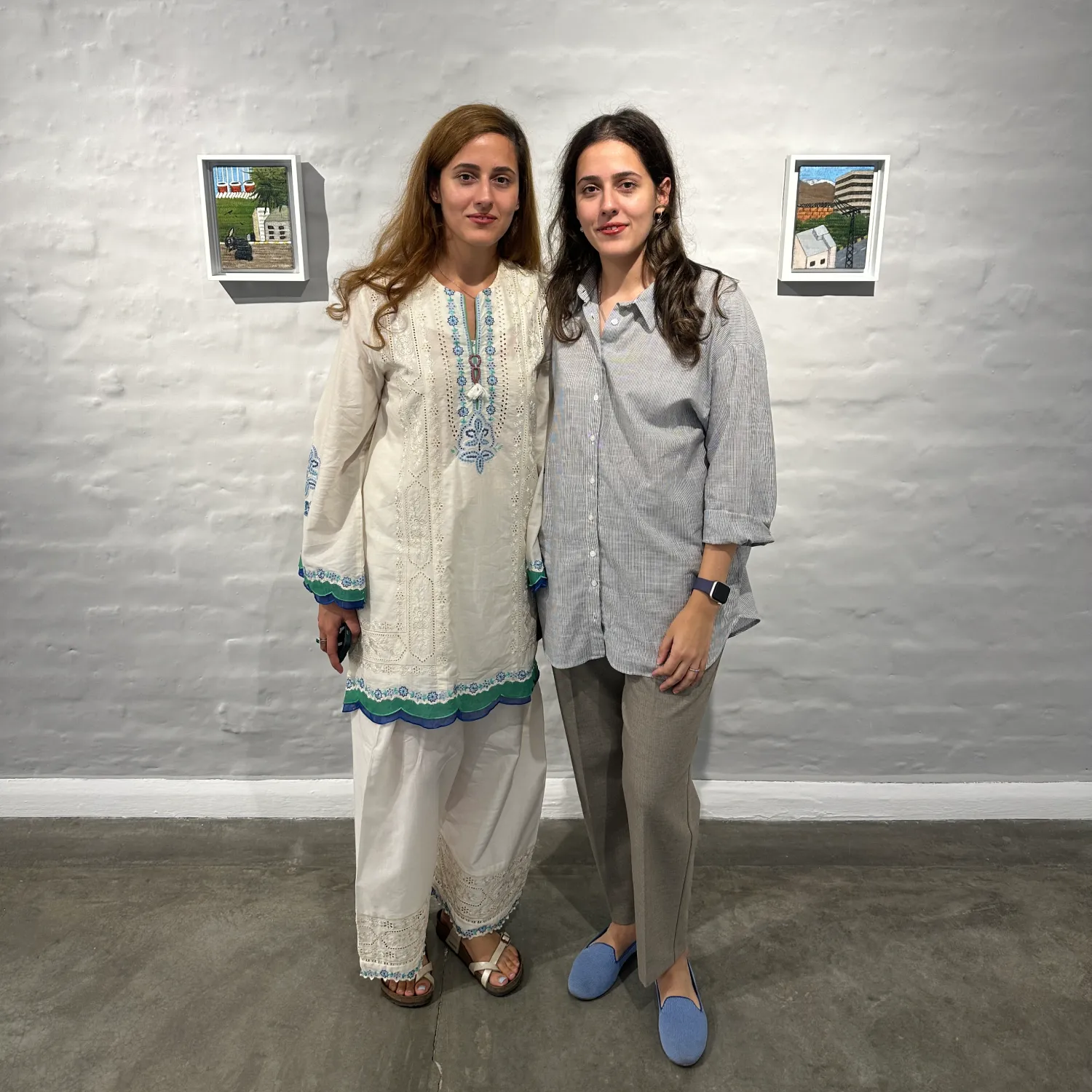
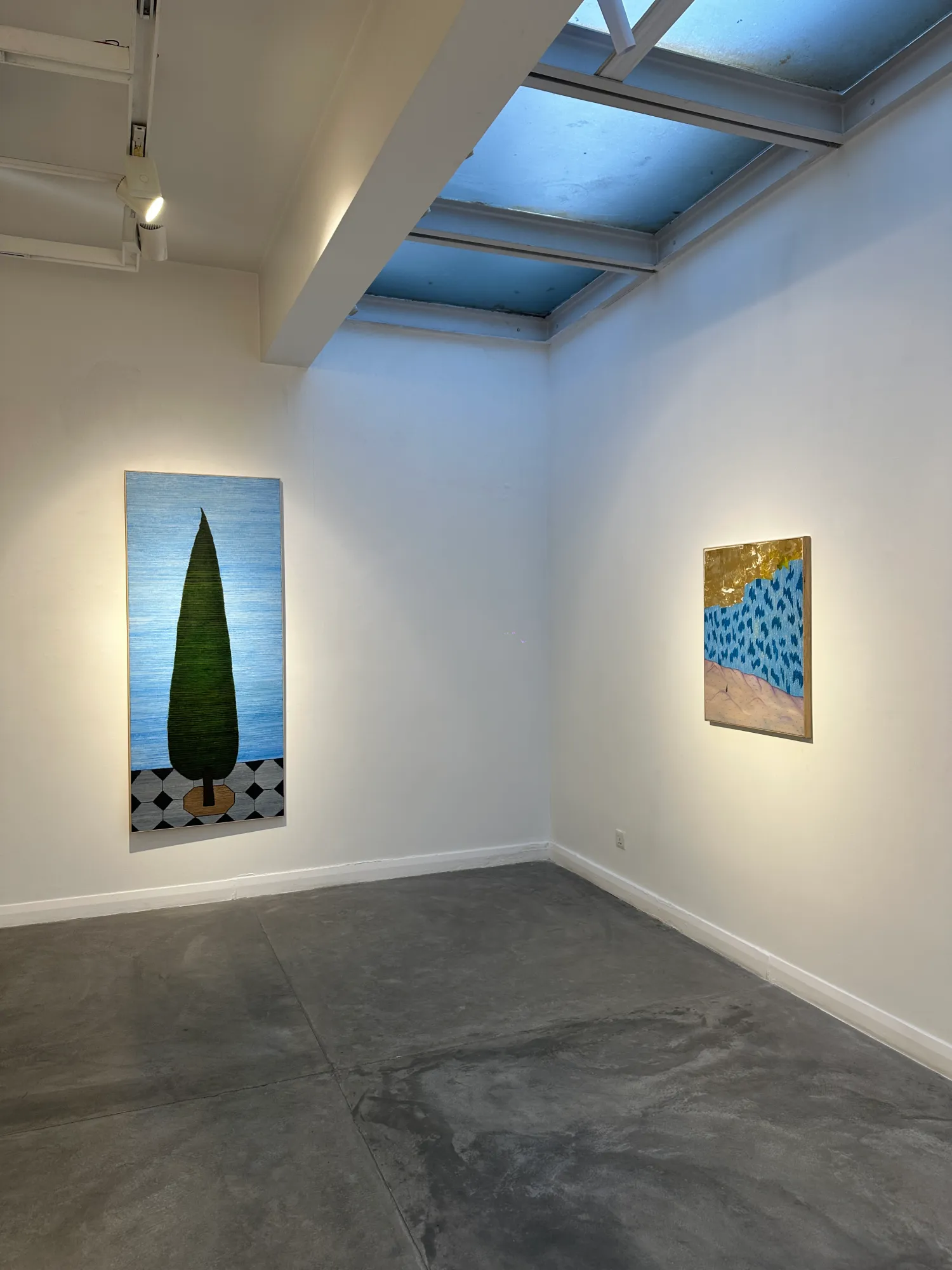
Between Two Homes opened on a Friday in October 2025 at O Art Space in Lahore, with the golden sun setting to give way for the city to transition to fall. It seemed fitting to curate this exhibition of familial dichotomy with the scent of change in the air.
Born in 1993, Iranian artists and sisters, Maryam and Marjan Baniasadi, work in different mediums, but share the same impulse: preservation. For Marjan, it’s the threadbare nature of Persian carpets; for Maryam, the fragile persistence of plants in the city. Between them lies a dialogue about endurance, migration and the colossal task of carrying around their heritage like an invisible suitcase everywhere they go. As one would expect, the sisters have an undeniable bond — the kind of wordless understanding that comes with twinhood. However, both Marjan and Maryam are careful to maintain distance between their practices.
“Well, we’ve been seen as the twin artists for so long, we want to focus more on our own individual practices that are so uniquely different,” said Maryam. They resist the label of ‘twin artists’, preferring instead to be seen as two distinct voices who just so happen to share a lineage and an alma mater.
Over the years, the Baniasadi sisters have steadily expanded their artistic footprint, with their works being shown in Pakistan’s major contemporary art circles as well as abroad, marking a consistent ascent from early, fresh-out-of-grad-school group exhibitions to the international stage. Together and individually, they have collected a remarkable roster of awards, grants and residencies. Both sisters were featured in the Imago Mundi Collection as a part of the 2017 Venice Biennale, positioning them among many of Pakistan’s emerging generation of artists defining a post-traditional aesthetic. Just last year (2024), they participated in a collateral event between the third edition of the Lahore Biennale and 11 Temple Road, entitled Tomorrow Isn’t Promised, where their individual works engaged with Lahore’s environmental histories.
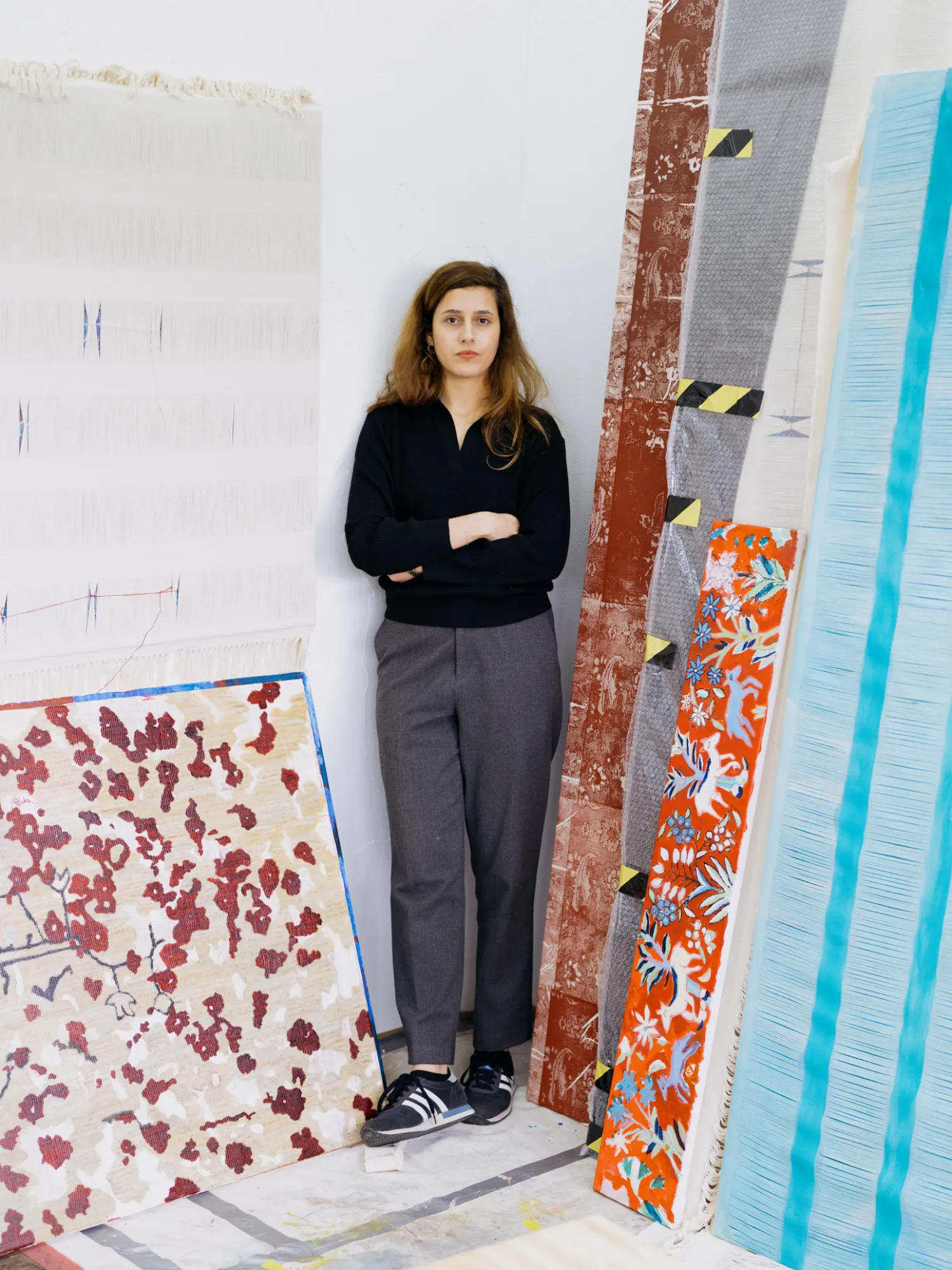
Closing in on a decade, Marjan Baniasadi’s practice has evolved steadily. During her later years at the National College of Arts, her early works from 2015 onwards focused on her budding interest in Persian carpets, including their form, texture, context and potential. She depicted this core concern as a metaphor for memory, migration, and material time. Her work during this period foregrounds the carpet as an object: oil paintings of woven surfaces, fragmenting motifs, dissipating and worn edges, telling tales of time. The focused presentation on patterns and motifs is eloquently materialised as topographies of memory and displacement rather than objects of decoration. Not only is Marjan concentrating on her lifelike tessellated depiction of carpets, we also see a few works that can be viewed as an abstract homage to the more rustic Iranian Mahal carpets with their simpler floral and geometric patterns, rather than the usual intricacies of the Isfahan and Kashan branch of carpets we see exhibited in several shows all over Lahore and neighbouring contexts.
Taking her 2018 work, Blossom, as an example, we see an initial experiment with texture, shapes and the start of a narrative. These hazy block prints of blurred motifs make way for a more solidified approach to her techniques. Later that year, Marjan undertook further studies, including a Master's in Ceramic Design from the University of Pécs in Hungary. Her practice broadened in its material form to include more sculptural works, and she began to interrogate not just the image of the carpet, but also its material logic, including individual threads, knots, weaves and texture.
Closing in on a decade, Marjan Baniasadi’s practice has evolved steadily. During her later years at the National College of Arts, her early works from 2015 onwards focused on her budding interest in Persian carpets, including their form, texture, context and potential. She depicted this core concern as a metaphor for memory, migration, and material time.
The sisters’ collaborative show Dual Genesis (what a fitting name) at Karachi’s Chawkandi Art Gallery in 2022 exhibited a narrational, if not mythological element, in Marjan’s serial works, A Hunting Tale and An Ordinary Day; zoomed in compositions of serene animal figures among foliage with a delightfully bright colour palette, not entirely akin to traditional Persian carpet imagery, but rather a modern interpretation. Earlier that year, when she visited the Museum Kurhaus Kleve in Germany, Marjan came across animal figurines all the way from Lorestan in Iran, dating to around 1500-500 BC; to the artist, these artefacts must have struck her as oddly familiar: the silhouettes of these animals recalling the borrowed forms she had long carried in her visual memory.
These animals were further reincarnated as Rendezvous II (tiny ceramic figurines 60 centimetres tall), The Woven Narratives Handmade Carpet installation (an unfinished carpet with animal shapes upside down) and Dispersion (minute line-drawn animals embroidered on fabric), all displayed at the exact same museum mentioned above.
In recent years, Marjan’s work has matured upon her move to Germany and she mentions that the environment directly influences her work: “I feel like my paintings are much more vibrant in Pakistan (…) back in Germany, they’re a lot more muted.” Her practice became more experimental and evolved into more sculptural and installation-adjacent forms, including large canvases and ceramics, all while expanding the notion of the carpet into ‘archives of time’ (an expression she coined). Her 2024 show, The Melody Beneath, at the Jo Van de Loo Gallery in Munich, articulates this: ‘Persian carpets are not only commodities but mobile living objects capable of listening and recording the time. Through incorporating myths, tales and fantasies of multiple times, these rugs, in each and every thread woven together, imbibe, delineate and convey simple and complex narratives of life and death, of pain and pleasure, of kings and peasants. Each individual carpet witnesses, conceals and then narrates a story of its own. It is interesting to note that while Marjan’s subject matter remains rather consistent in its ideology, both deep-diving into material forms as well as conceptual ones, the execution of her ideas involves various experimentations in mediums ranging from oil paints and acrylics to silk-screen prints and embroideries to ceramics and actual carpet weaving.
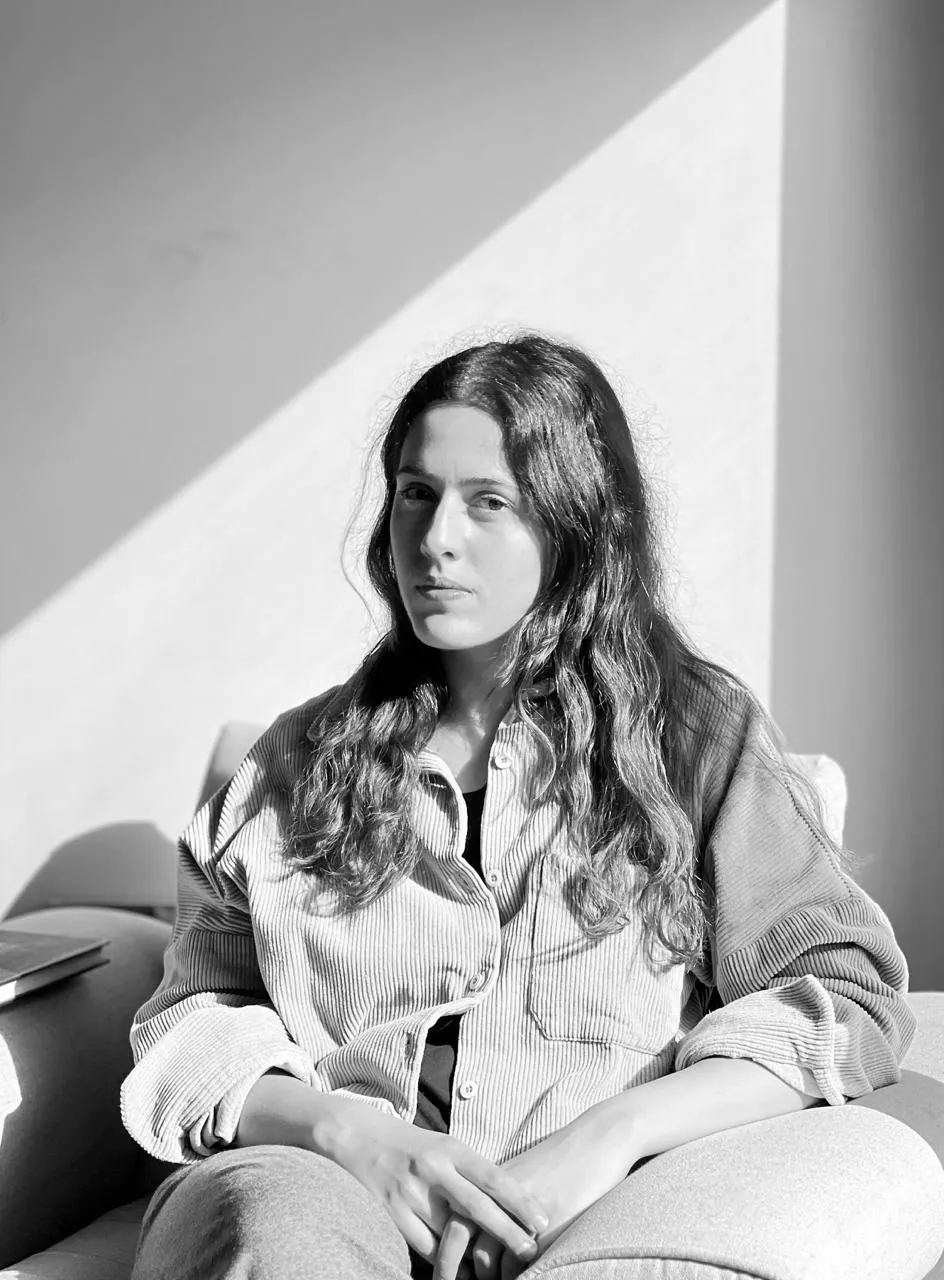
Maryam Baniasadi’s career over the last year maps a different trajectory: while her sister turns to the historical allusions of carpets and her modern interpretations of the heritage craft, Maryam turns to natural elements running parallel to manmade ones seen in everyday life. She scrutinises this seemingly mundane concept that a lot of us always overlook as we go about our business in the city of Lahore — a city that the artist is also based in for the better part of a decade now. Following her training in the traditional miniature painting technique that the National College of Arts is renowned for, her practice anchors itself in Lahore’s cityscape. One writer notes that the movement of miniaturists from Iran to the sub-continent resonates in her personal journey.
However, Maryam revokes the term ‘miniature painting’, which she believes to be a colonial expression designed to neatly compartmentalise a much broader context. While traditional Persian miniatures were solely concentrated in the illustrations of books, the term ‘miniature’ refers not necessarily to the small physical size, but to the intricate detail and the creation of a ‘world in miniature’ within the painting, which requires one to look closely to fully appreciate the world before you. However, with modern interpretations of the tradition by the likes of Shahzia Sikander, Aisha Khalid and Imran Qureshi, the very definition of ‘miniature’ begins to unravel and make space for new ideologies on the technique to burst forward.
Using either watercolour or gouache on wasli paper, Maryam first expanded on this tradition during her time at the National College of Arts, where she brought forth her Iranian roots and produced works strictly following that same tradition of flat, two-dimensional compositions. She drew inspiration from her life as a student in various studios, departments and hostel rooms at the college, as well as public spaces like gardens, stadiums, and of course, the roadside, for which her works are well-known.
Maryam Baniasadi’s career over the last year maps a different trajectory: while her sister turns to the historical allusions of carpets and her modern interpretations of the heritage craft, Maryam turns to natural elements running parallel to manmade ones seen in everyday life. She scrutinises this seemingly mundane concept that a lot of us always overlook as we go about our business in the city of Lahore.
One of her earlier works, Home (2016), illustrates the soft mundanity of a household interior: a bright sofa set with plain walls carrying a clock, a switchboard and an air conditioning unit with its remote holder; a framed artwork is halved where the painting ends; the carpet featured at the bottom is reminiscent of the ornate, geometric borders associated with traditional Persian miniatures, despite lacking an inscription in Farsi. Other works that were a part of her graduating thesis display feature a series of stylised imagery of her college, employing an elevated as well as a multiple-point perspective, mixing interior and exterior viewpoints. The Printmaking Studio (2015), NCA Main Courtyard (2015), NCA Canteen (2016), NCA Lahore Building (2018) and The Classroom (2018) all feature similar vantage points and tend to be more stylised with less emphasis on strict naturalistic accuracy. All the flora and fauna we see are perfected in their textures, perfectly in sync with the human figures we see in her work, who have idealised features; youthful, rounded faces and high eyebrows, with consistent modern-day clothing styles. A few of her recent works, such as Cricket Match (2022) and The Qwaali Night (2022), follow this approach to recreating a world in her own vision, if not totally acting as a reincarnation altogether.
Following her graduation, Maryam exhibited both nationally and internationally. Solo shows, such as In the Realm of Metamorphosis (2020) in Tehran, signal her growing profile. Her residency participation in the inaugural Dastaangoi Artist Residency group show Baad-e-Saba (2021) in Islamabad expanded her engagement with site, nature and narrative, resulting in what would be the start of her trademark works that render the natural and the urban in parallel: a lone tree against a wall of bright red bricks, or a shrub resisting and spilling over its cemented containment.
As if simultaneously, Maryam dives into botanical studies with close-ups of trees and bushes, leaves and flowers, stems and stalks. We see the groves in wood, the textures of tree bark, the wilted petals, perfect leaves, protruding thorns and the like, painted with excruciatingly slow intention. All executed in the technique that has become synonymous with her name now, including her treasured Vase Series (2023).
In recent years, Maryam has consistently reinforced her concept of how nature asserts itself in human territory, how traditional miniature technique can depict contemporary existential resilience and how personal displacement becomes botanical metaphor. Her 21st century depiction of nature in this practice is a direct opposition to the role it played in traditional Persian miniatures, where natural landscapes once flowed freely and made up a majority of the composition, including the background as well as the foreground. She concentrates on scenes we often overlook, like a potted plant, a bush growing on the side of the road, flowers and vines on balconies — simple, yet significant. A lot of uncomplicated patterns and textures are incorporated to signify vicinities, like in Pavement and Plants (2021); parallel layers of manmade constructions and natural elements with their simple but varied textures, all layered on top of each other like a well-made trifle.
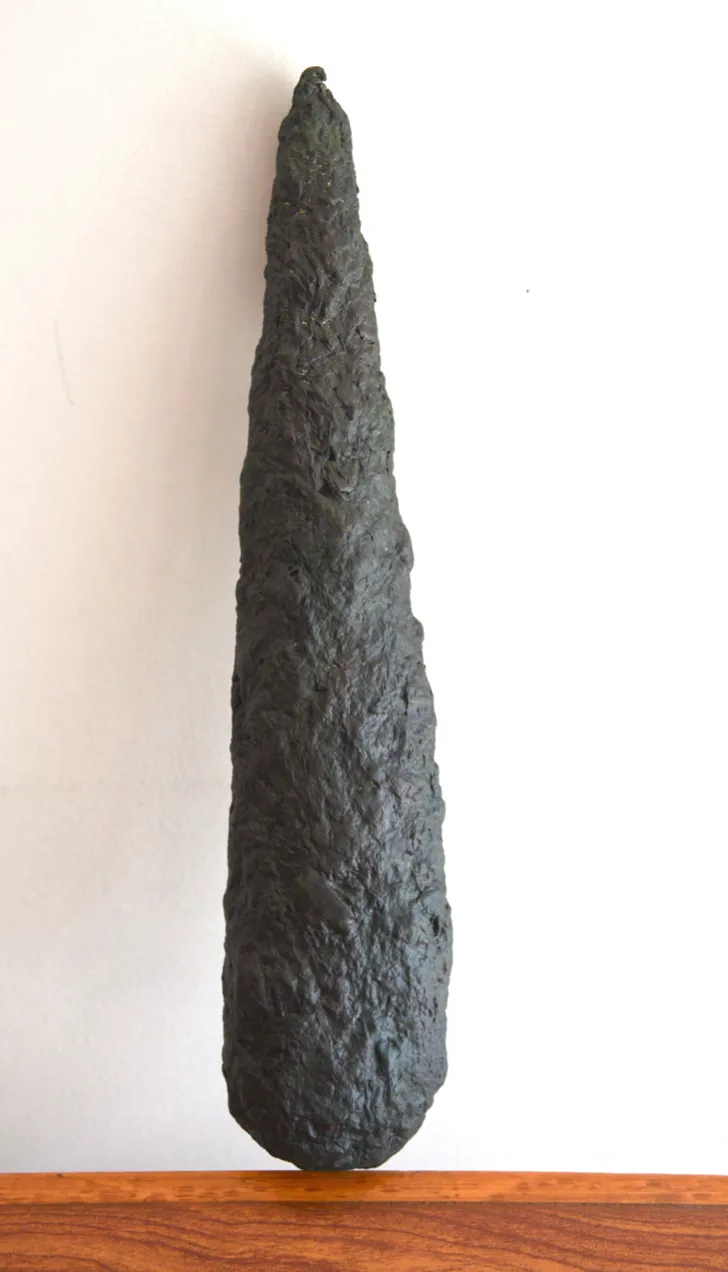
The title, Between Two Homes, gestures to both their nomadic histories and their twinhood. ‘Home’ here isn’t a singular place but a shifting state of belonging, stretched between countries, mediums and their relationship with each other. The cypress, a recurring motif in both their works, inquires what it means to create across geography and memory.
After spending a couple of years geographically apart, Marjan and Maryam Baniasadi’s exhibition at O Art Space in Lahore brought the sisters together again. The exhibition Between Two Homes began as a simple idea, which was to finish what had once been left undone. Across borders and time zones, Marjan and Maryam exchanged unfinished canvases, trusting the other to see what they could not. Out of that trust grew a new kind of conversation; one where distance and migration evolved into a material form. Maryam’s meticulous sketches are layered with Marjan’s textured brushstrokes, while Marjan’s abstractions soften under the sensibility of her sister’s miniature practice. Each piece becomes a palimpsest of two minds, produced with each other’s permission, memory and trust.
The title, Between Two Homes, gestures to both their nomadic histories and their twinhood. ‘Home’ here isn’t a singular place but a shifting state of belonging, stretched between countries, mediums and their relationship with each other. The cypress, a recurring motif in both their works, inquires what it means to create across geography and memory.
“When you travel to Iran (by road), you see vast, barren landscapes and along will come a cypress tree on its own, or a group of them. They remind me of Marjan and myself; a self-portrait of sorts,” says Maryam. The cypress is both individual and communal; a tree that stands alone and also in repetition in the vast oeuvre of the sisters’ practice.
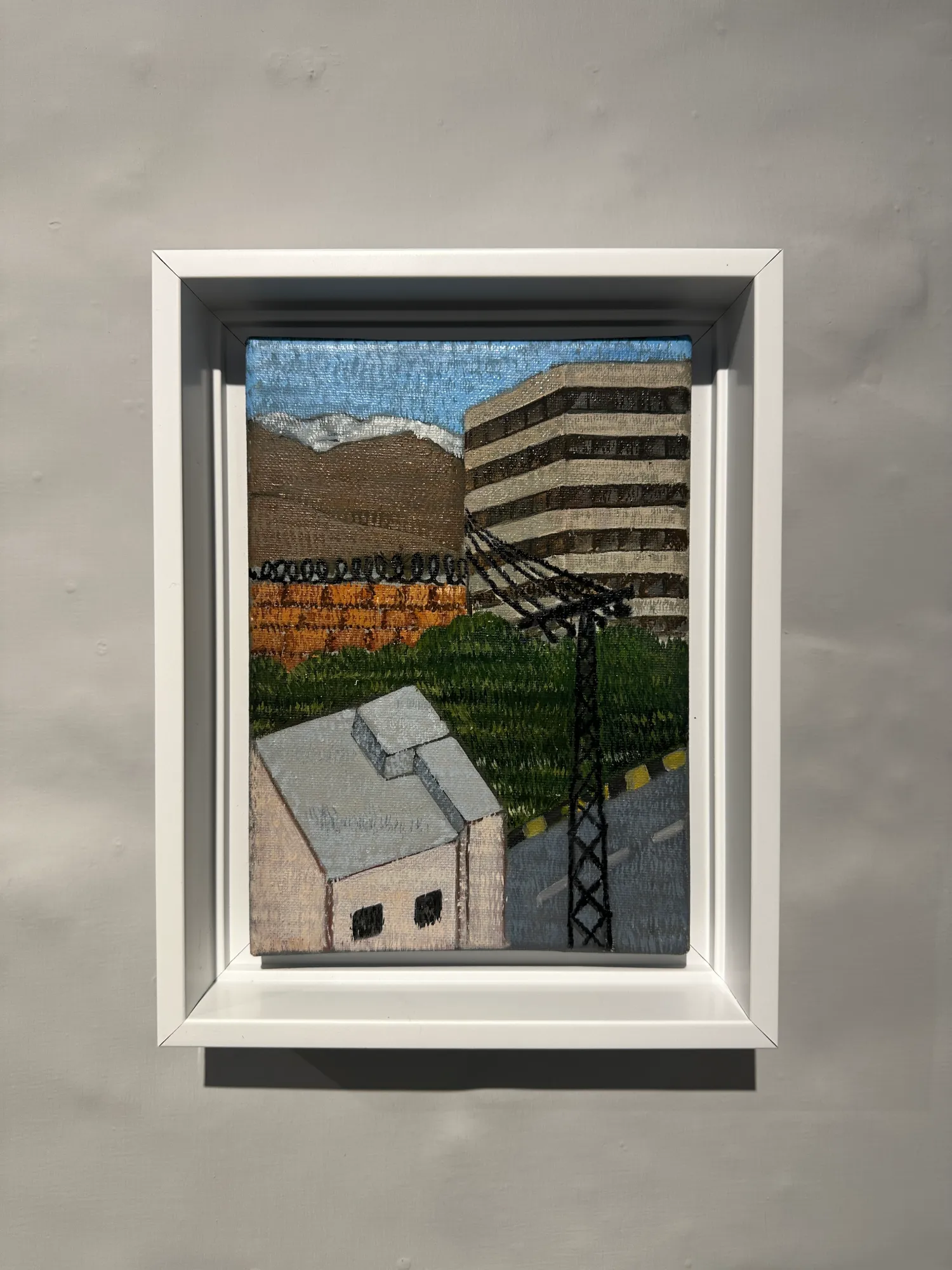
According to the artists, this show might be their last collaboration for a while, as a way of honouring what they share between them before stepping out and into their own orbits again.
Photos of the artwork in situ and header photo by the author.
‘The Raising Roots’ photo courtesy of the gallery.
Artist profile photos courtesy of the artists.
Ameera Khan is a visual artist, writer, lecturer and photographer, with an MSc in Art History, Theory and Display from the University of Edinburgh, Scotland. Khan lives and works in Lahore, where she teaches art history at the Beaconhouse National University.