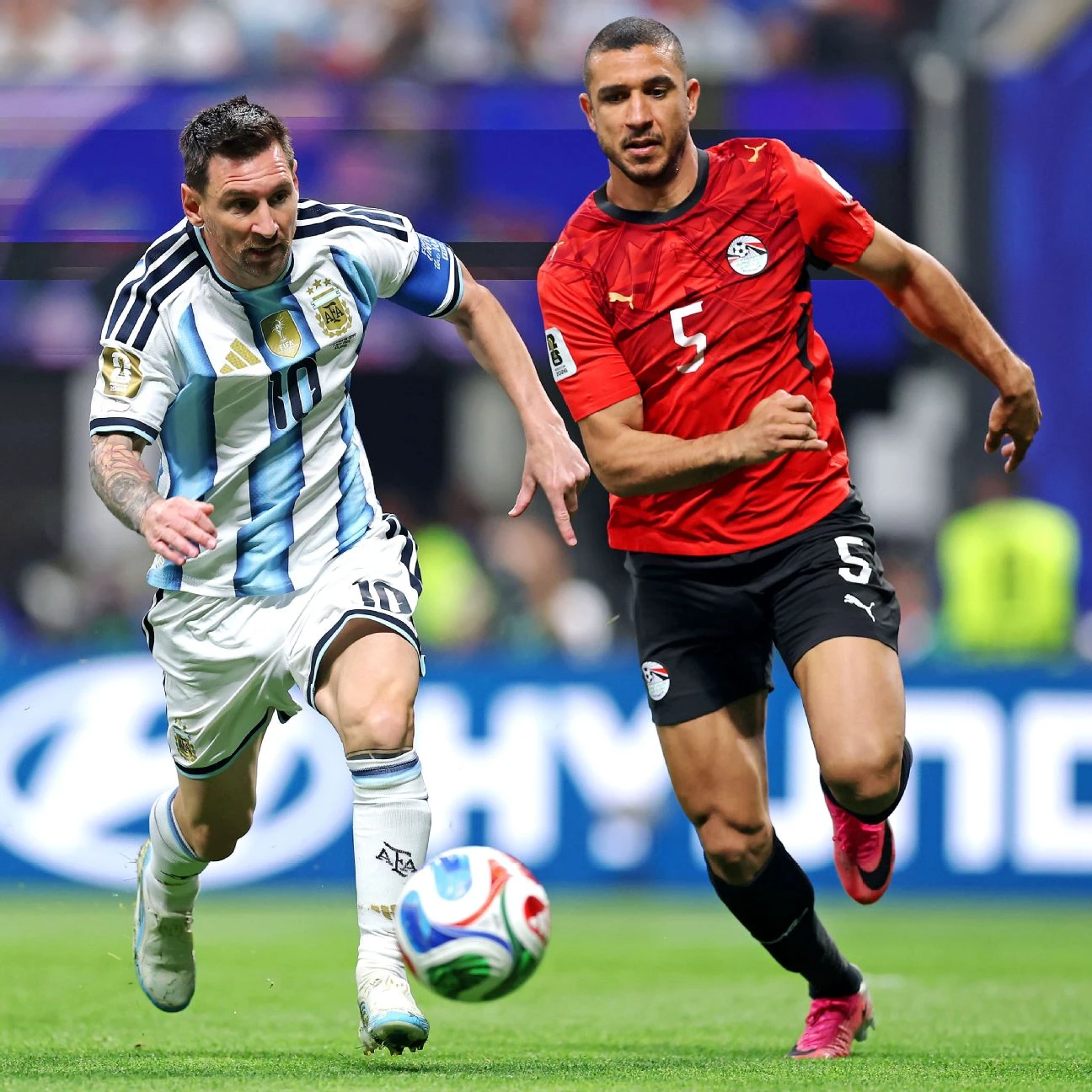
Football has a habit of being reductive. Scoreline reads 3–2: Egypt are eliminated, Argentina have advanced. White not factually incorrect, these statements do not tell the complete story. Years from now, someone will stumble onto this scoreline and think, oh okay! The defending champions, once again, found a way to win through perhaps the greatest player in the history of the game, eh, no big deal.
But it was a big deal. This was a story of an underdog looking one of football’s elite in the eyes and saying: we are not here to be part of your legend’s last dance to the trophy; we are here to make sure this, tonight, is your last dance.
Before Messi stood Egypt, a team that refused to accept its place in football’s conventional hierarchy. Argentina were supposed to stroll through to the quarter-finals, while Egypt admired them. And even if Egypt did manage to beat Argentina, the conversation was supposed to be about how bad Argentina were on the day, but not about how good Egypt were.
Egypt, however, completely made this about themselves—they not only made sure football’s usual narrative was rejected, but also made sure it was thrown completely out of the window. They didn’t arrive on the field to frustrate Argentina for an hour, only to eventually crumble under pressure. They came to play. Egypt owned the game, not because they had more gifted individual players, not because they controlled possession, but because they had absolute clarity.
Every pass had a purpose, every run made had an idea behind it, every recovery run seemed strategic, every transition and counter carried a threat. They defended without fear, and attacked decisively.
For Egypt, this was not survival, this was actual competition. At times it wasn’t just competition, it was dominance. For instance, at one point Egypt had a 3 on 1 attacking situation which they failed to capitalise on—there were plenty of those in this game. Egypt’s transitional play was as good as any team’s—it never looked accidental or rushed. On the contrary, it looked methodical.
It was all going to plan for Egypt: Messi had missed a penalty; Egypt had taken the lead through a sensational ball into the box by Marwan Attia, which was finished off by an even better header by Yasser Ibrahim. This was not looking like Salah’s farewell game; it was increasingly looking like Messi’s.
Egypt not only made sure football’s usual narrative was rejected, but also made sure it was thrown completely out of the window. They came to play.
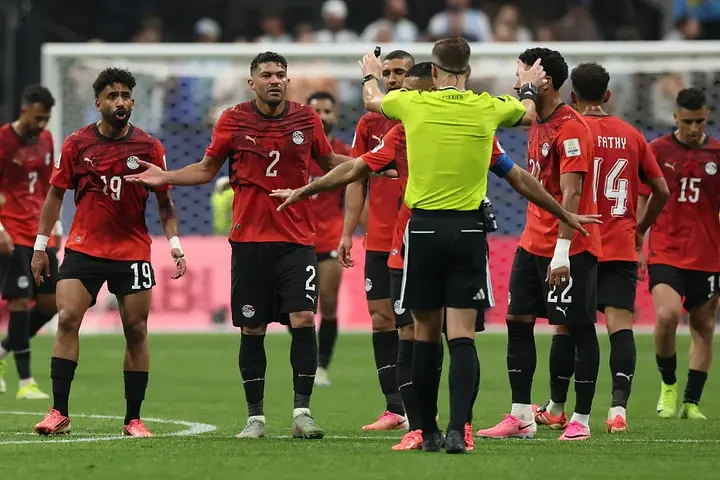
In the 58th minute, Egypt went through Argentina’s lines like a knife through butter. Mostafa Ziko slotted the ball into the back of the net and Egypt scored their second goal—they were in dreamland. They had exposed every flaw in this Argentinean team; they had looked Argentina in the eyes and told them you have weaknesses, and we are going to exploit them ruthlessly. The ball had crossed the line, it had rattled into the back of the net, the celebrations had begun, then VAR intervened, and the whistle blew to break Egyptian hearts. The goal was overturned because of a supposed foul at the opposite end of the field, from where Egypt had covered the entire distance of the field to score the goal. Officials will argue the goal was disallowed as per the uniform rules clearly given to all teams before this World Cup, Egypt and their fans will argue that the VAR shouldn’t have intervened for something that happened so far away.
Perhaps the officials were correct, perhaps they were wrong, but all of that is besides the point. The frustration from Egypt wouldn’t come because they were asking for charity, it would come because they were asking for consistency, or at the very least clarity.
The game however went on, as it is supposed to. Even though football is supposed to be a romantic sport, it has very little time for emotions, it carries on.
If Egypt’s second goal, or disallowed goal, or whatever you want to call it, wasn’t warning enough for Argentina, Egypt did it again. They once again looked Argentina in the eyes and said you may be the World Champions, but you aren’t as good as you think you are. Egypt sliced through Argentina again, Mostafa Ziko scored yet again. Once again the scoreline read 2-0, and thankfully for Egypt VAR didn’t intervene this time.
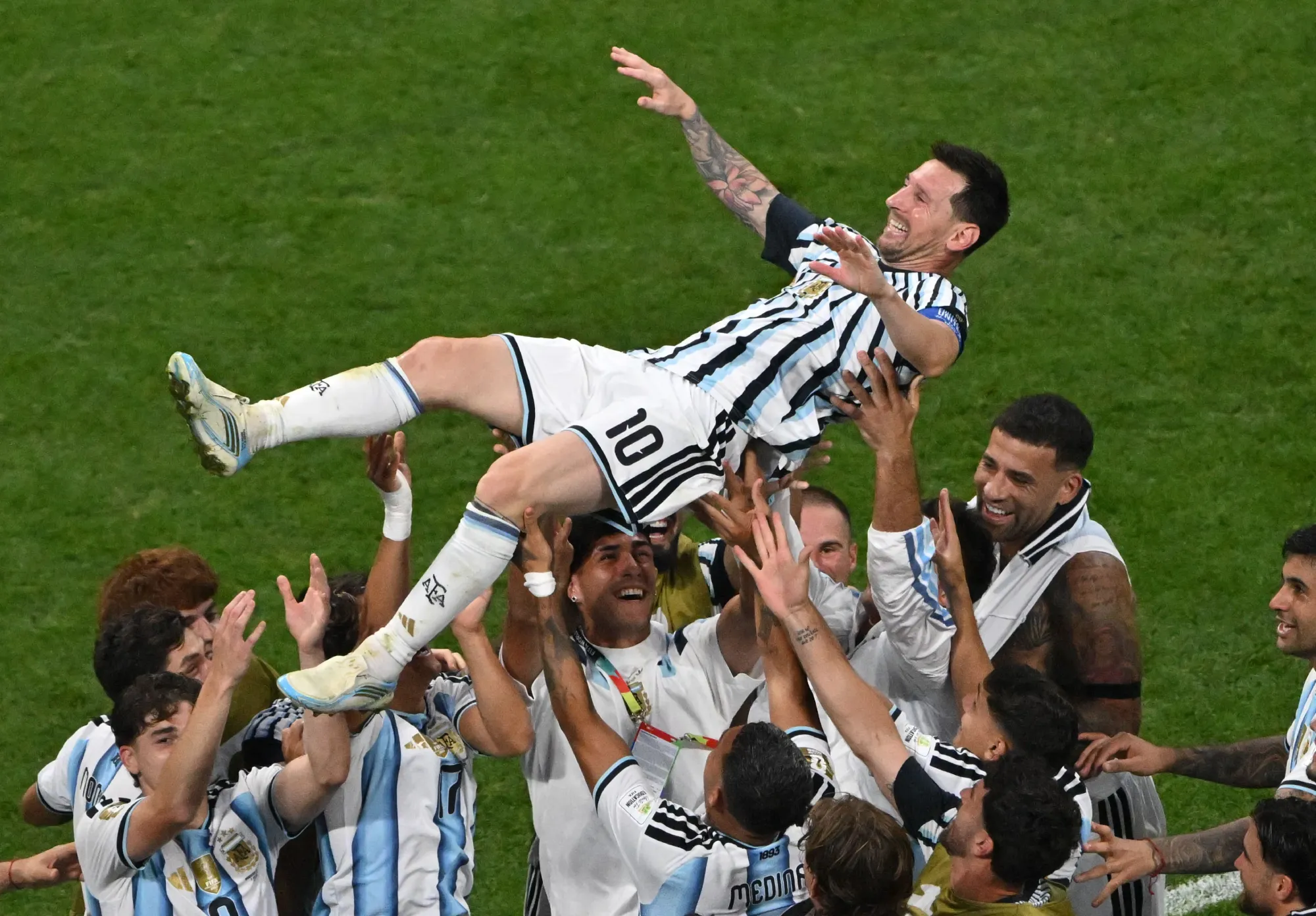
With 20 odd minutes left, Argentina increasingly looked out of ideas and Egypt increasingly looked menacing on the break. Argentina looked at everyone from Julián Alvarez to Lautaro Martínez to 23 other squad members. They couldn’t find any answers. Eventually they looked where they always look, that guy, yes that one who wears the number 10 jersey.
He missed a penalty to show he is human. He delivered an assist to show he still has it. He ran past three, maybe four defenders, almost resulting in a goal for Lautaro Martínez, to show he still has magic. And, then he scored the equaliser to remind the world, once again, that there is only one Messi.
In this moment, you could feel for Egypt, but Egypt deserved more than sympathy. They came into a match as complete outsiders, but didn’t behave like guests. They made Argentina look old, anxious, stretched, and made this game about Egypt not Argentina, even in defeat.
The same person who looked at one video to overturn a goal should look at the other one as well and then decide, whatever that decision might be is a separate debate.
Argentina eventually got the winner through Lautaro Martínez’s cross, which was headed home by Enzo Fernández. Egypt complained, they wanted VAR to intervene, but it didn’t. Whether that was a foul and subsequent penalty or not can be debated. But what is not up for dispute is that if VAR checked one decision, it should check the other one too. The same person who looked at one video to overturn a goal should look at the other one as well and then decide, whatever that decision might be is a separate debate. Eventually it was considered not ‘a clear and obvious error’ for the on-field referee to check the monitor. Referees get protection because it is not ‘a clear and obvious error’, but players, managers and coaches don’t need to make obvious errors to see their lifelong dreams vanish into nothing.
To understand Egypt’s anger and frustration and to question the inconsistency in refereeing decisions is not to diminish or pretend that Lionel Messi didn’t happen. Football can be beautiful and cruel at the same time. Egypt can be magnificent and go home at the same time. Messi can miss a penalty and still illuminate the world with his magic—all this can be simultaneously true.
There was no shame in Egypt’s defeat, rather there was the pain of what might have been. They forced Argentina into desperation and forced Messi into one more act of genius. In doing so, they ensured the world looked at them as a team that can challenge anyone and compelled everyone to open an uncomfortable debate about inconsistencies in refereeing decisions.
Let’s get it out of the way: VAR is here to stay. In every sport, technology is often dismissed early on, only to later be accepted; there is no issue with that as it generally makes the sport better in most, if not all, cases. The biggest challenge is not the VAR technology, it is consistency and clarity in decision making while using this technology. Imperfections can be forgiven, inconsistencies can’t be.
Football gave us a classic, but it also gave the decision makers questions that have to be answered.

Rehan Ulhaq is the COO of Islamabad United. He is a sportswriter and regularly works on FIFA’s World Cup transmission. Rehan has written for and worked with ESPN and BBC, amongst others.