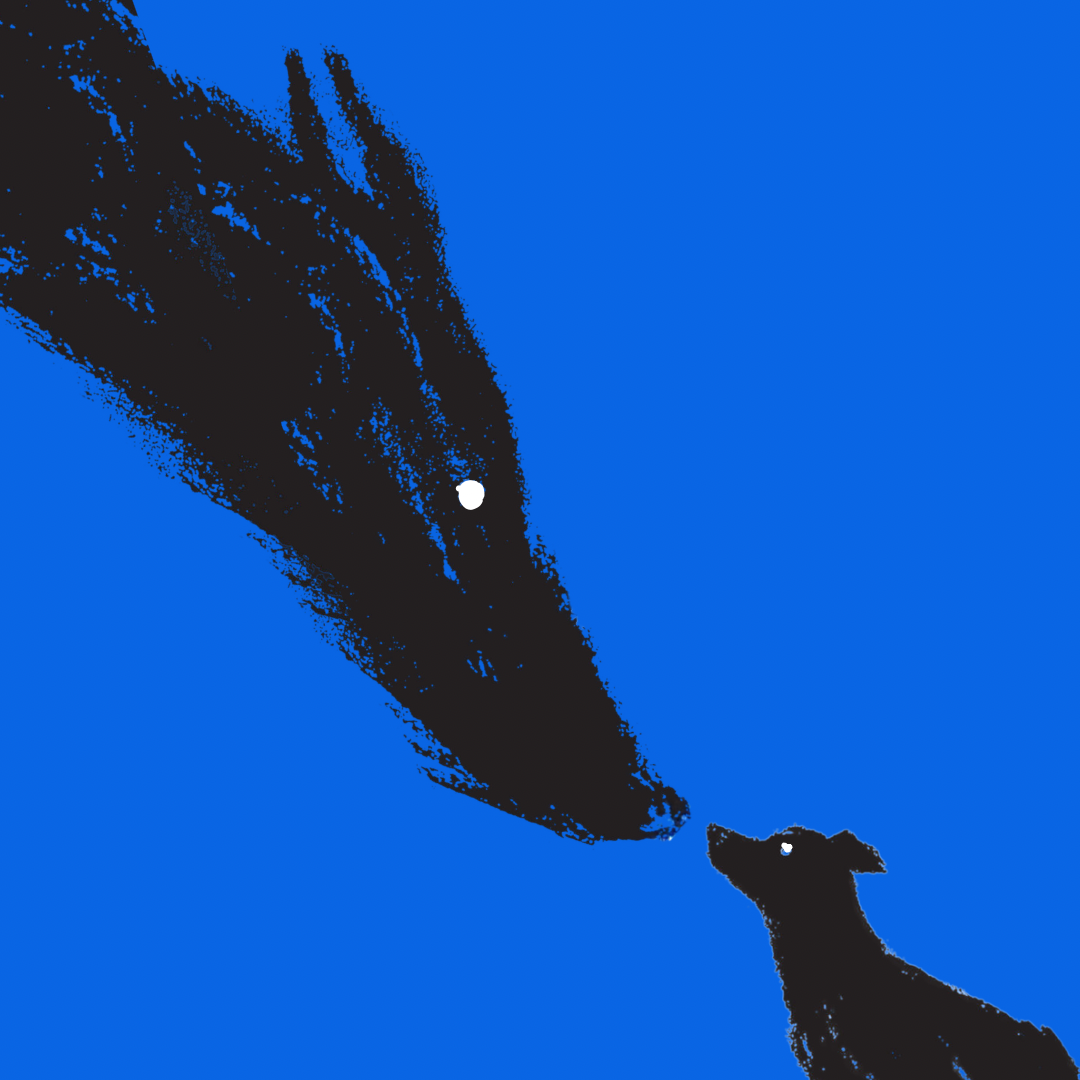
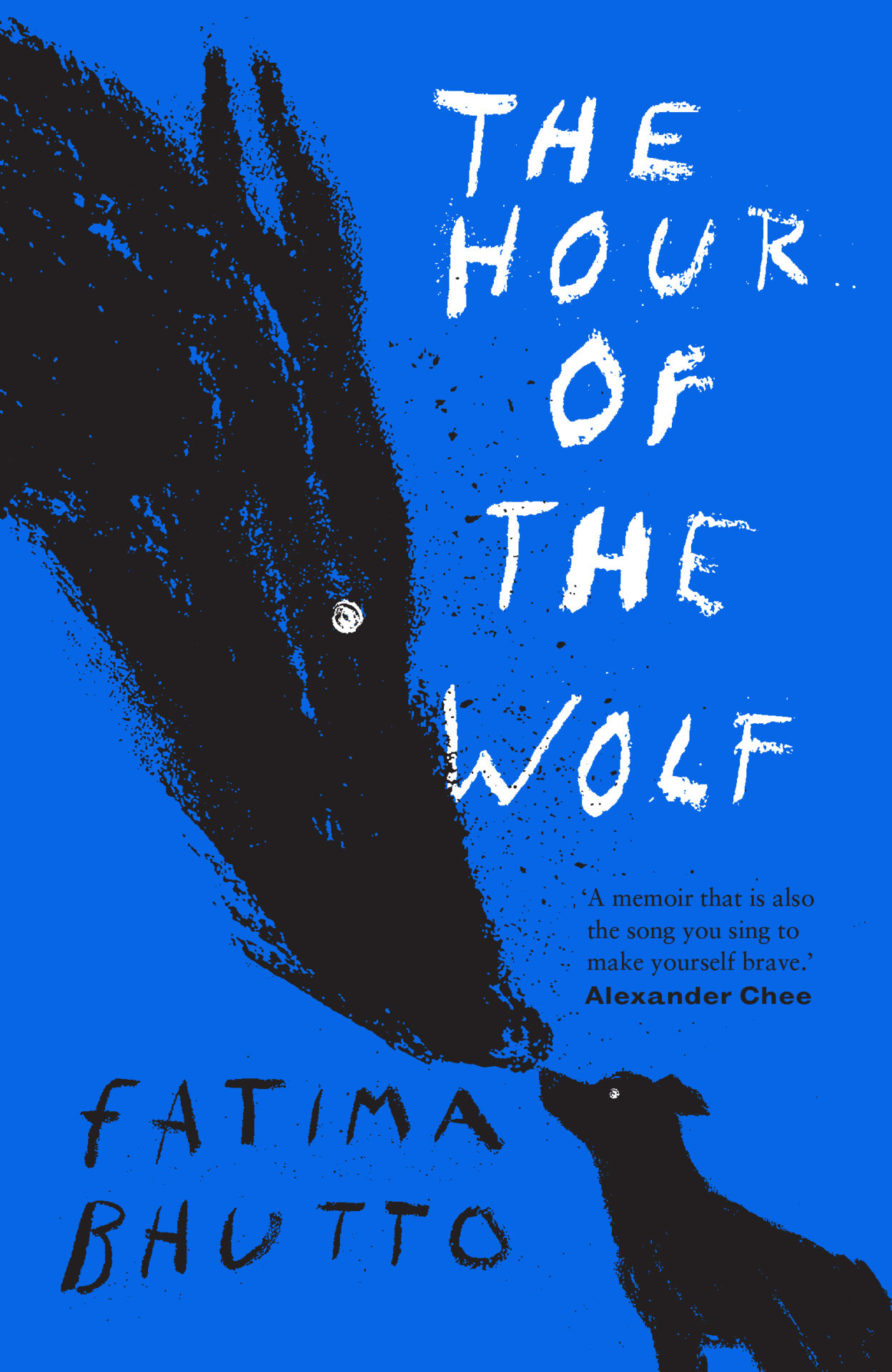
In these increasingly fraught times, Fatima Bhutto’s memoir, centred around her beloved dog Coco, feels less like a traditional autobiography and more like a lifeline. As I sat down to read The Hour of The Wolf (Granta, 2026), the atmosphere was mirrored in my own living room. With my cat Tintin resting her head heavily on my arm, her rhythmic purring a constant vibration against my skin, and my other feline companion, Yoko, sitting at a measured distance, attentive to my every move, but maintaining a typical feline poise, I found myself immediately submerged in Bhutto’s world. It is a world where the boundary between the human heart and the animal spirit is not just blurred, but entirely erased. It is understandable, almost viscerally so, how Coco helped Bhutto move through incredibly difficult times in her life through sheer, uncomplicated love.
The Hour of The Wolf is a difficult read not because the writing is dense, but because it is so honest that it hurts. It demands that the reader look at their own hours of the wolf and acknowledge the people who diminished them and the animals who saved them.
The Hour of The Wolf is ostensibly a memoir of grief, love and heartbreak told through her bond with her Jack Russell Terrier, Coco. But as I turned the pages, with Tintin’s warmth a physical reminder, it became clear that the book is so much more. It is a forensic examination of how we can survive the wreckage of human cruelty by clinging to the purity of animal devotion. Bhutto captures that specific hour, that window of vulnerability where our anxieties are loudest, and shows us how a small, spirited dog can be the only thing standing between a person and the abyss.
Coco: The Canine Anchor
Bhutto’s writing is at its most luminous when she describes the sensory reality of living with Coco. I looked at Yoko, watching me from across the room with that piercing, silent intelligence, and I saw a reflection of the witness Bhutto describes. Coco was her witness. In a life lived under the heavy shadow of a famous name and a tragic family history, Coco was the only being who required nothing of her, but her presence. She didn't care about the Bhutto name or all that came with it.
There is a profound therapy in the routine of an animal, something Bhutto explores with heartbreaking clarity. When your world is tilting on its axis, the simple necessity of a walk or a meal provides a scaffolding for a life that feels like it’s collapsing. Reading this while Yoko shifted her weight on my arm, I understood, almost like a revelation, that our pets offer us a version of ourselves that is stripped of artifice. They see us when we are undone — and they do not flinch. Bhutto’s grief for Coco is poignant because it is a grief for the only version of herself that felt entirely safe.
“The Man” with the Narcissist’s Playbook
However, the memoir takes a sharper, more painful turn when Bhutto delves into the details of her relationship with a person she refers to only as “the man”. This is where the book moves from a tribute to a pet into a brave, almost clinical deconstruction of emotional abuse. We’ve all had friends or have been that friend who has been trapped in a frustrating relationship with a narcissistic person. It is a cycle of being strung along just enough to keep the hope alive, while the process simultaneously breaks you down into a shadow of your former self.
Bhutto bravely details how “the man” used her very capacity for love against her. He followed the typically manipulative script to get out of ever formalising their relationship or providing the family she craved. He was the quintessential “free spirit”, a label that Bhutto identifies as a convenient shield for someone who refuses to be pinned down by the weight of another person’s needs. He framed her public persona as a barrier, claiming she was too much for him to even meet the people in her life. It is a classic move in the narcissist's playbook — make the target feel that their own success or identity is a flaw that must be hidden to deserve love.
There is a profound therapy in the routine of an animal, something Bhutto explores with heartbreaking clarity. When your world is tilting on its axis, the simple necessity of a walk or a meal provides a scaffolding for a life that feels like it’s collapsing.
As I read her account of his cruelty regarding her desire to have children, even going so far as to cruelly question if she was even capable of having them, I felt a protective surge of anger. This is the hallmark of the manipulator: finding the most tender, vulnerable hope a person holds and turning it into a weapon. They break down their target with these calculated cruelties until the target flinches, and then, just as the breaking point is reached, they offer breadcrumbs of affection. These tiny, inconsistent moments of warmth are enough to suck the target back in, convinced that the real version of the person is the one who loves them, while the cruel version is just a temporary aberration.
The Contrast of Devotion
The brilliance of the memoir lies in the contrast between “the man” and Coco. While the human relationship was defined by shifting goalposts, gaslighting and emotional starvation, the relationship with Coco was defined by abundance. Animals like Coco, or my own Yoko and Tintin, don't deal in subtext. There are no hidden agendas or manipulative scripts. When Tintin decides to sit nearby, she isn't doing it to keep me on the hook. She is doing it because she chooses my company. When Yoko rests her head on me, she isn't breadcrumbing me; she is offering a total, unreserved trust.
Bhutto shows us that the hour of the wolf is when we realise the difference between these two types of love. One leaves you hollowed out and questioning your sanity, while the other leaves you fuller, more human and more capable of standing on your own feet. By the end of the book, Bhutto’s journey is one of reclamation. She begins to see that the love she poured into a toxic man was actually a testament to her own strength, a strength that Coco helped her preserve. It is particularly poignant that the key incident which started breaking the spell the man had over her was broken when he hurt Coco. What further broke the spell was Coco having her first surviving litter of puppies, which opened up Bhutto’s world in a whole other way.
A Final Reflection in the Quiet
The Hour of The Wolf is a difficult read not because the writing is dense, but because it is so honest that it hurts. It demands that the reader look at their own hours of the wolf and acknowledge the people who diminished them and the animals who saved them. I often think and write about how we occupy spaces, but Bhutto reminds us that the most important space we occupy is the one within ourselves, and how easily we can let a predator colonise that space.
Bhutto shows us that the hour of the wolf is when we realise the difference between these two types of love. One leaves you hollowed out and questioning your sanity, while the other leaves you fuller, more human and more capable of standing on your own feet.
As I finished the final chapters, the sun was beginning to rise over Lahore. Tintin was still there, a constant weight of comfort, and Yoko had finally moved closer, settling at my feet. Fatima Bhutto has given us a gift with this memoir. She has validated the deep levels of emotions we feel for our pets, and she has held up a mirror to the subtle, insidious ways in which narcissists operate.
Steadfast friendships are also an aspect which cannot be ignored in the memoir. One person who constantly stood by Bhutto and Coco was Allegra, a close friend of the author’s. Her role goes beyond surface-level friendship and she truly serves as a member of this multi-species tribe the author developed around her. We all need an Allegra in our lives; those of us who have them should not take them for granted.
The Hour of the Wolf is a book for the broken-hearted, animal lovers and anyone who has ever had to learn the hard way that a free spirit is often just a polite term for a person who isn't kind enough to stay. Above all, it is a reminder that even when the humans in our lives fail us, the click of paws on a floor or the weight of a cat’s head on an arm is a language of love that needs no translation and offers no betrayals.

Shanzay Asim has been writing as long as she can remember, and is a perpetual student with an interest in culture and literature.