Firstly, a confession: I was over a decade too late to the Girls train. When the HBO show began airing in 2012, I saw an episode, declared this wasn’t for me, and read (and repeated) all the blurbs about how this was Sex and the City, but for hipsters in Brooklyn. Over the years, I was passively aware of Girls; I contributed to Lenny Letter, which was co-founded by Lena Dunham and her then producing/showrunner partner, Jenni Konner. While I was largely oblivious of the characters or the behind-the-scenes drama, what I was aware of was that almost every day on Twitter, there was some controversy around Lena Dunham, which took on the same outsized nature as almost everything in New York does, in which those of us who live as far away from Brooklyn as Block 2 in PECHS seem to be aware of.

I finally saw Girls a couple of years ago — prompted in part by being served up clips on Instagram — and I was left stunned by it; I wanted to kick myself for ignoring it the first time around. For the uninitiated, it is based on four young women living in New York in the late 2000s — as Dunham wrote in her pitch: “They know they want to be successful long before they know what they want to be successful at.”
Still, I was glad to have discovered it now, minus the conversations or the deluge of thinkpieces and takes that accompanies any piece of popular content. What surprised me was that it wasn’t even one of those shows where you have to think about whether it “holds up” or not. It is, simply, good. Strip away Brooklyn and the front-and-centre sex-forwardness and you could see the same story, anywhere, because it is a story of not just coming of age, but of coming to terms with the limits of your talent and ambition and friendships. (Watch the episode ‘American Bitch’, and tell me you couldn’t see it twenty years from now, or twenty years ago; or the episodes where Shoshanna lays out the reality of the girls’s friendship, or the pin-drop effect of Hannah’s mother summing up her daughter’s relationship: “I don’t want you to spend your whole life socialising him like he’s a stray dog, making the world a friendlier place for him.”)
Reading Famesick feels more potent — disturbingly so — than any of the storylines on Girls, because it invokes memories of the excruciating burden placed on the women who were creatives in the 2000s.
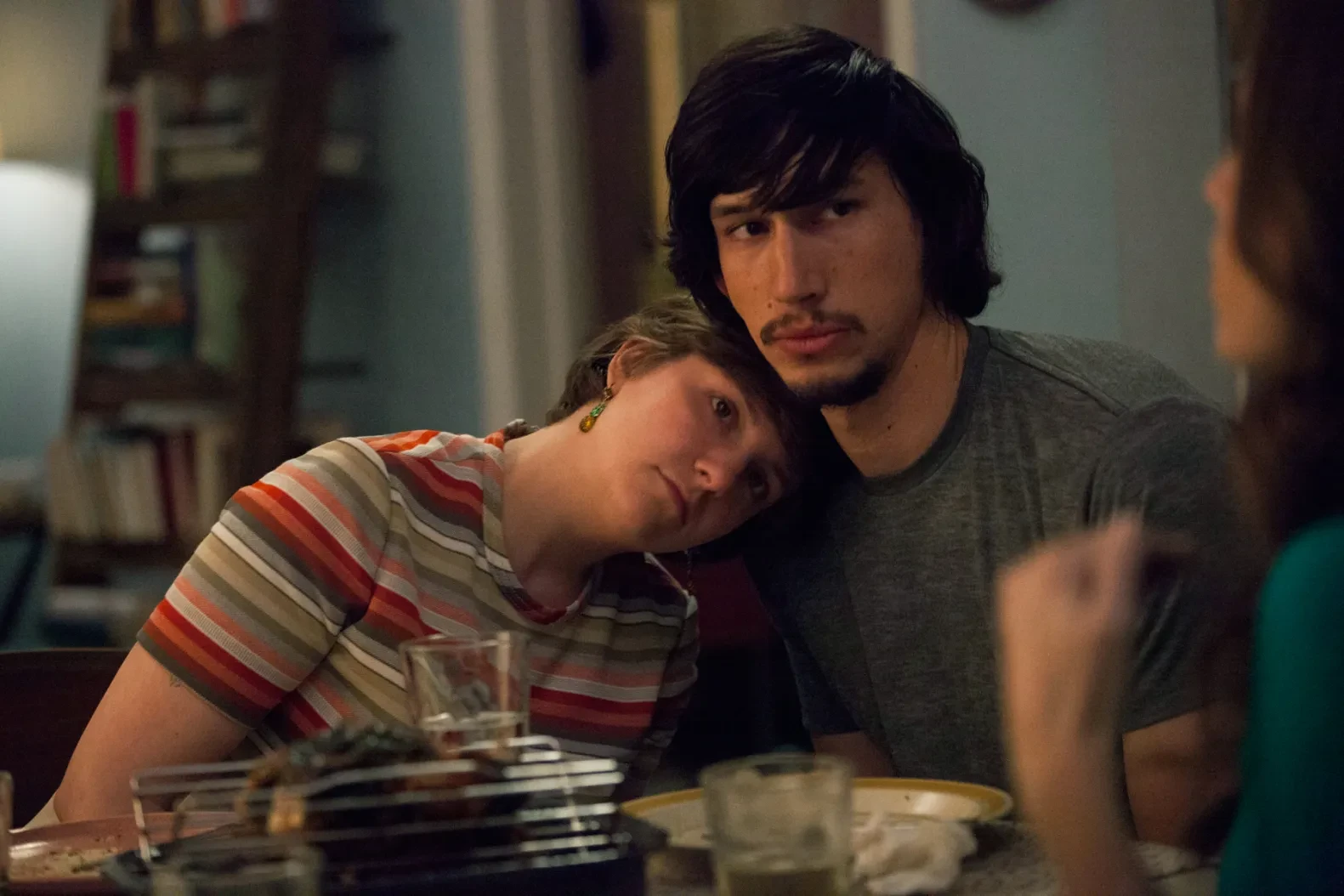
Lena Dunham’s Famesick is an exceptional memoir. It could have been a righteous corrective to all the cliches the world — and popular culture — has foisted on Dunham. It could have been a salacious tell-all that names names and drops gossip; or perhaps even a full-fledged apology tour. It does tell, in part, the story of the making of Girls, her friendship and working relationship with Jenni Konner, and the breakup of that — but what this memoir is is a story of breaking up with your body and mind and every stereotype that the world keeps reinforcing about Lena Dunham, and that Dunham seemed to have internalised about herself.
However, after reading about how Girls was conceived and made, how Dunham literally sticks it out as the show goes on, with blood and guts in her writing and in hospital rooms, it is hard to see Famesick as a corrective. If anything, it is the narration of a vicious cycle in which Dunham creates art, but cannot care for herself — or put herself first — because she has to work, because the consequences of not doing so seem life-changing. You can see the ways in which Dunham understands now how little she was protected then, how much pressure she took on, how the work did not come naturally. Dunham is suffering, in public and private, on sets, in cars, in cabs, in her parents’ house, from the gut-wrenching combination of endometriosis, the unfeelingness of the health care system, and the prescriptions of anti-anxiety medication. There is, as she describes, the “corrosive” effect of accusations and random attacks from people who had “previously seemed to care about her.” She describes her state of mind: “When given the choice about whether to displease someone and protect myself or help someone and exhaust myself, I would almost always land on option C: hurt myself badly, even though no one had really asked me to do that. I wanted, I know now, to be loving and loved, to be needed and necessary, to be so generous that I was above censure and so kind that I was above being subjected to anyone’s cruelty.”
It is a deeply introspective account of a person who is literally rendered sick as a product of fame. This fame propelled the popular culture discourse machine into turning Dunham and her work into a product onto which they could project their critique of everything from Lena’s weight, to her tweets, the success of Girls, its storylines, scandal, privilege, and her defense of a writer accused of sexual assault. It is a story of the proximity to celebrity and how unnatural and strange it is, ranging from experiences like receiving an email out of the blue from Nora Ephron, to the meeting with the iconic male star who Dunham doesn’t name, who sends her a ‘u up?’ text. It is recognisable in the recounting of the long, slow, brutal decimation of relationships, sometimes described with the kind of levity and self deprecation that feels like an episode of Girls, but put to paper, has an overwhelming feeling of sadness and confusion to it, and the accounts — particularly of her working relationship with her co-star Adam Driver — sound resoundingly awful.
But reading Famesick feels more potent — disturbingly so — than any of the storylines on Girls, because it invokes memories of the excruciating burden placed on the women who were creatives in the 2000s. Ask around, and you will find women who similarly decimated their bodies and lives and relationships — or even the prospect of them — for work. Until not too long ago, there was no working from home, no idea of being a multi-hyphenate, no crying at work, no way to be publicly vulnerable. It is only now that it has become slightly acceptable to either admit to the fact that anyone who is a full-time creative is doing so in the backs of generational wealth, a financial partner (or both), that it is perfectly acceptable to be creative half-time, quarter-of-the-time, to write once a year, to quit. I was reminded of how creative output was the only way to be seen as valid: if you were a writer or an actor or an artist or in television, you had to keep working; even if in a few-odd years your body began to show the physical scars and emotional damage, people believed that broken bodies were worth it. Emails were answered rapidly, people said yes to opportunities without even considering if they even made sense, everyone was hustling, all the time. There was the palpable fear that all this — the success, the ability to even make something of your own, to work — could all be taken away.
It is a story of the proximity to celebrity and how unnatural and strange it is, ranging from experiences like receiving an email out of the blue from Nora Ephron, to the meeting with the iconic male star who Dunham doesn’t name, who sends her a ‘u up?’ text.
It is that fear that keeps Dunham working, somehow, an almost herculean effort that is heartbreaking. “Looking back, this was another first—the first time I chose to ignore my body’s noisy signals in favor of this thing I wanted so badly,” Dunham writes. “It seemed that the film industry was made up of people ignoring their basic human needs—sleep, time with loved ones, a reliable schedule, no domain over what they ate or where they went or when they peed. But who could blame them, when the trade-off was the chance to make magic, to play pretend for a job?”
Ultimately, Dunham chooses to make magic on different terms, in a different place, with a new relationship and decisions over her physical self. Even though, throughout the period of her life she describes in the memoir, she perhaps technically has the agency to say no, enough, that’s it, it’s only when she makes these decisions – moving to the UK, having a hysterectomy – that her life begins to feel more stable. I learned recently that Dunham directed the pilot episode of one of my current favourite television shows, Industry, as far apart from Girls as a show can be. Reading Famesick left me feeling sad and hopeful; for Dunham, but also, that all that talent – that ability to draw out a performance and to tell the story of a generation – was still there.
It has has often been quoted about Dunham that she really is – as her character on Girls famously declared – the voice of her generation (or, as she says, “a voice of a generation.”) Famesick is a good reminder of why that’s still true.

Saba Imtiaz is currently writing the world’s most unrealistic romance.