There is a peculiar amount of vitriol reserved for JD Salinger’s The Catcher in the Rye (1951), erupting online with a regularity usually explained by the forced-to-read effect. As a former Salinger-obsessed teenager, my time in online fandoms was plagued by aggressive rants from American readers who routinely project onto the novel a boring cynicism trademarked by teenage angst.
Catcher in the Rye may be among the most direct attempts to understand its intended readers within the school system. It is, after all, a story about a teenage boy grappling with grief, assault, and the bitter first inklings of adulthood. The forced-to-read canon, however, is seldom accommodating. If pitiful white boys no longer make universal subjects (an oft-quoted criticism), neither, presumably, do pitiful white men who can't move on romantically, like Jay Gatsby, or bitter husbands and cowardly ministers, like the men of The Scarlet Letter. Deeply illustrative as it is of bureaucracy’s view of the homogenised “young ones,” the forced-to-read canon is a literary canon unlike any other, for it is essentially a sermon divested of all preoccupations with form and invention to tell you how to grow up. If Catcher in the Rye is the bane of American students’ existence, Goodbye, Mr Chips (1934) is Pakistan’s counterpart.
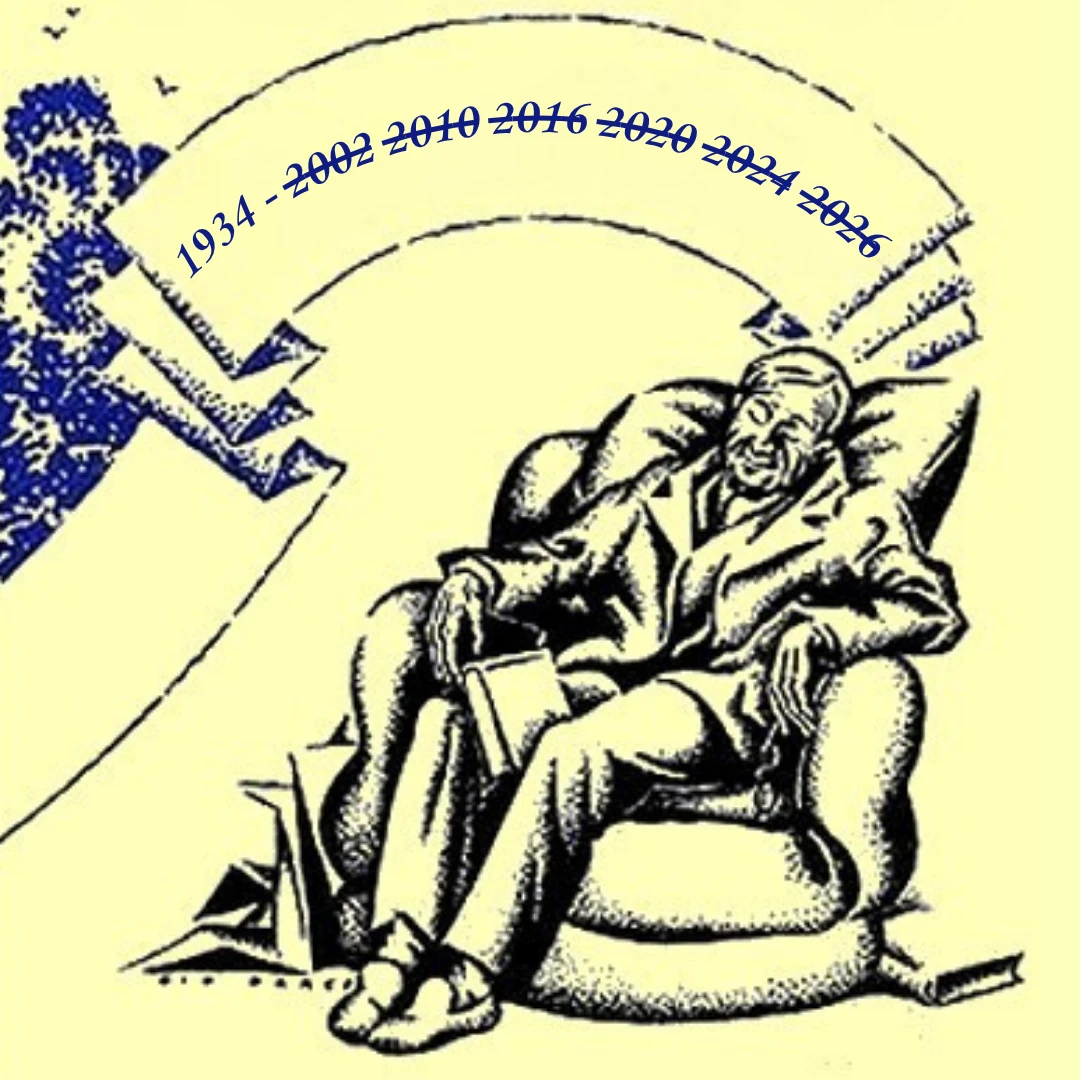
Who is Mr Chips? According to its writer, James Hilton, Chips is an old man, “getting in on years, but not ill,” a self-admittedly mediocre man of mediocre strengths and weaknesses; a teacher who once possessed some ambition to become headmaster, briefly, but ultimately retired in the same rank; a man so old he is synonymous with all that Brookfield boarding school has to offer. Despite this creaking old age, he still owns an endearing wit, though make no mistake, he was not born a funny man. So, the notorious sense of humour, too, is a slow accretion of the years, and their incidental shimmers of love and grief.
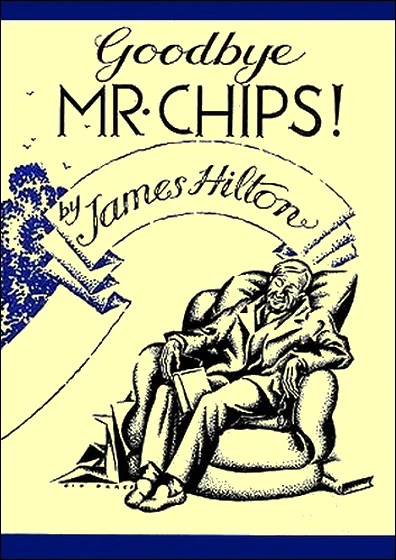
Then again, everything about Chips is incidental. He falls for Katherine, his wife, in a chance encounter, despite professing no interest in women, especially the “radical socialist” and “monstrous” modern woman who rides a bicycle astride and seeks voting rights and university education for all women. During the war years, despite having officially retired, Chips returns as the acting headmaster to manage a short-staffed Brookfield and departs just as the war ends. A creature of routine and comfort, life finds a hesitant Chips at every other corner and abandons him around the next.
Goodbye, Mr Chips’ inclusion in the intermediate syllabus across Pakistan for over five decades is a mystery that far exceeds the novella’s status as a literary work.
Goodbye, Mr Chips’ inclusion in the intermediate syllabus across Pakistan for over five decades is a mystery that far exceeds the novella’s status as a literary work. Though enormously popular in its day and adapted repeatedly for film, radio, and television, it no longer occupies anything resembling a central place in Anglo-American literary culture. Even more curious is the company the novella keeps in Pakistan’s national imagination: in addition to the odd abridged stories by William Shakespeare, one of the English books by the Punjab Board, Modern Prose and Heroes, features the essay “First Year at Harrow” by Winston Churchill, obligingly credited as “Sir.” Another unit is dedicated to Mustafa Kemal Ataturk, the father of the modern Turkish republic.
Unlike most debates around school reading lists, objections to Goodbye, Mr Chips in Pakistan are rarely framed in ideological terms. This is manifest in the novella’s reception, at worst categorised as boring and irrelevant drivel. In line with the highly politicised matter of diversity and reading lists in the US, for instance, though it will likely hold true in the wider global north, a mandatory Mr Chips would be a perfect neighbour to Holden Caulfield and other pitiful white men. (Not that pitiful white men cannot be riveting subjects of inventive literature, e.g. Dostoevsky’s narrator in Notes from the Underground).
Goodbye, Mr Chips has the benefit of being short and very easy to read, which makes it an unusual companion to Shakespeare and Churchill. But if you had the misfortune of encountering a viral copy of the English guess paper for intermediate II exams in Punjab this May, it may be evident immediately how this eccentric forced-to-read canon resolves itself. All you have to do is answer “What event took place in 1926 in England?” Or to make things easier (or harder), “With whom did Mr Chip [sic] share all his discussions?”
Given the sheer inanity of this engagement (or a lack thereof), it is no surprise that high school readers are extremely polarised about the novella. There is at least one letter on record in a newspaper calling for its removal: “The youth today finds no charm in studying this old novel.” For others, there is still meaning to be found in the ubiquity of war years, if not other particularities, be it Brookfield in the trenches or Pakistan in any given year of bombs and drone attacks. “Literature never gets old…we can still learn a lot from Mr Chips,” says one blog entry.
Perhaps, for the sole reason that I did not have to memorise Mr Chips' umph-punctuated ramblings for a class, it was a luxury to read it on my own and find it immensely ordinary. Neither an earnest children's tale nor a fully committed campus novel, the novella’s nonremarkability is quite the same as its protagonist’s. Like Chips himself, Hilton’s writing here has little ambition, subsuming in the deliberate inactivity of a man the tale of the “common” harmless citizen, whose political opinions matter little only because he is in no position to affect them, or to be affected by them.
Like Chips himself, Hilton’s writing here has little ambition, subsuming in the deliberate inactivity of a man the tale of the “common” harmless citizen, whose political opinions matter little only because he is in no position to affect them, or to be affected by them.
Practically wedded to Brookfield, even after retiring, Chips rents out a room just across the boarding school, and a central delight in his geriatric days is being visited by Brookfield students, old and new. This might all have been well had Chips emerged as one of those inspiring educators popularised by figures like John Keating in Dead Poets Society. However, no such charisma is apparent on paper. For better or worse, Hilton’s strong narration denies Chips any interiority, and the result is a man who does, in fact, aspire to be great. If not a great teacher, then a great jester.
Chips' mediocrity is recast as virtue. That distinction may explain why he survives so comfortably within curricula.
There is a better account of mediocrity in John Williams’ Stoner. But unlike William Stoner, whose mediocrity emerges from frustrated ambition, Chips' mediocrity is recast as virtue. That distinction may explain why he survives so comfortably within curricula. If Stoner comes to the reader as a man beguiled by the promise of letters, who offends many and inspires a few, before dying an unremarkable death, Chips is beyond the mortal realm altogether, a spectre of a dying empire that is always dying but never dead.
Maybe because it lacks Stoner’s recognition of its protagonist as generously pathetic, Goodbye, Mr Chips rearticulates in its masculinity a defining endurance for life. Even on the day he loses his wife and their child to a fatal labour, he is at Brookfield teaching. Bombs falling just outside the classroom during World War I do not scare him; he soldiers on. A man unfazed, committed to his job against all odds, is the fantasy of soft nationalism. “More and more, he saw the rest of the world at a vast disarrangement for which England had sacrificed enough, and perhaps too much.” All-ages appropriateness notwithstanding, it is possibly this idea of masculinity, spanning Churchill and Iqbal, that endeared Goodbye, Mr Chips to Pakistani curriculum designers.
To the extent that the project of masculinity is also paternalistic, Chips is a safe character; his alienation, unlike that of young lone wolf rebels, is a general reluctance to change. Much of his reminiscing is indeed instructive; on the use of bayonets in WWI, he famously remarks, “It seems to me a very vulgar way of killing people,” and gets dubbed not pro- or anti-war but pre-war. Tucked inside all his jokes, supposedly clever, is an old and unglamorous wisdom, one that can't quite tell the difference between a hundred years and the same year lived a hundred times.
Whether it is Caulfield or Chips, the forced-to-read canon, born of explicit bureaucracy, is inevitably a tough pill to swallow. More than a supplement to learning English, it is premised on relatability. The only question is whether the reader is meant to identify with their present self, or an idealised future one. If Caulfield is an attempt to make the student reader feel at home in their rebellions and desires, Chips is a prescription of civil obedience with the promise of a life well-lived, an appearance made possible only by the distance of time. Trust the wise old man the way you eat your greens: only time can tell if it was worth it.

Manahil Tahira is a Karachi-based journalist and writer whose work moves between fiction and nonfiction, tracing the intersections of bodies, spaces, visuality and technology. Formerly desk head of Lifestyle at The Express Tribune, their creative writing has appeared in Arzu Anthology, Fahmidan Journal, Lakeer, and is forthcoming in The Aleph Review (2025). They are also a Non-Fiction Editor at South Asian Avant-Garde (SAAG) magazine.