When TV personality Fiza Ali’s husband lifted her up in a fireman’s hold on live television, in what she later described as a “spontaneous moment taken out of context”, the Pakistani internet lost its collective mind. People were outraged at a married couple being in close proximity to each other on live TV in front of their daughter. Hina Parvez Butt, chairperson of the Punjab Women Protection Authority, took to Twitter (currently X) to explain that lifting your wife of many years over your shoulder in front of a young child is indecent even in the privacy of your own home, let alone on live television.
This isn’t the first time public displays of affection have been policed by Pakistanis. Sarwat Gilani was dragged over the coals for kissing her husband while holidaying in Rome, and Sana Fakhar took things even further; she posted a picture of herself kissing her husband while both of them were in bed.
The main criticism of these actions is that this isn’t a part of our culture, and that celebrities represent Pakistan on the world stage (or wherever people know what a Sarwat Gilani is).
I find these events to be a fascinating look into the contradictions of a deeply patriarchal society where visible women, celebrities, actresses, and influencers, are idolised and villainised at the same time. Where the goalposts of appropriate behavior move faster than the American negotiating position during a ceasefire, and the standards are more double than a double-decker bus. When pushed to really perform, we wax eloquent on the importance of family, the sanctity of blood, our hospitality, our food, crafts, community, etc., and these shining examples of our robust social fabric hold up extremely well as long as the women doing all of the work remain invisible, undercompensated, and, of course, unhappy.
But of course, women exist. And they affect the bottom line. They are doing much of the work, most of the shopping, and they are watching a lot of television.
The problem with values rooted in the patriarchy, however, is that they can be difficult to understand. The kachoomar of objectification, sexualisation, and hypocrisy makes it very difficult to know where to draw the line on appropriate behavior with your lawfully wedded husband. And if culture is under attack by excessive PDA, then it is culture that we must look to to understand the constantly moving goalposts. A particularly interesting indicator is one specific cultural product: Pakistani dramas.
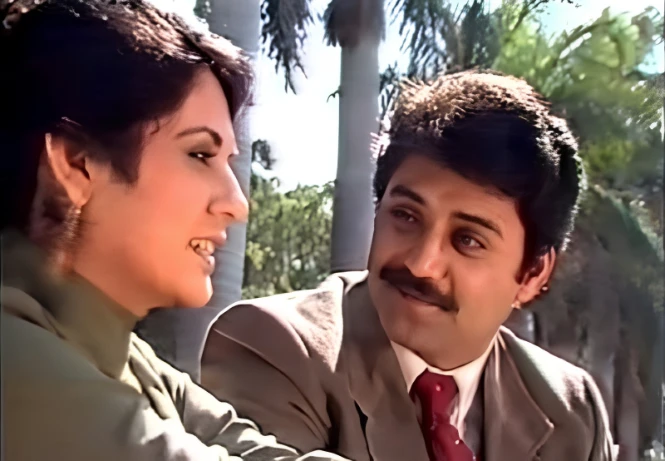
As a society that entertains itself almost exclusively through romance, marriage, and the politics of the domestic sphere, our entertainment industry has had to develop a very specific language to convey that romance. Veteran male lead Asif Raza Mir was once praised for the expressiveness of his eyes, and he responded by saying that in the days when Tanhaiyan first aired, you couldn’t have much romance in the dialogue, so your eyes had to do the talking. Nothing so subtle anymore, though, for our current crop of dramas across a plethora of private TV channels.
While overall viewership of television has declined in Pakistan (in favor of digital media), women still make up most of the audience on channels that don’t show the news or sports. This makes sense since digital access for women is still limited; they own fewer smartphones and laptops. With romance being the most popular genre for women’s media, it’s no surprise that most TV dramas focus primarily on love stories. With most Pakistani dramas having some kind of romance in their plots, how are they to show it? How do they depict love, dating, and marriage? How do they talk about the one thing that is the cornerstone of human relationships: sex?
From Humsafar to Bulbuley, from Suno Chanda to Tere Bin, sex is everywhere. Sex is what a lot of family politics revolves around. The incestuous relationships between the hero and his blood relations (mother, sisters) and the resulting jealousy of his wife often form the main plot point. The tension around courtship, the wattpad nature of TV marriages themselves, the contention over children, who those children belong to (paternity), the second wife, the affairs, all push that plot forward, while the finer points of marriage law (iddat, halalah, pregnancies preventing a divorce) help create pivots and points of tension.
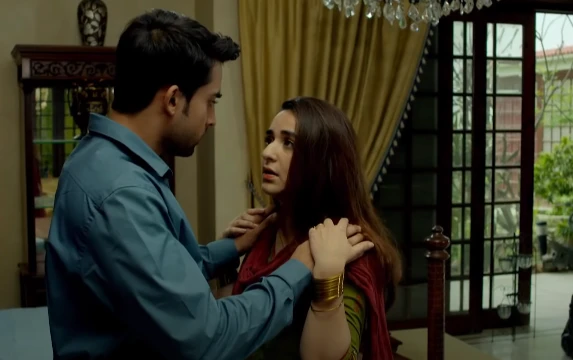
While this is the substance of what keeps the machine churning, you’re not really allowed to be explicit about it. As recently as 2021, the Pakistan Electronic Media Regulatory Authority (PEMRA) directed entertainment channels to refrain from showing “Hugs/caress scenes/extramarital relations, vulgar/bold dressing, bed scenes and intimacy of married couple”. PEMRA has a history of being particularly trigger-happy, having previously banned repeat telecasts of dramas such as Ishqiya, Pyaar key Sadqey, and Jalan for being too obvious about sex.
Veteran male lead Asif Raza Mir was once praised for the expressiveness of his eyes, and he responded by saying that in the days when Tanhaiyan first aired, you couldn’t have much romance in the dialogue, so your eyes had to do the talking.
Writers and directors are forced to be creative. Here’s how you can tell if the main characters in your current favorite drama are having sex:
They are dating: Whether it’s cousins, coworkers, or classmates, if they’re dating, they are not having sex. The idea of premarital sex is so taboo that even dramas and movies that deal with social issues such as prostitution and trafficking are censored, let alone consensual encounters between willing but unwed adults. Writers go out of their way to indicate that everything is completely above board with short dates during the daytime in well-lit, crowded public places. And it doesn't matter where in the cast hierarchy the couple is. The main protagonists are not having sex. The heroine's little sister, who is secretly dating a good-for-nothing creep, is also not having sex. Don’t worry, even when the good-for-nothing creep roofies, kidnaps, or otherwise tricks her into a secluded place (it’s always an empty apartment a friend is happy to let him borrow), the hero will arrive guns blazing right on time to save her.
They are not dating: No matter how obvious the enemies-to-lovers arc, don’t worry, they are not having sex. Yes, the sparks are flying, the banter is immaculate (or trying to be, the script is never that good), there is even yelling and light sabotage. Sometimes the enemies will be forced into cooperation, tight spaces, or dark alleyways. Still not having sex.
They are speaking on the phone/via text: Well, obviously, they are not having sex, but they’re not sexting either, no matter how deep or vulnerable the conversation gets.
They are married: You’d think they’re having sex, but about 7 times out of 10, you’d be wrong. Here’s how to tell.
- The Suhagraat: If it’s angry, contentious (Dr. Bahu), if one of them is there against their will, if one of them storms off before the end of the scene then they are not having sex. Mummy can lead them to the altar, but she can’t make them get into bed, sorry. If the suhagraat is happy, if the groom is being cringe, if the bride is blushing, smiling, if the gift for mun-dikhai is handed over tenderly and not tossed onto the bed, then yes, as soon as the camera pans out, you can assume they’re having sex.
- The Morning After: The happier the couple is, the more likely they have had sex. Conversely, the ruder they are, the less likely.
- The Couch: It’s obvious, but if one of the pair is on the couch/ floor, then they’re not having sex. Pakistani TV is very egalitarian in the sense that it’s not always the man who ends up on the couch. Ladies will also try curling themselves into two-seaters that are in no way suitable for a good night’s rest. Interestingly, the couch serves the same purpose in Pakistani dramas as it does in romance novels; ratcheting up sexual tension for married couples. An excuse to give your lawfully wedded husband/wife yearning looks from across the room.
- The Day-to-Day: Are they bantering? Are they comfortable alone, especially in the bedroom? Is the husband trying to help in the kitchen? Is the wife ironing shirts? Bringing tea? They’re having sex. If conversation isn’t easy, if they’re spending runtime apologizing for each other’s parents, if the heroine is doing laundry by hand in the sun, then they’re not having sex.
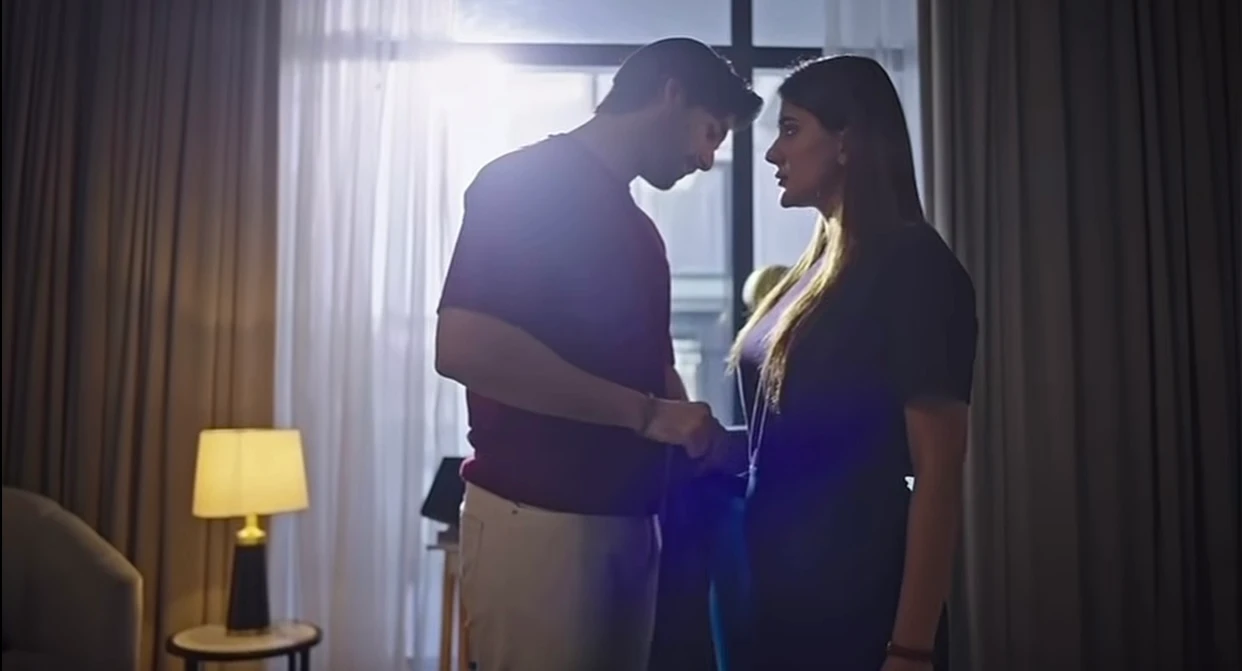
Of course, all sex (or desire) isn’t created equal. There’s good sex, bad sex, and ridiculous sex, and there are clues to help the audience figure out which is which. Good sex happens between married and consenting adults, and to be very honest, this insistence on consent (via many episodes of couch banishment) is one of the more positive aspects of a media culture where physical and emotional violence against women is often normalised. All consensual sex under They are married is good.
Bad sex is typically announced. You have an episode dedicated to it happening off camera, and most of the supporting cast learns that it has happened fairly quickly; it cannot be hidden, so don’t even try. This rule applies to extramarital affairs (Khwab Nagar Ki Shehzadi), mistaken identity (the twins episode in Haqeeqat), and rape, marital (Razia) or otherwise (Mein Janu Mera Khuda Janey).
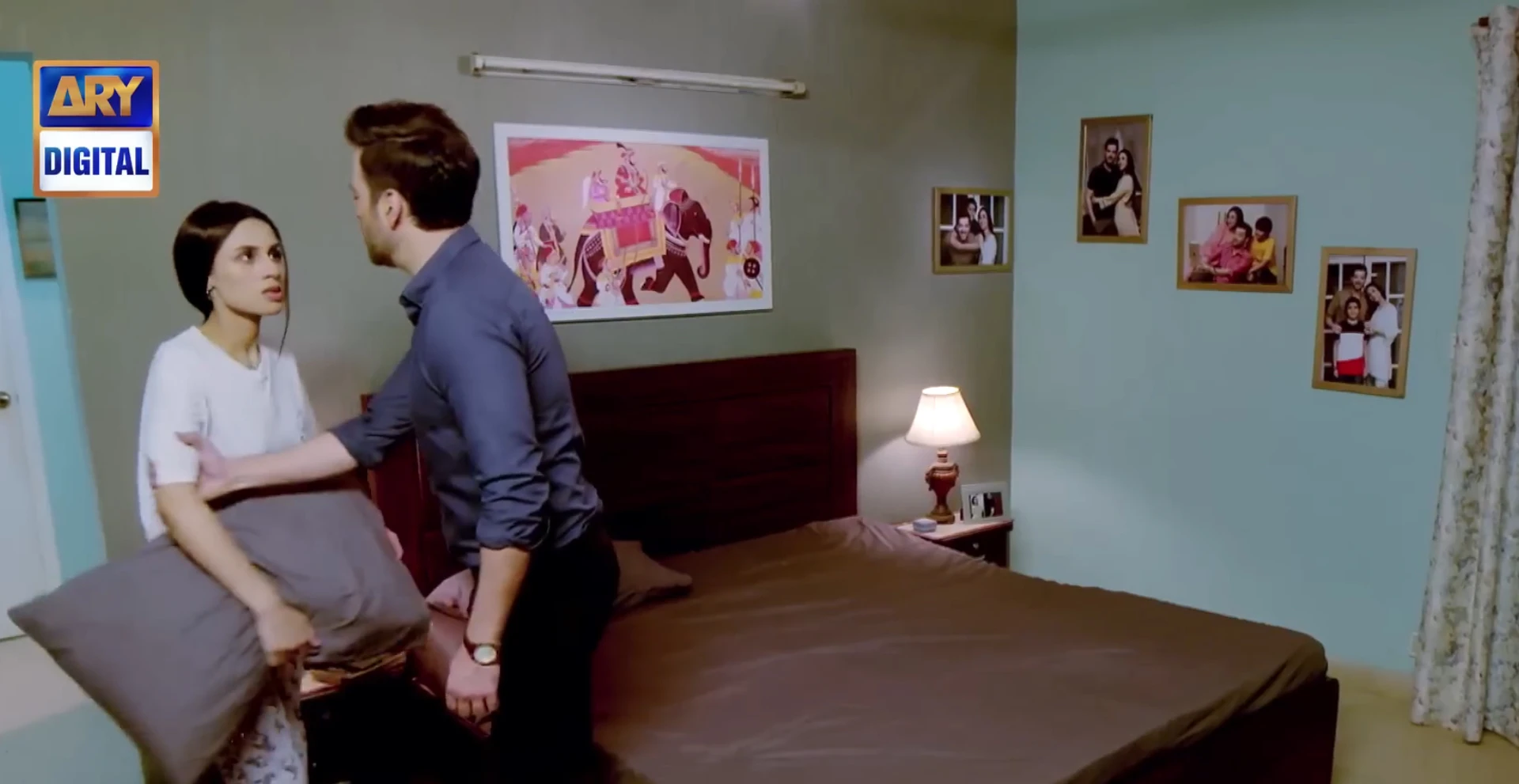
These days, the Pakistani Drama industry often feels like it is in its rebellious, hormonal, teenage phase, with creators constantly pushing the boundaries of how romance and intimacy can be portrayed on screen.
Ridiculous sex or desire is when the characters do not conform to beauty standards. They are too ugly (Quddusi Sahab Ki Bewah) or too old (Chand Nagar) to exhibit desire, pursue love interests, or display any kind of sensuality. The shtick is so popular that Bulbuley has been running it for over 700 episodes with the geriatric Mehmood Sahab and the unemployed Nabeel lusting after anything even vaguely female, including naagins, fairies, ghosts, and jinns. It is a trope that Quddusi Sahab Ki Bewah leverages to create some excellent satire with the character of Rooafzah and her confidence in her own sensuality.
Even though the days when Asif Raza Mir wasn’t allowed within two feet of his costars are long gone, hugging, kissing, or even handholding is still a no-no on Pakistani TV. But don’t worry, scripts get creative (not) to make sure viewers get the romance they crave within the suffocating confines of PEMRA’s arms. Here’s how your favourite couple is canoodling on screen:
The injury: Touching is not allowed. That much is clear. But even PEMRA won’t let the heroine bleed to death (literally: channels must recolor or blur any gore). One excuse to hold hands is a simple injury. A cut finger, a tiny burn, an electrical shock (Sukoon), and the romantic partner can rush in to act as a nurse. When writers want to add more spice, a twisted foot can be an excuse for some ankle action or for the hero to take the heroine in his arms (not in the fireman’s hold, though).
The rescue: What could be more romantic than a man fighting off multiple goons to protect a lady’s honour, all while blocking traffic and dodging bullets? This is typically the pivot in the enemies-to-lovers arc. After all, who can resist a man with an awful temper and a killer right hook?
Car rides: A close second is being rescued when your car breaks down/bus refuses to run/taxi refuses to arrive, by the hero and his great, big, shiny four-wheeler, and then the couple is confined into a small space, forced to hash out differences, talk over misunderstandings, and get personal without being overheard by nosy family.
The Ice cream date: The dinner date is a very obvious vehicle for romance, but can just as often be turned into a site for confrontation. The ice cream date is more harmless, more working class, the mood is lighter, a five-minute filler to establish that the characters are actually dating before something derails their relationship.
The drive-by hand grab: This is how the hero apologizes. It is only allowed after at least a dozen episodes of toxic emotional abuse, jealousy, false accusations, and the marriage/relationship on the brink of dissolution. While you're cheering on the heroine for finally coming to her senses, as she walks past the hero with her head held high, he will grab her wrist, pull her close (leaving room for a PEMRA official, of course), look deeply into her eyes, and say, “If you love me, you will forgive me,” or something similar. And, dear reader, she inevitably will.
The privacy of the great outdoors: Being in a room together before marriage is almost akin to adultery. Only the vamp/Gaston type anti-hero pushes themselves into a bedroom in the pursuit of their romantic interest. The main couple, while unmarried, always meet in public, but for privacy’s sake, this will sometimes be the terrace, roof, lawn, or private bit of beach that is suspiciously empty of people. Another clue that they are not having sex.
These days, the Pakistani Drama industry often feels like it is in its rebellious, hormonal, teenage phase, with creators constantly pushing the boundaries of how romance and intimacy can be portrayed on screen. While older scripts relied on emotional connection via dialogue (Dhoop Kinarey), acts of service (Zindagi Gulzaar Hey), and moments of comfortable silence (Tanhaiyan), newer titles are trying to evolve with the changing times, pushing against what our mothers (and government censors) consider acceptable. Action (not that kind) has slowly moved from common living areas to bedrooms, and physical contact is evolving against the forces that seek to constrain it. One can argue that the attempt to sneak PDA into scenes is simply lust for views and ratings, as audiences move to digital platforms and have so many more different types of entertainment competing for their attention. Some modern dramas (Tere Bin) are written to be little more than one titillating scene after another to make sure audiences keep tuning in. Dopamine hits that cater to the lowest common denominator by mirroring our own internalised misogyny back at us.
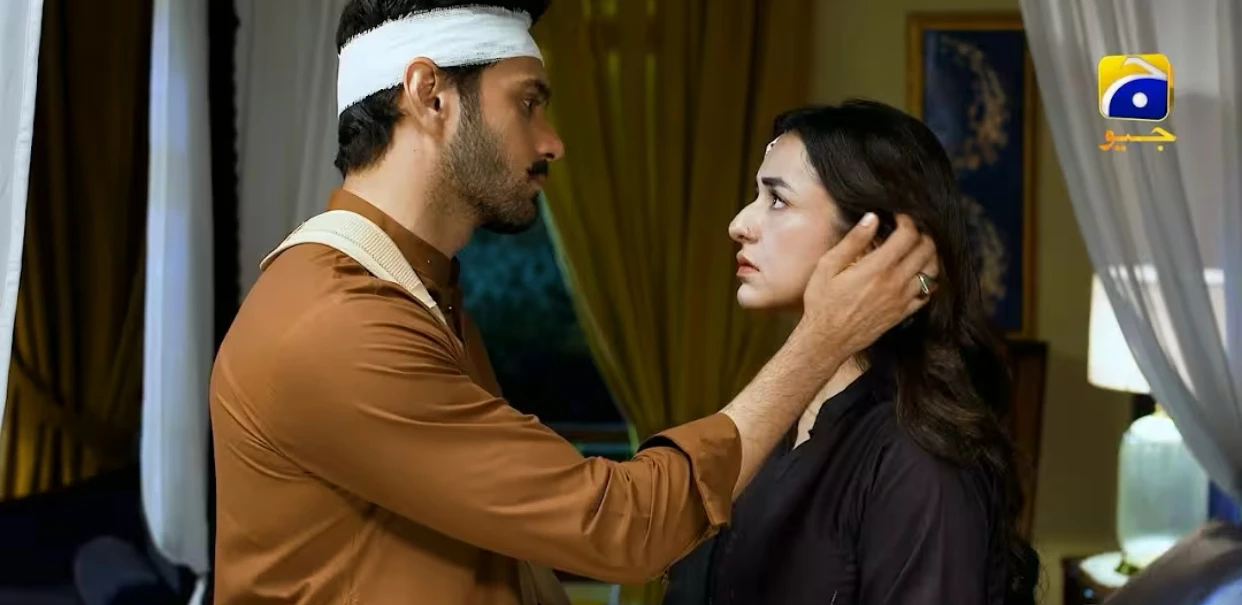
Dramas dealing with serious subjects where romance is not front and centre continue to rely on nuanced emotional connection (Parizaad) or leave out overt romance entirely (Noor Jahan) in the service of an important message and a tightly paced story. Still, can we not have our roadside ice cream and eat it too?
Can writers push through our natural modesty as a nation and show real, physical romance that is shot and scripted well, delivers the emotional punches without being cringe, and also helps tell important stories? As this censored scene from Dr. Bahu, of the husband helping his wife tie a sari (very reverse Shah Rukh Khan in Swades vibes) shows us, maybe they can, if only PEMRA would let them.
Sakina Hassan is a freelance writer who also writes short fiction and poetry. She is a Salam Award winner, has been longlisted for the Zeenat Haroon Writing Prize, and teaches writing workshops in whatever time is left from caring for her two children. You can find her @kyascenemehjabeen on Instagram.