The year 2023 was momentous for Pakistani television. It began and ended with two shows that had a notably feminist intent. Nadeem Baig’s Kuch Ankahi [Something unsaid] (henceforth KH) and Saba Hameed’s Jaisay Aapki Marzi [As you will] (henceforth JAM) tackled similar themes, such as arranged marriages, women’s career paths, and family harmony. While familiar, these themes unfolded through unique images, dialogues, and characterizations that Pakistani viewers widely appreciated. From KH’s palpable throwback to the national favorite of the 80s, Haseena Moin’s Ankahi, to JAM’s play in its title on the Aurat March’s poster ‘Mera Jism Meri Marzi’ [My body, my choice/will]; and from the poster of Sarmad Khoosat’s 2022 film Joyland in the sisters’ bedroom in KH to characters watching KH in a pivotal episode of JAM – several writing and directorial choices rendered the shows appealing to an audience receptive to feminist arguments concerning women’s upbringing, education, and marriage.
What passed unnoticed, however, was a recently recurring trend in Pakistani TV dramas – of depicting the younger sister in a new light. In addition to masculinity and female siblinghood, these dramas are redefining the role of the younger sister as the ‘girl’ of the family, distinguished from the older sister by her unripe marriageability. Do not be deceived; it is not because she is not of age, but because the sister(s) older than her will be married off first. On the precipice of marrying, the older sister of the Pakistani family embodies, in contrast to her younger sisters, a womanhood differentiated from girlhood on grounds of ripe marriageability.
I draw on Shenila Khoja-Moolji’s discussion of girlhood to demonstrate the fluidity of this concept in recent Pakistani dramas, especially KH and JAM. Reflecting on her book, Forging The Ideal Educated Girl: The Production of Desirable Subjects in Muslim South Asia (2018), Khoja-Moolji notes,
In the archives considered for this book, in some moments the distinction between woman/girl does not hinge on age but on marital status; in other moments, it is securely centered on biological age. Nevertheless, in other cases, the state adamantly refuses a distinction between women and girls, as was the case of the British colonial state. Even these distinctions are not always a given, because social class also has repercussions on who gets marked as a “woman” and who is infantilized into a “girl,” and when. Indeed, the point of narration or the speaker’s positionality matters too. As I will show in the book, the Pakistani state often infantilizes women through terms such as bachi (girl-child), which are used to describe even women over eighteen years old. In doing so, such women are brought securely under the control of the state and the patriarchal family. (8-9)
The fluidity of girlhood, however, need not be an expression of systemic power alone, whether colonial, national, or familial. KH’s Tanya and JAM’s Ramza represent a girlhood that is path-breaking for its questioning of the ‘ideal educated subject’ of feminism, especially within the urban-based, middle-class Pakistani family – the most common setting in Pakistani televisual fictions (Khoja-Moolji 125) – i.e., the older sister, as well as its revision of the typical narrative about female siblings upheld in many Pakistani dramas.
When reduced to textbook knowledge, classroom learning, and curricular focus, education could also prove counterproductive. It might appear to prepare women for their future but only teach them to acquiesce; or it might appear to empower women but end up putting them on the lonely pedestal of heroism as someone who ‘made it’.
The conceptual malleability of girlhood is its strength, particularly when combined with the dominant view of girls within girlhood studies, which Green-Barteet and Allen sum up well: “Girls’ persistence often leads to change – sometimes personal change, sometimes institutional change – and that change is political. Yet girls themselves are often excluded from the discourse of politics and power, even amongst feminist analyses” (476). Citing Catherine Driscoll, Green-Barteet and Allen further note:
Despite the exemplary modernity of girls, the Subject on which modern popular, public, and academic discourses center is never a girl, even for feminism . . . feminist discussions of girls rarely engage with feminine adolescence without constructing girls as opposed to, or otherwise defining, the mature, independent woman as feminist subject. (479)
Where I depart from Driscoll is the assumption that girlhood holds power only when it is defined separately from womanhood. The uniquely coded girlhood in KH and JAM – as in some other recent shows – drawn from Pakistan's cultural fabric, shows otherwise. In the context of Pakistan, girlhood is more fully appreciated when seen relationally. In other words, the girlhood of younger sisters is constructively entangled within a tight siblinghood, reliant not only on age, but also on factors such as who is afforded more liberties and whose turn it is to marry. In this relational scheme, the younger ones hold several privileges, which they use politically to bring about change in the family's life, particularly in the marital life of the older sister.
The younger sisters achieve this by poking holes in a feminist narrative that equates educated girlhood with empowerment and another which strives towards an ideal femininity that does not exist. This essay examines the causes and consequences of this narrow perception of empowerment and femininity, particularly among the middle-class. It shows the lessons one may learn from the girls of the house, who remain on the peripheries of both feminism and viewers’ appreciation of progressive change.
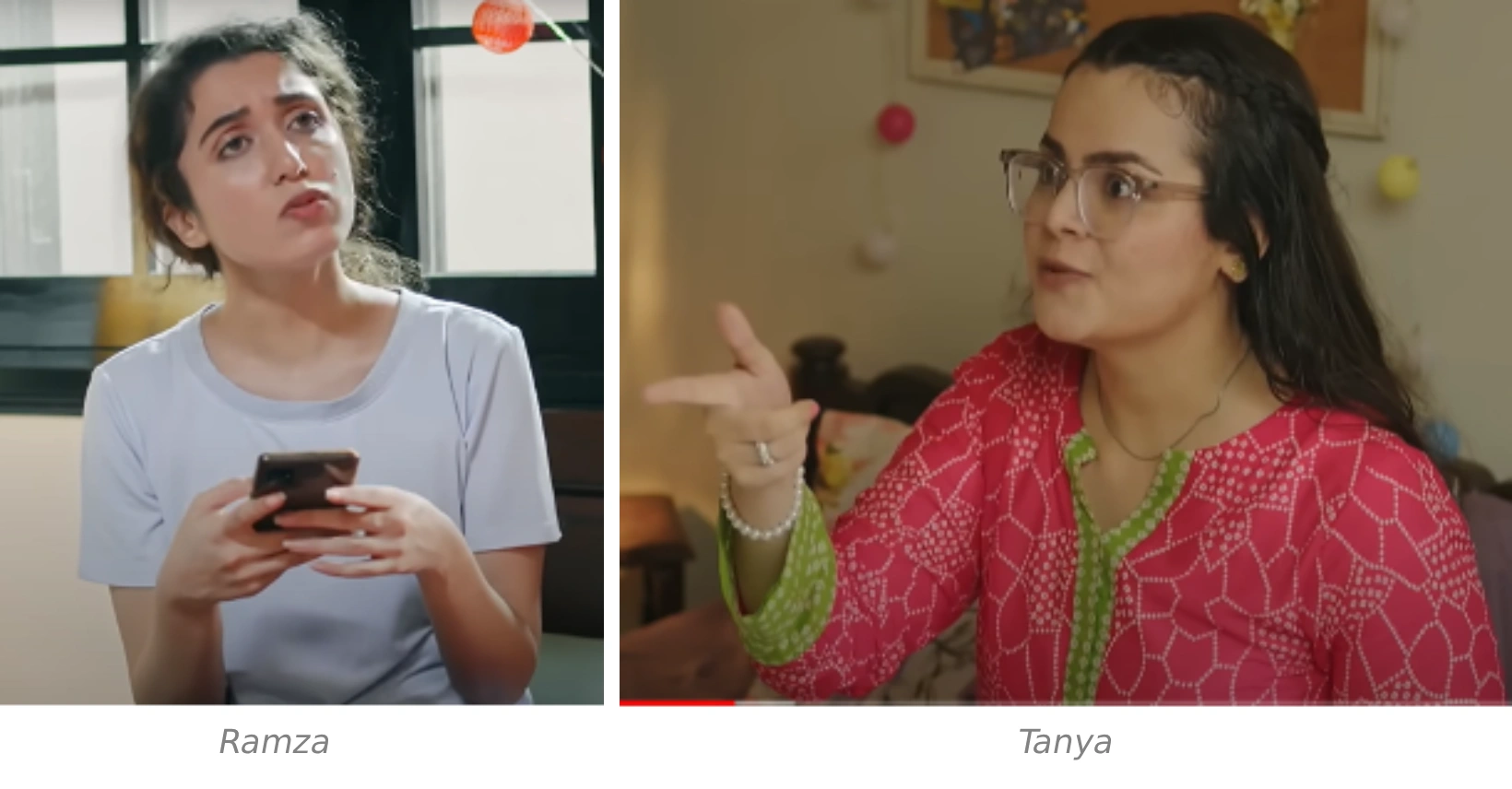
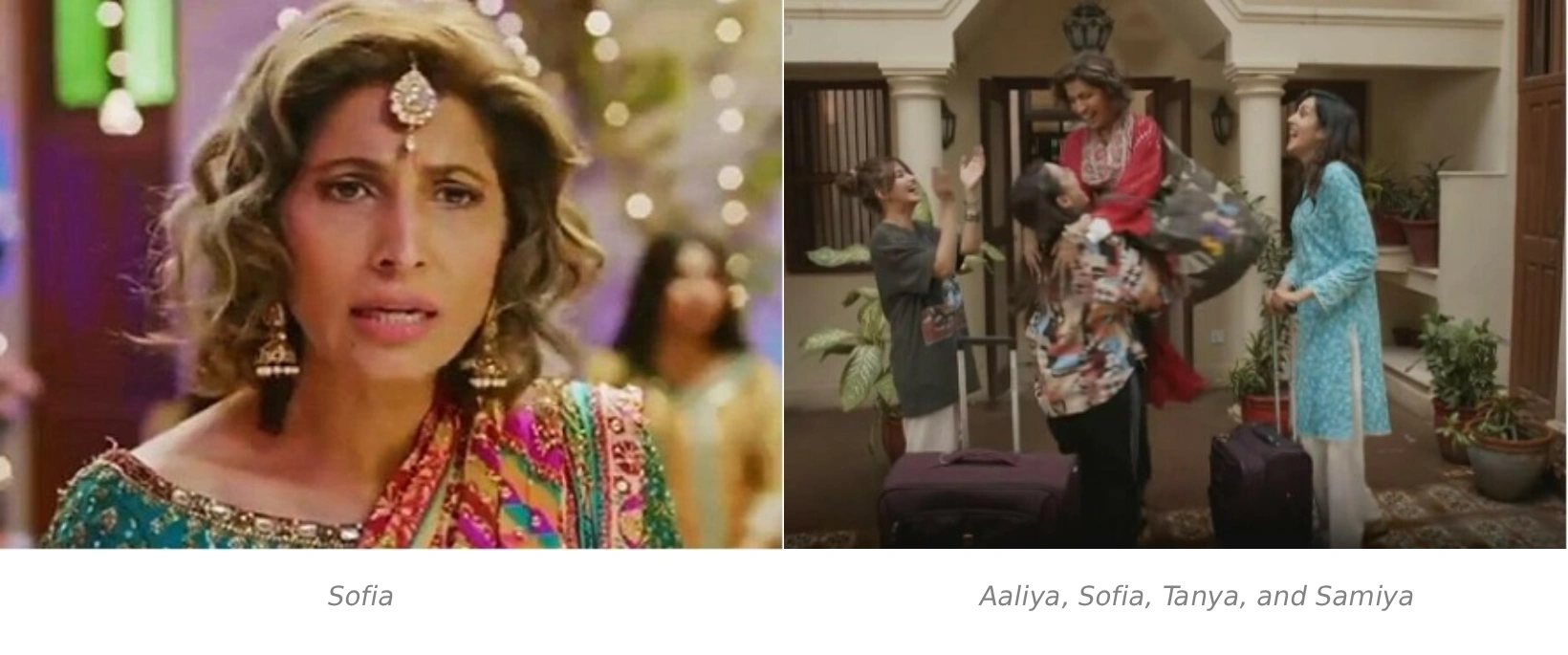
The curly-headed Tanya and Ramza are lively younger sisters to Samiya and Aaliya, and to Alizeh, respectively. From the very first episode, they are represented as foils to their older sisters. While Samiya is mostly seen helping her mother prepare food, Tanya is seen eating it, much of it in secret, despite her mother’s regular fat-shaming. She is learning to be a filmmaker and is often out and about with her close friends Ali and Mona. Ramza, on the other hand, is not too keen on pursuing higher studies and gets scolded by Alizeh, who is getting ready for work in the morning to arrive on time, in the very first episode. Ramza, too, has a close male friend, Ahmer, whom she marries later on in the story. Despite their apparently contrasting characterizations, both Tanya and Ramza are extremely close to their older sisters and would go to war for them if having their backs proves insufficient.
[F]amilies, especially their mothers, heavily rely on their older daughters to maintain family respectability by presenting themselves to the world and potential suitors as sophisticated, chaste, and demure. The older sisters happily oblige, out of the guilt and gratitude associated with having parents who give them more liberties than do others, particularly when it comes to receiving education.
One of the first cues of the younger sisters’ significance to the plot, particularly regarding their older sisters’ future marital life, comes when they are the first to suspect their brothers-in-law’ ill intent. Aaliya, the middle sister, catches Samiya’s to-be-husband sharing an intimate friendship with another woman, and Tanya later spots that woman at Samiya’s wedding. Ramza, on the other hand, finds it strange that one of the first conversations Sherry (Alizeh’s future husband) has with her involves comparing the two sisters. However, no one takes the younger witnesses' contestations seriously, which triggers the main conflict in the plot and foreshadows the outcome. From here on, Tanya’s and Ramza’s journeys intersect with those of their older sisters, leading to Samiya and Alizeh escaping their respective toxic marriages and returning to the family home.
Often, the middle classes attempt to empower their daughters through institutionalized access to education, which is seen as proof of class mobility. However, many women are permitted to venture out of the home only for educational purposes, or to pursue higher education solely to improve their marital prospects, suggesting that the pursuit of education does not necessarily alter traditional gender roles within the family. Educational outcomes are widely predetermined according to gender, including the choice of career – with teaching, medicine, and other service-sector jobs deemed favorable for women – and, more importantly, when to marry. While advocacy for girls’ education is necessary in Pakistan, whether that education empowers the girl depends on factors such as the economic makeup of the family. Just as poverty and precarity can be, and are, easily co-opted by development sector feminism, revered concepts such as ‘ambition’ and ‘career-orientedness’ are convenient hideouts for normative, hierarchical gender roles in a middle-class family.
These dynamics are at play in both shows. Shammo dislikes that Aaliya is in real estate and Tanya in filmmaking, which keeps them away for much of the day. While Samiya is educated, her mobility is limited because she prefers to stay home to make jewelry for her friends and family, which allows her mother to monitor her closely. Ramza is social and outgoing even without a demanding career, which is partly why her parents think her immature and rebellious. Both families, especially their mothers, heavily rely on their older daughters to maintain family respectability by presenting themselves to the world and potential suitors as sophisticated, chaste, and demure. The older sisters happily oblige, out of the guilt and gratitude associated with having parents who give them more liberties than do others, particularly when it comes to receiving education. These feelings also manifest in their personalities as puritanical self-discipline: Alizeh suppresses her budding feelings for a fellow college mate to entertain an arranged match, and Samiya marries her fiancé despite knowing about his affair.
They leverage the reputation of ‘bachi’ and ‘choti’ to put repeated dents on traditional ways of thinking, creating space for ongoing critique of the patriarchal power affecting their older sisters.
The younger sisters resist this unspoken bargain between liberty and obedience. On several occasions, they remark critically on the state of marriage in society and the silencing of women after marriage. Both Tanya and Ramza absent themselves from a key ritual during their sisters’ weddings to protect their self-respect, and to register their grievance against a brother-in-law whom they strongly suspect would ruin the lives of their beloved sisters, all the while assuring their older sisters of their support, come what may. Tanya and Ramza seem to understand this privileged position as a witness to the experiences of their older sister – ones who are not expected to marry just yet; and they use it to spit out hard truths. They leverage the reputation of ‘bachi’ and ‘choti’ to put repeated dents on traditional ways of thinking, creating space for ongoing critique of the patriarchal power affecting their older sisters.
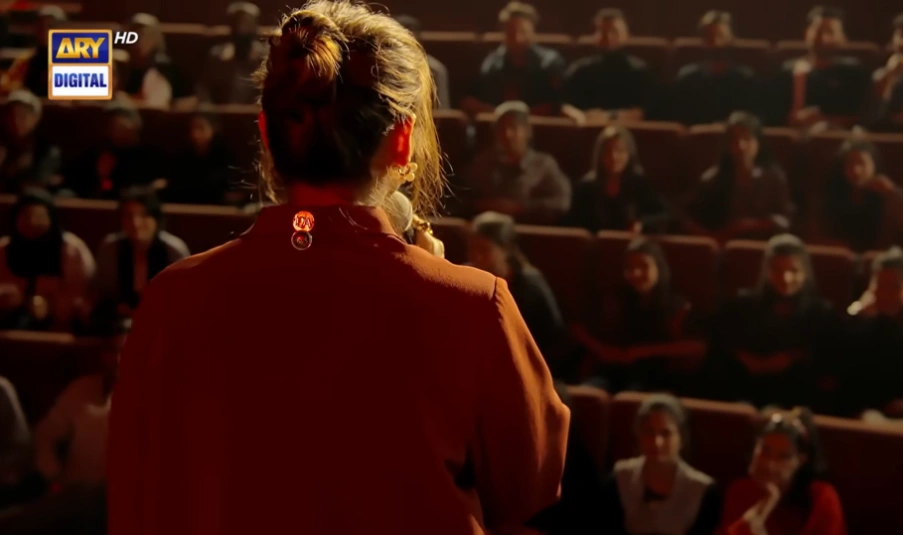
Tanya and Ramza have a critical eye and witty articulation that are not necessarily attained through institutionalized education. When reduced to textbook knowledge, classroom learning, and curricular focus, education could also prove counterproductive. It might appear to prepare women for their future but only teach them to acquiesce; or it might appear to empower women but end up putting them on the lonely pedestal of heroism as someone who ‘made it’. Alizeh’s occasional moonlighting as a motivational speaker exemplifies this. In the first episode, she delivers a motivational speech on the importance of recognizing marzi (will), giving the impression that she has already achieved it. In a subsequent episode, her husband, Sherry, without consulting her, accepts a speaking invitation on her behalf. The irony is cutting as the symbol of empowerment – motivational speaking – is too easily exposed as vacuous.
The characterization of the girl is not so easily reduced to symbolism. Tanya and Ramza are hardly politically correct speakers. Their understanding of how power operates in the world appears to derive from extra-institutional sources, such as social hangouts, far-off travels, and dating experiences. What is significant about this outside-of-school education is its contribution to their decision-making skills, self-image, and identity formation. Unlike Alizeh, whose identity hinges on being a ‘working woman’ (read: participating in the national economy as a salaried individual), Ramza and Tanya do not have one source of validation from which they derive a sense of self. They are neither obedient daughters, nor school toppers, nor indeed in lucrative careers; instead, what could be said to define them is their ability to speak their mind. The absence of this holistic social education in Samiya’s and Alizeh’s upbringing, under the watchful gaze of emotionally expectant parents, contributes to their inability to recognize early on the incompatibility of the match arranged for them.
In KH, phuppo points out that Samiya is wilfully looking away from her fiancé’s affair because, as the oldest daughter, she has observed too closely her mother’s struggles in a society that celebrates sons. Samiya finds herself alone in bearing the burden of this knowledge, a burden exacerbated by her lack of exposure and worldliness. In contrast, Alizeh’s myopic vision regarding her marriage owes more to a pride delicately perched on performative gestures that masquerade as sophisticated values. Despite staunchly arguing against capitalism at her workplace, she falls all too easily for the millionaire Sherry’s rehearsed act of charity at the restaurant where they first meet alone. In all subsequent scenes, Ramza continues to be astonished at Alizeh’s repeated neglect of red flags in Sherry and her unwillingness to hear out Ramza’s protestations.
The score that runs in the background when Sherry, once married to Alizeh, forbids her from working goes sab dost yaar yak dam se khoye [all friends lost in an instant]. This loneliness weighs even more heavily since Alizeh had no close friends to begin with, as she admitted in an earlier episode that she had chosen the less-traveled road (i.e. career over early marriage). Her self-comparison with other women is not unrelated to the pride of being highly educated, which is too often used as a symbol of status. Rarely is it understood however that liberation for each is liberation for all. The perceived isolation and self-reliance serve less the woman than middle-class values concerning family privacy, the responsibility for which is often borne by daughters alone. Keeping ghar ki baatein ghar mein [family matters within the four walls of the house] rests with the daughter both before and after her marriage; and while the eldest daughters Alizeh and Samiya abide by this unsaid rule, the younger sisters Ramza and Tanya feel no qualms about discussing family matters with their close friends and seeking their input on whether the oppositional perspectives they hold are valid. This social orientation surrounds them with firmer support, preventing them from easy entrapment in toxic relationships.
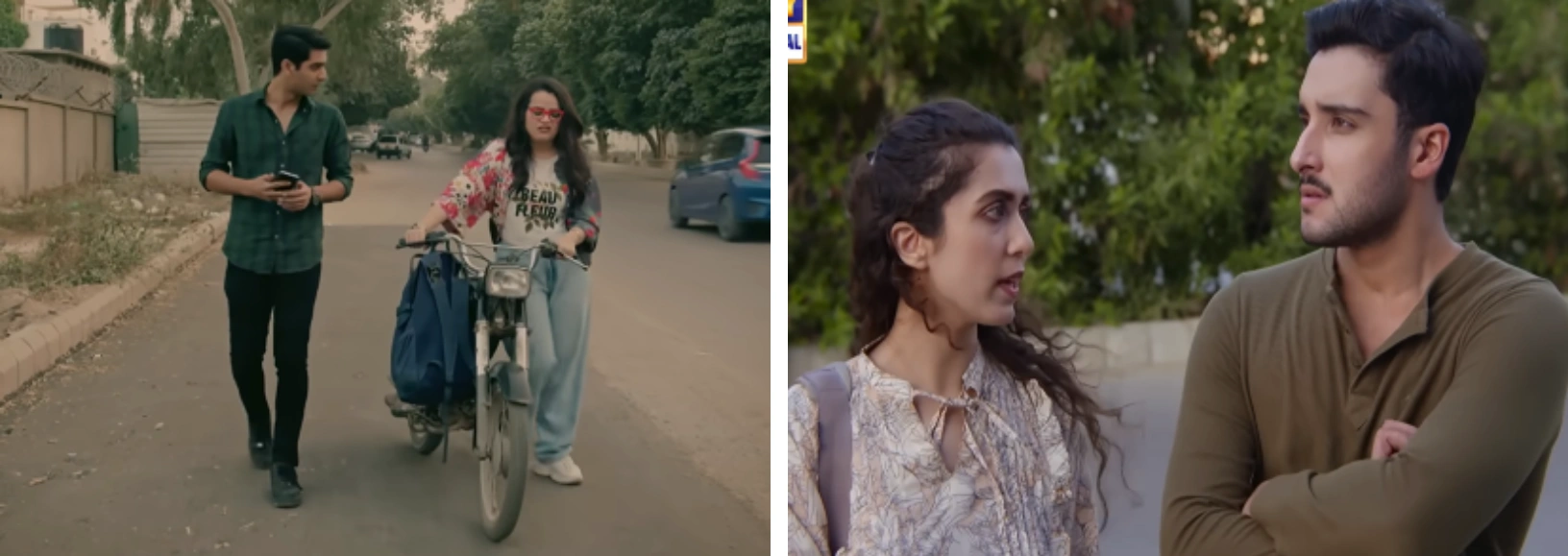
This outside-of-classroom education, reliable social capital, and distance from parents’ watchful eyes are part of the girlhood experience for Tanya and Ramza, available to them in part because they are not yet on the doorstep of marriage. The girls, however, utilize this privilege well. Tanya, Aaliya, and the OG girl of the house, their now single phuppo, Sofia, intervene in the marital life of Samiya to ensure her safety and well-being. They also use humor to deflect tensions in her sasural, particularly when Samiya’s mother-in-law goes too far in making demands of her. Unlike their parents, the girls do not shy away from holding Samiya’s husband accountable, using sarcasm and lighthearted humor to emphasize Samiya’s one-sided dedication to the marriage. Ramza, too, confronts Sherry several times, earning the ire of both her parents and Alizeh, and even endangering herself once. While the confrontations are slow to yield results, they eventually guide Alizeh out of her relationship. Ramza has the right articulation and confidence for this partly because she has discussed the matter with her trusted friends outside of the family. Once Alizeh and Samiya have been assured of their sisters’ support through the difficult marriage, Ramza and Tanya help them overcome the trauma of living or having lived with difficult in-laws. Ramza becomes the bridge between her older sister, who feels guilty for having put her parents in the position of having to answer to society, and her parents, whose demeanor betrays a mix of resentment and relief at Alizeh’s return home. Tanya helps Samiya turn her jewelry-making into a profitable business, boosting her self-confidence and, in turn, helping her convince her mother that she is strong and can look after herself just fine.
Keeping ghar ki baatein ghar mein [family matters within the four walls of the house] rests with the daughter both before and after her marriage; and while the eldest daughters Alizeh and Samiya abide by this unsaid rule, the younger sisters Ramza and Tanya feel no qualms about discussing family matters with their close friends and seeking their input on whether the oppositional perspectives they hold are valid.
This girlhood, which enables a stronger sisterly bond, is a unique phenomenon. On the one hand, the girl finds a refreshing conceptual redefinition through her relational positionality. On the other hand, the understanding of feminist sisterhood could be expanded beyond merely denoting a circle of supportive friends or a community of women who empathize with others' experiences (which is of course no small feat in itself). In a middle-class setting, where it is often hard, particularly for the older sibling, to develop close friendships through open sharing, a younger sister who, for the time being, can afford a more exposed education can serve as that close friend. These two dramas are useful in envisioning how sisterhood can be adapted through relational girlhood to challenge conservative family norms in Pakistan.
Such a sisterhood has been rarely seen in mainstream Pakistani dramas, which, as Khoja-Moolji argues, have mainly been various adaptations of Ahmed Nazir’s famous 1869 Urdu novel Mirat-ul-uroos (125). The two sisters in the novel, Akbari and Asghari, are competitive foils of each other: the former arrogant, lazy, and prodigal; the latter obedient, proactive, and frugal. Following this normative representation of good and bad women, which is essentially a tool to command women’s morality and, through her, the family’s honor, many Pakistani dramas relish in employing this trope by pitting two sisters against each other, turning one into the moral heroine and the other the anti-heroine. In doing so, they perpetuate the notion of an ideal femininity, one which conforms to the archetype of the obedient daughter, and whose obedience is anchored in either her religiosity or a disciplining education (yes, a binary exists, however unfruitfully).
Shows like KH and JAM then unpack the misguided notion of ideal femininity by illustrating its plurality and processual, rather than natural, character. As argued earlier, the girl of the house is defined by her relational status, and she may be forced into womanhood as soon as the older one is married off. Then, it is not a matter of the younger sister’s femininity vs the older’s, but how quickly compulsory heteropatriarchal performances could transform one into the other. The relational definition of girlhood and its significance for sisterhood enable us to see beyond the black-and-white framing of Mirat-ul-uroos and appreciate the struggles women face when faced with the expectation of ideal femininity.
The processual nature of femininity is evident in how Tanya sympathizes with the show's vamp, Shagufta, whom societal prejudice turned into a disagreeable person. She praises her wit and courage for not compromising her self-respect and recognizing Saif-ur-Rehman (Samiya’s husband) for how spineless he is – a pleasing departure from the usual tendency to blame the ‘other woman’ rather than the married man in an extra-marital affair. Ramza, too, shows Alizeh a mirror from time to time to revive the spiritedness that Sherry subdued in her. It is this awareness of acceptable and unacceptable femininities, of the arbitrariness with which a woman is labeled as one or the other, that breaks the myth of a uniform femininity or an ideal one.
Tanya and Ramza reverse-engineer the continuum from girlhood to womanhood by repeatedly reminding Samiya and Alizeh that there is a way out, a way back home. This is significant, as the undoing of a heteropatriarchal marriage – the ritual of transition out of girlhood – could interrupt the process that is femininity. It could return to the women their resistant and authentic voices, which get frequently lost as a result of directly and bluntly experiencing society’s expectations (Allen and Barteeta 615). Phuppo’s character in KH is an excellent example of this. She is known in the family as the one who takes off – which is also, self-admittedly, Tanya’s reputation. As she visits the family for Samiya’s wedding, now single, her advice to the sisters illustrates a perspective gained from having experienced marriage and emerged from it recognizing what one gains and loses. Unfortunately, for many women in society, especially older daughters, going through a toxic marriage becomes the social education they had previously been disallowed.
The Pakistani TV drama is widely acknowledged as a womanly genre, and this acknowledgment is often made pejoratively. The female protagonists at the front and center of the shows are the most carefully cast, and their images populate the shows' visuals. This risks turning that protagonist into the lone, suffering woman that exists within tradition and outside of history. Focusing on a fuller life, including the woman’s loving siblinghood, has the potential to alter this image and thaw the masochistic image of the fated girl. There is much to learn from the performances of girlhood and sisterhood in KH and JAM that could challenge perceptions of the TV drama while continuing to engage with explorations of femininities.
Unfortunately, for many women in society, especially older daughters, going through a toxic marriage becomes the social education they had previously been disallowed.
Appreciating the relationality that could be productively embedded in the conceptualization of girlhood and sisterhood, especially as we envision them in Pakistan, is the first step towards answering questions like Why educated, financially independent women entertain toxic matches, Why it is easier for them to leave toxic work environments but not toxic marriages, and Why women persist amidst toxicity and what triggers them to leave it, if not, ultimately, heinous bodily harm. This essay is an attempt to reassert the importance of family support, particularly that of the sister, in introducing improvements within the discourse of marriage in Pakistan. KH and JAM show that even as parents like Shammo complain that the ‘bachi’ of the house “picks fights with the blowing wind,” her contrarian persistence ultimately leads to the collective realization voiced by Tanya’s father, that “she was, after all, the most intelligent one.”
Works Cited
Allen, Amanda K., and Miranda A. Green-Barteet. "Girls Who Persist and Resist: Resistance in Girlhood Studies and Girls’ Literature." Women’s Studies, vol. 52, no. 6, 2023, pp. 611–26, https://doi.org/10.1080/00497878.2023.2238234.
Green-Barteet, Miranda A., and Amanda K. Allen. "Girls Who Persist: Girls, Literature for Girls, and the Politics of Persistence." Women's Studies, vol. 52, no. 5, 2023, pp. 475–89, https://doi.org/10.1080/00497878.2023.2220133.
Jaisay Aapki Marzi. Directed by Saba Hameed, written by Naila Zehra Jafri, Six Sigma Plus Production, 2023.
Khoja-Moolji, Shenila. The Ideal Educated Girl: The Production of Desirable Subjects in Muslim South Asia. University of California Press, 2018.
Kuch Ankahi. Directed by Nadeem Baig, written by Syed Mohammad Ahmed, Six Sigma Plus / Kashf Foundation, 2023.
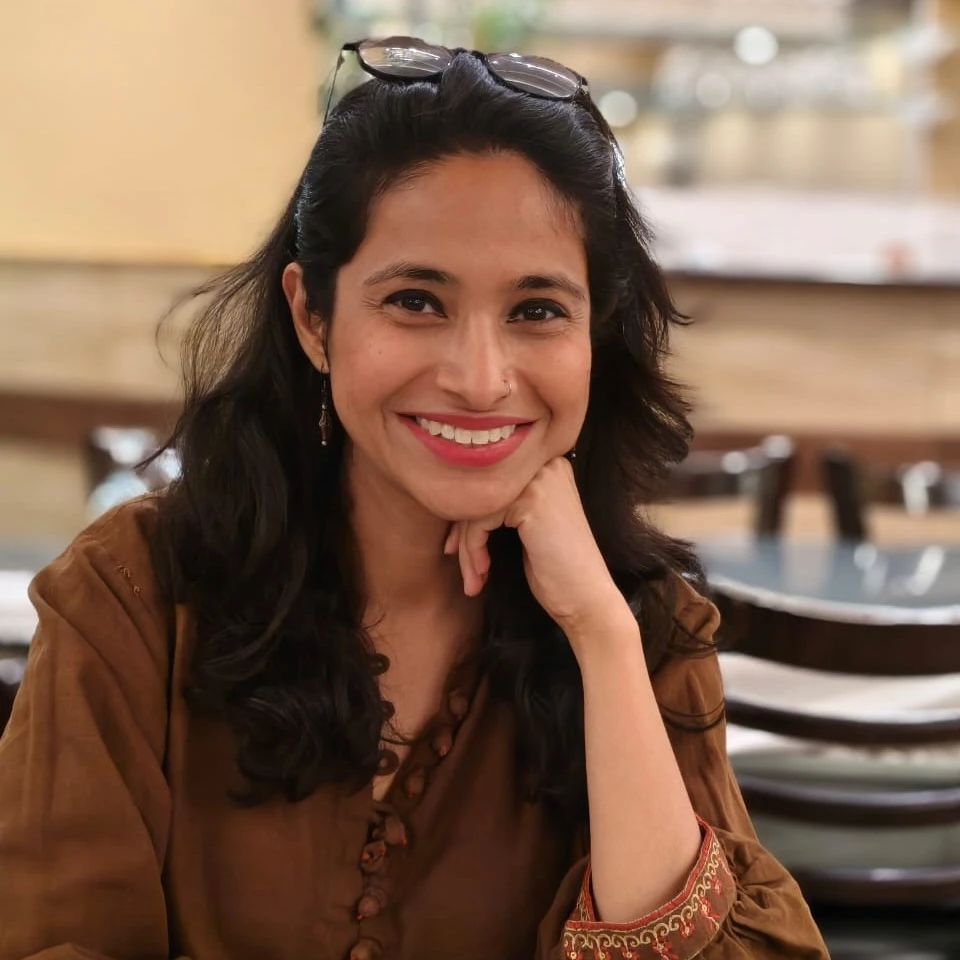
Irum Iqbal Hussain is pursuing a doctoral degree in Comparative and World Literature at the University of Illinois Urbana-Champaign. She has taught courses on MENA and South Asian literatures and cultures. Her research, writing, and teaching focus on Muslim cultures, women's writing, South Asian television and film, Museum Studies, and translation studies. Her poetry and essays have appeared in Pandemonium Journal, Litbreak Magazine, and The Knowledge Forum.